Hypoallergenic neurocosmetics are skincare products that target the skin-nervous system connection while minimizing allergen exposure. They address neurogenic inflammation, a key driver of eczema flares that traditional moisturizers and corticosteroids ignore entirely.
This guide covers the science behind neuro-inflammatory eczema, the active ingredients and irritants that matter most, top-rated product recommendations by severity and skin area, routine building, stress-reduction rituals, and certification standards that verify safety claims.
Eczema-prone skin contains heightened nerve fiber density and elevated neuropeptides like substance P, which amplify itch and redness in a self-reinforcing cycle. Neurocosmetics use bioactive peptides and adaptogens to intercept that cascade at its neurological source rather than suppressing surface symptoms alone.
Ingredients like palmitoyl tripeptide-8, ceramide NP in precise lipid ratios, ashwagandha extract, and prebiotic actives each target a distinct layer of eczema pathology. Equally critical is avoiding sulfates, synthetic fragrances, and sensitizing preservatives that compromise an already fragile barrier.
Choosing the right product depends on whether eczema is mild, moderate to severe, facial, body-wide, or affecting children. Each scenario demands different concentrations, textures, and safety verification thresholds.
A structured routine of sulfate-free cleansing, neuropeptide serum layering, and occlusive ceramide moisturizing provides the daily framework. Sensory rituals incorporating calming soundscapes and tactile-olfactory cues lower cortisol before products are applied, giving barrier-repair actives stronger tissue to work with.
Certifications like the ECARF Seal and HRIPT patch testing separate substantiated hypoallergenic claims from marketing language, which is essential when no universal legal definition of "hypoallergenic" exists.
What Are Hypoallergenic Neurocosmetics and Why Do They Matter for Eczema?
Hypoallergenic neurocosmetics are skincare products that target the skin-nervous system connection while minimizing allergen exposure. They matter for eczema because they address neurogenic inflammation, a key driver of flares that traditional moisturizers ignore. The sections below cover the skin-nerve axis, hypoallergenic formulation standards, and how neurocosmetics differ from conventional eczema care.

How Does the Skin-Nervous System Connection Influence Eczema Flares?
The skin-nervous system connection influences eczema flares by amplifying neurogenic inflammation through overactive nerve signaling. Eczema-prone skin contains a higher density of cutaneous nerve fibers, which release neuropeptides such as substance P and calcitonin gene-related peptide. According to research published in the Journal of Inflammation Research, patients with atopic dermatitis frequently exhibit increased cutaneous nerve fiber density and elevated levels of these inflammatory neuropeptides.
This creates a self-reinforcing cycle. Nerve growth factor promotes the growth of nerve endings in skin lesions, making skin more sensitive to stimuli and triggering even greater neuropeptide release. Stress compounds the problem because skin cells produce cortisol independently, responding directly to psychological pressure, UV light, and dry air. That localized cortisol weakens the skin barrier and slows repair. Neurocosmetics target this exact loop, which makes them uniquely suited for eczema management.
What Makes a Neurocosmetic Formula Truly Hypoallergenic?
A neurocosmetic formula is truly hypoallergenic when it combines neuroactive ingredients with rigorous allergen exclusion verified through clinical testing. EU cosmetics regulation identifies 26 fragrance materials that must be labeled if concentrations exceed 0.001% in leave-on products; genuinely hypoallergenic formulas eliminate these entirely.
Key criteria include:
-
Formulas maintain a skin-compatible pH of 4.5 to 5.5, which is critical for eczema since thinned barriers are more susceptible to irritation.
-
Products undergo human repeated induction patch testing (HRIPT) to confirm they do not cause allergic reactions after repeated exposure.
-
Independent certifications, such as the ECARF Seal from the European Centre for Allergy Research Foundation, verify that products meet allergy-safe standards.
For eczema-prone skin, third-party validation matters more than marketing claims. Any neurocosmetic labeled "hypoallergenic" without patch testing data or recognized certification should be approached with caution.
How Do Neurocosmetics Differ From Traditional Eczema Treatments?
Neurocosmetics differ from traditional eczema treatments by targeting neurogenic inflammation at the nerve-skin interface rather than suppressing surface symptoms alone. Traditional approaches, such as topical corticosteroids and standard emollients, focus on reducing visible inflammation or restoring moisture. They do not address the overactive nerve signaling that perpetuates the itch-scratch cycle.
Neurocosmetics use bioactive peptides and adaptogens to modulate neuropeptide activity directly. In skin explants exposed to substance P, research published by the National Institutes of Health found that palmitoyl tripeptide-8 reduced the size of dilated vessels by up to 30%. This mechanism calms inflammation at its neurological source.
The multisensory dimension adds another layer conventional treatments lack entirely. Tactile and olfactory stimuli have demonstrated superior calming effects, reducing anxiety and enhancing physiological relaxation. For eczema sufferers caught in a stress-flare loop, this combined neuroactive and sensory approach offers a fundamentally different strategy. Understanding these active ingredients is the next step in choosing the right formula.
What Ingredients Should You Look for in Hypoallergenic Neurocosmetics for Eczema?
The ingredients you should look for in hypoallergenic neurocosmetics for eczema include neuropeptide complexes, ceramide-based lipid restorers, adaptogenic botanicals, neuroactive calming agents, and prebiotic actives that balance the skin microbiome.

Neuropeptide Complexes
Neuropeptide complexes are synthetic peptides that modulate the skin's neuro-inflammatory signaling. Palmitoyl tripeptide-8 is among the most studied. According to research published by the National Institutes of Health, palmitoyl tripeptide-8 significantly reduced the number of dilated capillaries and vessel size by up to 30% in skin explants exposed to substance P. This matters for eczema because substance P is a key neuropeptide that drives redness and itch. By intercepting that cascade topically, neuropeptide complexes calm reactive skin without suppressing immune function the way corticosteroids do. For eczema-prone individuals, these peptides offer targeted neurological soothing at the formulation level.
Ceramide and Lipid Barrier Restorers
Ceramide and lipid barrier restorers are ingredients that replenish the structural lipids eczema-depleted skin lacks. Ceramide NP is the primary barrier lipid, effective at concentrations of 0.5–3%. According to a Patsnap formulation guide, physiological lipids including ceramide NP, cholesterol, and free fatty acids perform best in a 3:1:1 ratio. This precise balance mimics the skin's natural lipid matrix. Without adequate ceramides, transepidermal water loss accelerates and irritants penetrate more easily. Formulas that pair ceramides with cholesterol and fatty acids in biomimetic ratios rebuild barrier integrity rather than simply coating the surface. For eczema management, consistent lipid replenishment is arguably the single most important foundation any neurocosmetic can provide.
Adaptogenic Botanicals
Adaptogenic botanicals are plant-derived actives that help regulate the body's stress response at the skin level. Ashwagandha extract is a leading example. A clinical trial published in Functional Foods in Health and Disease found that ashwagandha standardized to 5% withanolides reduced serum cortisol levels, a key stress marker. Since skin cells independently produce cortisol in response to environmental triggers, adaptogens that modulate this pathway can reduce stress-driven barrier breakdown. Other adaptogens commonly used in neurocosmetic eczema formulations include:
-
Centella asiatica for wound healing and anti-inflammatory support
-
Reishi mushroom for immune modulation
-
Rhodiola rosea for antioxidant defense
Neuroactive Calming Agents
Neuroactive calming agents are compounds that directly soothe sensory nerve endings in irritated skin. These ingredients target the neurological dimension of eczema itch and discomfort, working alongside barrier repair to interrupt the scratch-itch cycle. Commonly used neuroactive calming agents include:
-
Bisabolol, which reduces inflammation at nerve receptor sites
-
PEA (palmitoylethanolamide), an endocannabinoid-like lipid that down-regulates mast cell activation
-
Niacinamide, which strengthens barrier function while calming neurogenic redness
Tactile-olfactory stimuli have also demonstrated superior calming effects, as a 2025 study in Frontiers in Psychology found reduced anxiety scores and enhanced physiological relaxation through sensory engagement. This principle underpins why multisensory application rituals amplify the efficacy of neuroactive ingredients.
Prebiotics and Microbiome-Balancing Actives
Prebiotics and microbiome-balancing actives are ingredients that nourish beneficial skin bacteria while suppressing pathogenic strains linked to eczema flares. A disrupted skin microbiome, particularly Staphylococcus aureus overgrowth, is a hallmark of atopic dermatitis. Effective microbiome-supporting ingredients include:
-
Alpha-glucan oligosaccharide, a prebiotic that selectively feeds commensal bacteria
-
Lactobacillus ferment lysate, a postbiotic that reinforces antimicrobial peptide production
-
Inulin, a plant-derived prebiotic that supports microbial diversity
These actives complement ceramide and neuropeptide layers by addressing the biological environment where flares originate. For lasting eczema relief, a formulation that rebalances the microbiome prevents the recurring dysbiosis that triggers inflammation cycles.
Knowing which ingredients to prioritize makes identifying harmful ones equally important.
What Ingredients Should You Avoid in Neurocosmetics if You Have Eczema?
The ingredients you should avoid in neurocosmetics if you have eczema include synthetic fragrances, harsh surfactants, drying alcohols, and known sensitizers that trigger neurogenic inflammation. Because eczema-prone skin exhibits heightened nerve fiber density and elevated neuropeptide activity, even trace amounts of common irritants can amplify flare cycles.
The following ingredients pose the greatest risk for eczema-prone skin using neurocosmetic formulations:
-
Synthetic fragrances and parfum blends. The EU cosmetics regulation identifies 26 fragrance materials that must be labeled when concentrations exceed 0.001% in leave-on products, according to Scentspiracy. Many neurocosmetics incorporate scent for sensory benefits, but synthetic fragrance compounds activate sensory nerve endings and provoke histamine release in sensitized skin.
-
Sodium lauryl sulfate (SLS) and sodium laureth sulfate (SLES). SLS thins the protective skin barrier, increasing penetration of other irritants in aqueous creams. For eczema-prone skin already compromised by barrier dysfunction, sulfate-based surfactants accelerate transepidermal water loss and worsen dryness.
-
Denatured alcohol (alcohol denat) and isopropyl alcohol. These strip lipids from the stratum corneum, disrupting the barrier that eczema-prone skin struggles to maintain. Products formulated outside the optimal pH range of 4.5 to 5.5 compound this damage further.
-
Methylisothiazolinone (MI) and methylchloroisothiazolinone (MCI). These preservatives rank among the most common contact allergens in cosmetic formulations, particularly problematic for skin with compromised barrier integrity.
-
Essential oils at high concentrations. While some neurocosmetic lines use essential oils for aromatherapeutic calming effects, concentrated forms of lavender, tea tree, and citrus oils can irritate eczema-prone skin. Dilution matters significantly.
-
Formaldehyde-releasing preservatives. Ingredients like DMDM hydantoin and imidazolidinyl urea slowly release formaldehyde, a known sensitizer that can trigger contact dermatitis in vulnerable populations.
For anyone building a neurocosmetic routine around eczema management, reading ingredient lists critically is non-negotiable. The most effective approach combines avoiding these triggers with seeking products verified through human repeated induction patch testing (HRIPT) and certifications like the ECARF Seal, which confirms suitability for allergy-prone consumers. A truly hypoallergenic neurocosmetic should deliver sensory and neurological benefits without relying on ingredients that compromise an already fragile skin barrier.
Knowing what to avoid narrows the field considerably when evaluating top-rated formulations.
Which Are the Top-Rated Hypoallergenic Neurocosmetics for Eczema in 2026?
The top-rated hypoallergenic neurocosmetics for eczema in 2026 target the skin-nervous system axis while meeting strict allergen-free standards. The best choice depends on eczema severity, body area, and age.

Which Hypoallergenic Neurocosmetic Is Best for Mild Eczema?
The best hypoallergenic neurocosmetic for mild eczema is a lightweight, neuropeptide-enriched moisturizer that calms sensory nerve overactivity without heavy occlusives. Look for formulas containing palmitoyl tripeptide-8, ceramide NP at 0.5–3%, and adaptogenic botanicals in a fragrance-free base maintained at skin-safe pH of 4.5–5.5. According to a 2021 NIH study, palmitoyl tripeptide-8 reduced substance P-induced capillary dilation by up to 30% in skin explants, making it particularly effective for the low-grade neurogenic inflammation that drives mild flares. Products carrying the ECARF Seal and verified through human repeated induction patch testing (HRIPT) offer the strongest safety assurance for reactive skin. For mild cases, a simple twice-daily application of a ceramide-neuropeptide cream often provides sufficient barrier support and itch relief.
Which Hypoallergenic Neurocosmetic Is Best for Moderate to Severe Eczema?
The best hypoallergenic neurocosmetic for moderate to severe eczema is a concentrated barrier-repair balm that combines neuropeptide complexes with a physiological lipid blend. Severe atopic dermatitis involves increased cutaneous nerve fiber density and elevated levels of substance P and calcitonin gene-related peptide, which intensify itch-scratch cycles. Formulations should pair neuropeptide-calming actives with ceramides, cholesterol, and free fatty acids in a 3:1:1 ratio to rebuild the compromised barrier. Avoiding sodium lauryl sulfate is critical; SLS thins the skin barrier and increases irritant penetration in already damaged skin. Applying a rich balm at night, when skin regeneration peaks, and layering with an occlusive on severe dry patches delivers the most consistent relief.
Which Hypoallergenic Neurocosmetic Is Best for Facial Eczema?
The best hypoallergenic neurocosmetic for facial eczema is a non-comedogenic, pH-balanced serum or light cream formulated to address neurogenic sensitivity without congesting delicate facial skin. Facial skin produces its own cortisol in response to stress, UV light, and dry air, which weakens the barrier and amplifies inflammation locally. Effective facial neurocosmetics prioritize fast-absorbing neuropeptide serums over heavy creams. They exclude all 26 EU-regulated fragrance allergens and rely on tactile-olfactory calming properties from naturally derived, non-sensitizing botanicals. According to a 2025 study published in Frontiers in Psychology, tactile-olfactory stimuli demonstrated superior calming effects, reducing anxiety scores and enhancing physiological relaxation. For the face specifically, less is more; a single well-formulated neurocosmetic serum paired with a gentle ceramide moisturizer outperforms complex multi-step routines.
Which Hypoallergenic Neurocosmetic Is Best for Body Eczema?
The best hypoallergenic neurocosmetic for body eczema is a rich, occlusive body cream that delivers neuropeptide-calming and barrier-restoring actives across large surface areas. Body skin affected by eczema requires higher concentrations of lipid-replenishing ingredients because the trunk and limbs lose moisture faster than the face. Since nerve growth factor (NGF) promotes nerve ending growth in eczema lesions, making skin progressively more sensitive, body formulas benefit from sustained neuropeptide modulation across extended wear times. Waiting 14 days before adding any new product to a body eczema routine helps distinguish true improvement from irritant reactions, as skin can take 7–10 days to react to a new ingredient. Body-specific neurocosmetics should be SLS-free, ECARF-certified, and formulated for generous, full-body application.
Which Hypoallergenic Neurocosmetic Is Best for Eczema-Prone Children?
The best hypoallergenic neurocosmetic for eczema-prone children is one verified through human repeated induction patch testing (HRIPT), which assesses allergic reaction potential after repeated exposure specifically in sensitive populations. According to a 2025 SGS report on clinical testing solutions, HRIPT remains the standard for validating child-safe cosmetics. Children's skin has a thinner stratum corneum and higher surface-area-to-body-weight ratio, so every ingredient must meet the strictest safety thresholds. Key features to prioritize in pediatric neurocosmetics include:
-
Fragrance-free formulation excluding all 26 EU-regulated allergens
-
Ceramide NP with physiological lipids in a 3:1:1 molar ratio
-
Neuropeptide-calming actives at concentrations tested for pediatric use
-
pH maintained between 4.5 and 5.5 to protect developing barriers
-
ECARF Seal or equivalent third-party allergy certification
With the right hypoallergenic neurocosmetic matched to severity and skin area, building an effective daily routine becomes the next step.
How Do You Build a Hypoallergenic Neurocosmetic Routine for Eczema?
You build a hypoallergenic neurocosmetic routine for eczema by following three core steps: gentle cleansing, targeted serum layering, and occlusive moisturizing. Each step protects the skin barrier while calming neuro-inflammatory signals.

What Cleansing Step Works Best for Eczema-Prone Skin?
The cleansing step that works best for eczema-prone skin is a sulfate-free, fragrance-free micellar or cream-based cleanser formulated at a pH of 4.5 to 5.5. Maintaining skin pH near these normal levels is critical for eczema treatment, since thinned barriers are far more susceptible to irritation, according to research published by Wiley Online Library. Sodium lauryl sulfate (SLS) thins the protective skin barrier and increases penetration of other irritants, so it should be avoided entirely. Look for cleansers containing ceramides or colloidal oatmeal that reinforce barrier integrity during the washing step. Lukewarm water and minimal rubbing further reduce neurogenic irritation on sensitized skin.
How Should You Layer Neurocosmetic Serums and Treatments?
You should layer neurocosmetic serums and treatments from thinnest to thickest consistency, applying water-based neuropeptide serums first and oil-based treatments second. Key actives to prioritize include:
-
Palmitoyl tripeptide-8, which calms substance P-driven inflammation.
-
Adaptogenic botanicals such as ashwagandha extract, shown to reduce cortisol markers in clinical trials.
-
Ceramide NP at 0.5 to 3% concentration to restore lipid barrier function.
Because skincare takes 7 to 10 days to react to a new ingredient, waiting at least 14 days before adding another product to the routine helps isolate any triggers. This patience is especially important for eczema-prone skin, where compounding irritants can be difficult to trace after the fact.
What Type of Moisturizer Seals in Neurocosmetic Benefits?
The type of moisturizer that seals in neurocosmetic benefits is a rich, occlusive balm or cream containing physiological lipids in a ceramide-to-cholesterol-to-fatty-acid ratio of 3:1:1. According to Patsnap's ceramide formulation guide, this specific lipid ratio most effectively repairs the skin barrier. Applying a richer balm at night, when skin regeneration is highest, maximizes active ingredient absorption and provides sustained relief from eczema symptoms. Layering an occlusive on persistently dry patches creates a physical seal that prevents transepidermal water loss. For eczema-prone skin, choosing fragrance-free formulas that have passed human repeated induction patch testing (HRIPT) ensures the final moisturizing step calms rather than aggravates neuro-inflammatory pathways.
With routine steps established, understanding how stress reduction rituals further support eczema management deepens these benefits.
How Does Stress Reduction Through Sensory Skincare Rituals Help Eczema?
Stress reduction through sensory skincare rituals helps eczema by lowering cortisol levels that directly weaken the skin barrier, while calming the neuro-inflammatory cycle that triggers flares. The following sections explore the cortisol-eczema link and how aromatherapy and soundscapes reduce inflammatory responses.
What Does the Research Say About Cortisol and Eczema Severity?
The research says cortisol worsens eczema severity by degrading the skin barrier and amplifying inflammatory signaling. Skin cells produce their own cortisol independently, responding directly to stress, UV light, and dry air, which weakens barrier integrity and slows collagen production. This localized stress response compounds the systemic cortisol released during psychological stress, creating a dual assault on eczema-prone skin.
Elevated cortisol thins the stratum corneum, increases transepidermal water loss, and leaves compromised skin more vulnerable to allergens and irritants. For eczema patients already dealing with heightened nerve fiber density and excess neuropeptides like substance P, this cortisol-driven barrier breakdown accelerates the itch-scratch cycle.
Sensory rituals that actively lower cortisol before product application give barrier-repair ingredients a stronger foundation to work with. For most people managing eczema, addressing cortisol is as important as choosing the right moisturizer.
How Can Aromatherapy and Soundscapes Calm Neuro-Inflammatory Responses?
Aromatherapy and soundscapes calm neuro-inflammatory responses by engaging sensory pathways that downregulate the nervous system before inflammation escalates. According to a study published in Frontiers in Psychology, tactile-olfactory stimuli demonstrated superior calming effects in humans, as evidenced by reduced anxiety scores and enhanced physiological relaxation.
Low-frequency sound stimulation in the 20 to 50 Hz range may offer neuroprotective benefits by promoting mitochondrial health and reducing oxidative stress. Clinical trials also show that structured, rhythmic music can measurably shift the nervous system and reduce cortisol levels before skincare products are even applied.
These findings suggest that pairing calming scents with therapeutic soundscapes during a skincare ritual creates a compounding effect. The nervous system settles, neuropeptide release slows, and topical actives encounter less inflamed tissue. With sensory rituals in place, certifications and testing standards help verify the safety of the products used.
What Certifications and Testing Standards Verify Hypoallergenic Claims in 2026?
The certifications and testing standards that verify hypoallergenic claims in 2026 include third-party allergy seals, clinical patch testing protocols, EU fragrance allergen regulations, and pH compliance benchmarks.
No universal legal definition of "hypoallergenic" exists in cosmetics regulation, which makes independent verification essential. For eczema-prone skin, where barrier integrity is already compromised, relying on self-declared claims without supporting certifications carries real risk. The following standards offer measurable proof of safety:
-
ECARF Seal: The European Centre for Allergy Research Foundation certifies cosmetics that are fragrance-free or meet specific criteria suitable for consumers with allergies. This third-party seal remains one of the most recognized allergy certifications globally.
-
Human Repeated Induction Patch Testing (HRIPT): According to a 2025 SGS report on clinical testing solutions for child-safe cosmetics, HRIPT assesses whether a product may cause allergic reactions after repeated exposure, ensuring safety in sensitive populations. Products that pass HRIPT demonstrate tolerance across multiple skin applications.
-
EU Fragrance Allergen Labeling: EU cosmetics regulation mandates disclosure of 26 fragrance materials when their concentration exceeds 0.001% in leave-on products. Compliant neurocosmetics for eczema either exclude these allergens entirely or declare them transparently.
-
pH Range Compliance (4.5 to 5.5): Formulations that maintain skin pH near the physiological range of 4.5 to 5.5 protect thinned eczema barriers from additional irritation. Independent lab verification of pH stability adds another layer of trustworthiness.
For anyone shopping for hypoallergenic neurocosmetics, prioritizing products with at least two of these verifications, particularly the ECARF Seal combined with HRIPT results, provides the strongest assurance that claims are substantiated rather than decorative. Understanding how a luxury neurocosmetic ritual applies these standards in practice brings the science closer to daily eczema care.
How Can a Luxury Neurocosmetic Ritual Support Eczema-Prone Skin?
A luxury neurocosmetic ritual can support eczema-prone skin by combining clinically backed, hypoallergenic formulations with multisensory elements that calm the skin-nervous system axis. The sections below explore BONJIL's approach and the key takeaways from this guide.
Can BONJIL's Multisensory Skincare Approach Benefit Eczema Management?
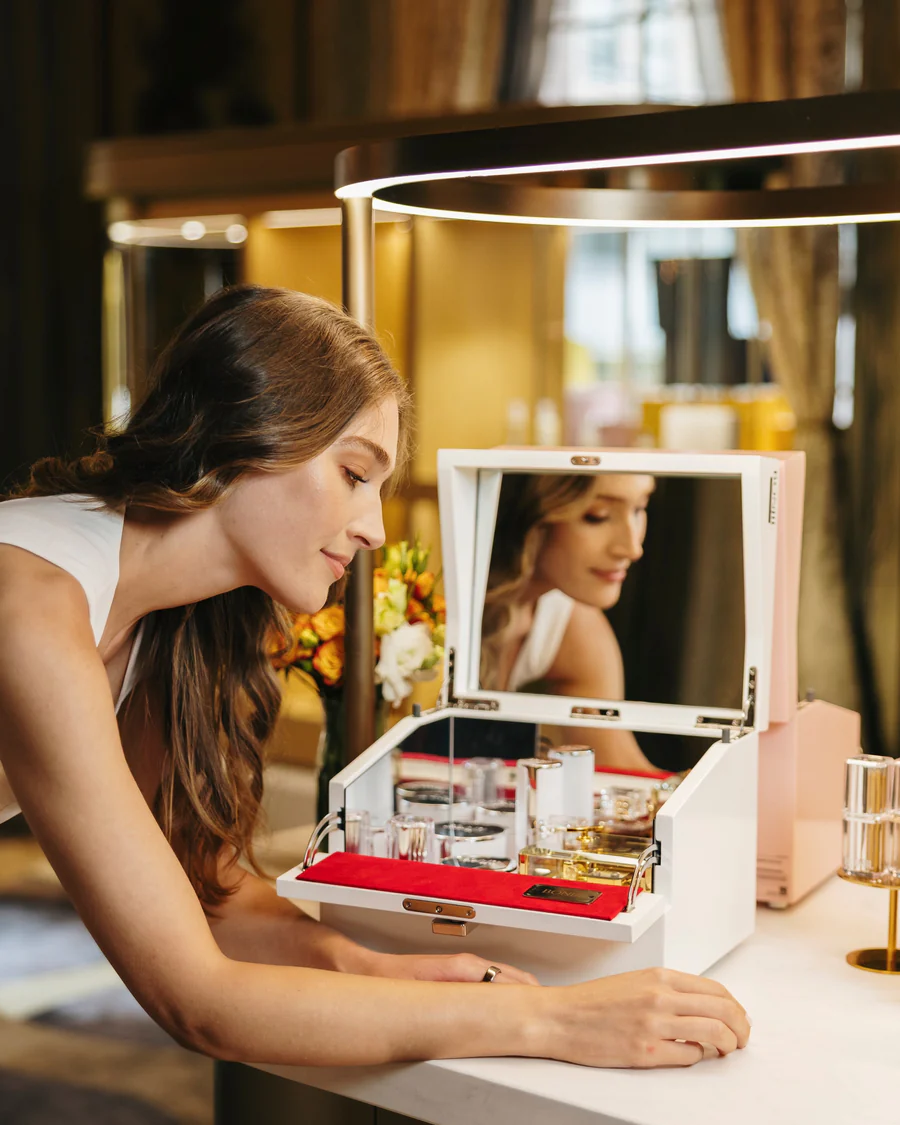
Yes, BONJIL's multisensory skincare approach can benefit eczema management by addressing both the neurological triggers and the barrier dysfunction that drive flares. BONJIL formulates luxury neurocosmetics around the principle that skin cells produce their own cortisol in response to stress, UV light, and dry air, weakening the skin barrier. By pairing neuropeptide-rich, hypoallergenic formulas with sensory ritual elements like the BONJIL Music Box, the brand targets the stress-itch cycle at its source.
According to a 2025 study published in Frontiers in Psychology, tactile-olfactory stimuli demonstrated superior calming effects in humans, reducing anxiety scores and enhancing physiological relaxation. This validates the science behind layering gentle textures and calming sensory cues into a skincare routine. For eczema-prone skin, that combination of barrier repair and nervous system regulation is more valuable than either strategy alone.
What Are the Key Takeaways About Hypoallergenic Neurocosmetics for Eczema?
The key takeaways about hypoallergenic neurocosmetics for eczema are:
-
Eczema involves a bidirectional skin-nervous system loop where elevated neuropeptides, such as substance P, intensify inflammation and itch.
-
Truly hypoallergenic formulas require verified testing like HRIPT, EU allergen compliance, and a skin-appropriate pH of 4.5 to 5.5.
-
Neuropeptide-modulating ingredients, ceramide-based barrier repair, and adaptogenic botanicals form the most effective active ingredient strategy.
-
Sensory rituals that incorporate calming sound, texture, and scent can measurably reduce cortisol before products even touch the skin.
-
Building a routine slowly, waiting 14 days between new product introductions, prevents reactive flares.
Choosing neurocosmetics that unite rigorous hypoallergenic standards with nervous system support represents the most complete approach to eczema care available in 2026.