Acoustic neuro-cosmetics is an emerging field that applies specific sound frequencies to influence skin health through cellular mechanotransduction and nervous system modulation. This guide covers how sound affects skin cells, the neural pathways connecting acoustic stimulation to skin function, frequency-specific benefits, clinical research findings, and practical integration into skincare rituals. Sound waves act as mechanical stimuli that penetrate tissue layers and activate fibroblast proliferation, collagen type I expression, and keratinocyte migration. Low-frequency vibrations at the cavitation threshold have demonstrated measurable increases in fibroblast activity, while clinical ultrasound protocols show significant wound area reduction compared to sham treatments.
The skin-brain axis forms the biological bridge between what we hear and how our skin responds. Mechanoreceptors, particularly Pacinian corpuscles, convert acoustic vibrations into intracellular signals through gated ion channels. These signals travel to the brain, which then modulates cortisol release, neurotransmitter output, and autonomic nervous system balance; all factors that directly shape skin condition.
Individual frequencies carry distinct profiles. 40 Hz gamma rhythms support neural health through brainwave entrainment, 432 Hz tones reduce measurable stress markers like anxiety scores and blood pressure, and 528 Hz solfeggio waves influence hormonal gene expression. Binaural beats and 174 Hz tones show preliminary relaxation potential, though clinical evidence for each varies considerably.
Translating this science into practice involves aligning session timing, topical product application, and sensory environment into cohesive rituals. Multisensory layering of sound, touch, and scent compounds the neuro-cosmetic effect beyond any single input alone.
How Do Sound Frequencies Affect the Skin at a Cellular Level?
Sound frequencies affect the skin at a cellular level by generating mechanical vibrations that stimulate fibroblast proliferation, alter cellular metabolism, and promote structural protein synthesis. The following subsections explore how sound waves interact with skin cells, shift metabolic activity, and influence collagen and elastin production.
How Do Sound Waves Penetrate and Interact with Skin Cells?
Sound waves penetrate and interact with skin cells by transmitting mechanical energy through tissue layers, creating pressure oscillations that activate cellular responses. When acoustic vibrations reach dermal fibroblasts, the resulting micromechanical forces trigger membrane-level signaling cascades.
According to a study published in the Journal of Biomedical Physics & Engineering, low-frequency, low-intensity ultrasound waves at the cavitation threshold increase fibroblast proliferation and collagen type I expression, with fibroblast expression rising from 0.03±0.00 in controls to 0.17±0.05 at a 0.20 mechanical index. These pressure waves also demonstrate measurable wound-healing effects; in a clinical trial published in the International Journal of Lower Extremity Wounds, 97.1% of patients receiving ultrasound therapy achieved greater than 50% wound area reduction compared to 73.1% in the sham group (P = .042).
Beyond direct tissue interaction, certain frequencies influence systemic pathways that indirectly affect skin. The 528 Hz frequency at 100 dB intensity, for instance, has been shown to alter hormonal gene expression and reduce anxiety-related behaviors in animal models.

What Happens to Cellular Metabolism When Exposed to Specific Frequencies?
Cellular metabolism shifts when exposed to specific frequencies because acoustic vibrations alter ion channel activity, cytoskeletal dynamics, and intracellular signaling pathways. Mechanically gated ion channels on cell membranes detect these pressure changes and convert them into biochemical signals, a process known as mechanotransduction.
Once activated, these channels trigger downstream cascades that influence energy production, protein synthesis rates, and cell division cycles. Fibroblasts and keratinocytes, both essential to skin structure and repair, respond to frequency-specific stimulation with measurable changes in migration speed and morphological organization. The metabolic response varies depending on frequency range, intensity, and duration of exposure. For acoustic neuro-cosmetics, this frequency-dependent metabolic sensitivity is what makes targeted sound protocols a compelling area of investigation.
How Does Acoustic Vibration Influence Collagen and Elastin Production?
Acoustic vibration influences collagen and elastin production by delivering contact-free mechanical stimulation that activates fibroblast biosynthetic pathways. As reported in Science Advances, acoustic technologies have emerged as precise, contact-free tools to study cellular responses, functioning much like an orchestra synchronizing its audience through coordinated mechanical forces.
Fibroblasts, the primary producers of both collagen and elastin in dermal tissue, respond to sustained vibration by upregulating extracellular matrix protein synthesis. Low-frequency stimulation, in particular, promotes collagen type I gene expression, which forms the structural scaffolding responsible for skin firmness. Elastin production follows a complementary pathway, with mechanical cues encouraging the cross-linking that maintains skin resilience and elasticity.
For those exploring acoustic skincare rituals, this mechanobiological relationship between vibration and structural protein production represents a foundational principle worth understanding. The next section examines how the broader field of acoustic neuro-cosmetics translates these cellular mechanisms into practical applications.
What Is Acoustic Neuro-Cosmetics and How Does It Work?
Acoustic neuro-cosmetics is a field that applies sound frequencies to influence skin health through the nervous system. The following sections cover its scientific principles, the neural pathways connecting sound to skin, and how mechanoreceptors translate acoustic vibration into cellular responses.
What Scientific Principles Define the Field of Neuro-Cosmetics?
The scientific principles that define the field of neuro-cosmetics center on the bidirectional communication between the nervous system and the skin. Neuro-cosmetics recognizes that skin cells contain the same receptors found in neural tissue, meaning topical and sensory stimuli can trigger neurological responses that alter skin function. This connection, sometimes called the skin-brain axis, forms the foundation of the entire discipline.
Rather than treating the skin as an isolated barrier, neuro-cosmetic science acknowledges that emotional states, stress responses, and sensory input all shape skin condition at a cellular level. When acoustic elements are introduced, this framework expands to include sound as a sensory input capable of modulating neural pathways relevant to skin physiology. For practitioners and consumers alike, this represents a meaningful shift in how skincare efficacy is understood. BONJIL embraces this neuro-cosmetic philosophy through its approach to skincare, recognizing that beauty is felt with every sense, not just through topical application, but through the complete sensory experience surrounding it
How Does the Nervous System Mediate Sound-to-Skin Communication?
The nervous system mediates sound-to-skin communication through interconnected neuroendocrine pathways that link auditory and tactile perception to cutaneous function. Sound vibrations detected by the ear and skin activate afferent nerve fibers, which relay signals to the central nervous system. The brain then modulates hormonal and autonomic outputs that directly affect skin cell behavior, including inflammation, barrier repair, and sebum regulation.
The hypothalamic-pituitary-adrenal (HPA) axis plays a central role in this process. When sound reduces perceived stress, it can downregulate cortisol release through this axis. According to a 2022 review in the International Journal of Molecular Sciences, psychological stress exacerbates conditions like psoriasis by dysregulating the HPA axis, the sympathetic-adrenal-medullary axis, the peripheral nervous system, and the immune system. Sound-based interventions that calm these pathways may therefore support skin homeostasis by interrupting the neurogenic inflammation cycle.
What Role Do Mechanoreceptors Play in Acoustic Skin Therapy?
Mechanoreceptors play a critical role in acoustic skin therapy by converting sound vibrations into intracellular signals that influence skin cell activity. According to the National Library of Medicine's NCBI Bookshelf, mechanoreceptors are somatosensory receptors that relay extracellular stimuli to intracellular signal transduction through mechanically gated ion channels.
There are four major categories of tactile mechanoreceptors relevant to acoustic skin therapy:
-
Merkel's disks detect sustained pressure and fine touch.
-
Meissner's corpuscles sense skin movement and object handling.
-
Ruffini endings primarily detect skin stretching and finger position.
-
Pacinian corpuscles sense vibrations and detect fine textures.
Pacinian corpuscles are particularly significant for acoustic applications because of their sensitivity to vibratory stimuli. When sound waves contact the skin, these receptors initiate signaling cascades that can influence cellular processes, including mechanotransduction pathways linked to tissue repair. This makes mechanoreceptor activation a plausible biological mechanism through which acoustic therapy reaches deeper skin layers.
Understanding these receptor pathways helps explain why specific sound frequencies may produce different skin responses, a topic explored further in the sections on frequency-specific benefits.
Which Sound Frequencies Provide Specific Benefits for Skin Health?
Specific sound frequencies provide skin health benefits by reducing stress hormones, promoting cellular repair, and supporting nervous system balance. The key frequencies explored in acoustic neuro-cosmetics include 40 Hz gamma, 432 Hz harmonic, 528 Hz solfeggio, 174 Hz foundation, and binaural beat frequencies.

40 Hz Gamma Frequencies
40 Hz gamma frequencies stimulate neural oscillations associated with enhanced brain function and cellular maintenance. Scientists at MIT's Picower Institute for Learning and Memory have spent over a decade testing sensory stimulation at this gamma rhythm, building a growing evidence base that 40 Hz stimulation can improve brain health in both humans and animals. Because the nervous system directly influences skin condition through the skin-brain axis, gamma-frequency stimulation may support skin health indirectly by optimizing neural signaling and reducing neuroinflammation. This frequency remains one of the most actively researched in sensory neuroscience, though direct skin-specific clinical trials are still needed.
432 Hz Harmonic Frequencies
432 Hz harmonic frequencies reduce physiological stress markers linked to skin degradation. A double-blind, randomized controlled pilot study published in Acta Biomedica enrolled 54 healthcare providers with 83 total measurements; in the 432 Hz group, median state-anxiety values decreased from 34 to 29, respiratory rate decreased by 2.714 breaths per minute, and systolic blood pressure decreased by 3.821 mmHg. Since elevated anxiety and blood pressure contribute to cortisol-driven skin inflammation, these measurable reductions suggest a plausible pathway through which 432 Hz listening could benefit skin health. For anyone building a sound-enhanced skincare ritual, this frequency deserves serious consideration as a stress-management tool.
528 Hz Solfeggio Frequencies
528 Hz solfeggio frequencies influence hormonal pathways and anxiety-related behaviors. According to a study published in Genes & Genomics, sound waves at 528 Hz frequency in 100 dB intensity induced testosterone production in the brain by enhancing StAR and SF-1 gene expression while reducing P450 aromatase gene expression, and prolonged exposure reduced anxiety-related behaviors in rats. Hormonal balance and anxiety reduction both affect skin quality, since stress hormones accelerate aging and impair barrier function. While human clinical data remains limited, the hormonal and anxiolytic effects observed at this frequency point toward potential neuro-cosmetic applications worth monitoring.
174 Hz Foundation Frequencies
174 Hz foundation frequencies are among the lowest tones in the solfeggio scale, traditionally associated with grounding and tension relief. A literature review published by Springer calls for more scientific research to investigate and better understand the effects of solfeggio frequencies on well-being. Currently, no peer-reviewed clinical trials isolate 174 Hz for skin-specific outcomes. The proposed mechanism centers on deep relaxation, which could lower sympathetic nervous system activity and reduce stress-related skin flare-ups. Until controlled studies validate these claims, 174 Hz should be viewed as a complementary relaxation aid rather than a proven skin treatment.
Binaural Beat Frequencies
Binaural beat frequencies are an auditory phenomenon that occurs when two tones of different frequencies, presented separately to each ear, produce the perception of a third tone oscillating at the difference frequency. According to a systematic review in PLOS One, binaural beats can be perceived in the frequency range of about 1 to 30 Hz; the review found five studies supporting the brainwave entrainment hypothesis, eight reporting contradictory results, and one with mixed results. This inconsistency means the evidence base is not yet strong enough to make definitive skin health claims. Still, when binaural beats do achieve entrainment, the resulting shift toward alpha or theta brainwave states may promote the deep relaxation that benefits stress-sensitive skin conditions.
With individual frequency profiles outlined, the next step is understanding how these acoustic signals travel through the skin-brain connection.
How Does the Skin-Brain Connection Respond to Acoustic Stimulation?
The skin-brain connection responds to acoustic stimulation through neurotransmitter modulation, cortisol reduction, and parasympathetic nervous system activation. Each pathway influences skin health differently.

How Do Sound Frequencies Trigger Neurotransmitter Release Affecting Skin?
Sound frequencies trigger neurotransmitter release affecting skin by activating auditory and somatosensory pathways that signal the brain to adjust neurochemical output. When acoustic vibrations reach mechanoreceptors in the skin or auditory signals are processed by the central nervous system, the brain modulates release of neurotransmitters such as serotonin, dopamine, and norepinephrine. These neurochemicals influence inflammatory responses, microcirculation, and cellular repair processes in dermal tissue. Because the skin and brain share ectodermal origins during embryonic development, this bidirectional communication is particularly responsive to rhythmic sensory input. Calming sound patterns can shift neurochemical balance toward anti-inflammatory signaling, while stressful noise does the opposite.
What Is the Relationship Between Cortisol Reduction and Skin Healing?
The relationship between cortisol reduction and skin healing is direct: lower cortisol levels create conditions that accelerate tissue repair. Cortisol, the body's primary stress hormone, suppresses collagen synthesis, impairs immune function, and slows wound closure when chronically elevated. Acoustic stimulation that activates relaxation responses helps downregulate HPA axis activity, reducing circulating cortisol. With cortisol levels lowered, fibroblast proliferation increases, inflammatory cytokine production normalizes, and barrier function strengthens. However, a Cochrane Library review of eleven trials found it "uncertain whether therapeutic ultrasound improves the healing of venous leg ulcers," with most studies judged at unclear or high risk of bias. This highlights that while the stress-skin connection is well established, specific acoustic protocols still require rigorous clinical validation.
How Does Parasympathetic Activation Through Sound Improve Skin Function?
Parasympathetic activation through sound improves skin function by shifting the autonomic nervous system from sympathetic dominance into a restorative state. This "rest and digest" mode increases blood flow to the skin, enhances nutrient delivery, and supports cellular regeneration. According to a study published in the International Wound Journal, low-frequency sound at 100 Hz promotes fibroblast migration and alters cell morphology through actin restructuring, while frequencies of 10 and 20 kHz stimulate epidermal wound healing in mice by activating keratinocyte functions. Parasympathetic engagement also reduces vasoconstriction, allowing oxygen-rich blood to reach dermal layers more efficiently. For practitioners in this emerging field, the consistency of the acoustic signal matters as much as the frequency itself; sustained, predictable sound patterns appear most effective at maintaining parasympathetic tone.
Understanding these neural pathways sets the stage for examining what clinical research currently supports about sound therapy and specific skin conditions.
What Does Research Reveal About Sound Therapy and Skin Conditions?
Research reveals that sound therapy's effects on skin conditions are supported by emerging evidence in neuromodulation and cellular biology, though large-scale clinical trials remain limited. The following subsections examine studies on inflammation, wound healing, and anti-aging outcomes.
What Studies Support Sound Frequency Effects on Skin Inflammation?
Studies supporting sound frequency effects on skin inflammation focus primarily on brainwave entrainment and its downstream physiological consequences. Brainwave entrainment (BWE) is a noninvasive method of neuromodulation based on the principle that auditory or visual stimulation at a specific frequency can lead the brain's electrocortical activity to oscillate at that same frequency. According to a review published in Applied Psychophysiology and Biofeedback, a total of 84 studies were analyzed, and the authors underscored the need for further research on BWE, particularly with larger sample sizes, robust control groups, and randomized clinical trial designs.
Separately, MIT's Picower Institute has built a growing evidence base showing that sensory stimulation of 40 Hz gamma rhythms can improve brain health in both humans and animals. Because neuroinflammatory pathways share signaling mechanisms with skin inflammation through the hypothalamic-pituitary-adrenal axis, these neural findings carry potential implications for inflammatory skin conditions. However, direct clinical trials linking auditory brainwave entrainment to measurable reductions in dermal inflammation have not yet been published, making this a promising but still early-stage area of investigation.
How Has Acoustic Therapy Been Studied for Wound Healing?
Acoustic therapy has been studied for wound healing through both low-frequency sound research and clinical ultrasound trials. Low-frequency sound at 100 Hz promotes fibroblast migration and alters cell morphology through actin restructuring. According to a review published in the International Wound Journal, frequencies of 10 and 20 kHz also stimulate epidermal wound healing in mice by activating keratinocyte functions.
Clinical ultrasound protocols have shown measurable results as well. In one trial, patients received ultrasound or sham therapy for 28 days, and a greater than 50% reduction in wound area was observed in 97.1% of the ultrasound group compared to 73.1% in the sham group. Still, a Cochrane Library review of 11 trials found that 10 carried unclear or high risk of bias, concluding it remains uncertain whether therapeutic ultrasound improves healing of venous leg ulcers. The gap between laboratory promise and clinical certainty represents the field's most significant challenge right now.
What Evidence Exists for Sound-Based Anti-Aging Benefits?
The evidence for sound-based anti-aging benefits is indirect but grounded in cellular mechanics. Low-frequency ultrasound waves at the cavitation threshold increase fibroblast proliferation and collagen type I expression, two processes central to skin firmness and elasticity. According to research published in the Journal of Biomedical Physics and Engineering, fibroblast collagen expression rose from 0.03 at control conditions to 0.17 at a 0.20 mechanical index.
Because collagen degradation drives visible aging, any intervention that stimulates new collagen synthesis holds anti-aging relevance. Sound-based approaches also reduce cortisol through stress modulation, and chronic cortisol elevation accelerates collagen breakdown. These converging pathways suggest acoustic stimulation could support skin resilience over time, though no published clinical trial has yet measured wrinkle reduction or skin elasticity improvements directly attributable to sound therapy alone.
With research still evolving, integrating sound frequencies into daily skincare may offer practical benefits worth exploring.
How Can Sound Frequencies Be Integrated Into Skincare Rituals?
Sound frequencies can be integrated into skincare rituals by aligning session timing, product application, and environmental conditions to support acoustic engagement. The following subsections cover optimal duration, synergy with topical products, and setting design.
What Timing and Duration Optimize Sound-Enhanced Skincare?
The timing and duration that optimize sound-enhanced skincare depend on the type of frequency used and the desired effect. Most sound-based wellness protocols recommend sessions of 10 to 20 minutes, aligning with the typical absorption window of topical skincare products. Shorter exposures suit energizing frequencies, while longer sessions pair well with calming, low-frequency tones intended to support relaxation during evening routines. Consistency matters more than session length; incorporating acoustic elements into a daily ritual, even briefly, helps reinforce the parasympathetic response over time. For those new to acoustic skincare, starting with 5-minute sessions and gradually extending allows the nervous system to adapt without overstimulation.
How Does Combining Sound with Topical Application Enhance Absorption?
Combining sound with topical application enhances absorption by creating a multisensory environment that promotes relaxation and improved peripheral blood flow. When the body shifts into a parasympathetic state through calming frequencies, blood vessels near the skin's surface dilate, potentially improving nutrient delivery to epidermal layers. Applying serums or creams while listening to specific frequencies also encourages slower, more intentional massage techniques. This deliberate touch activates mechanoreceptors in the skin, which relay signals through the nervous system and reinforce the calming neurological feedback loop. The ritual itself becomes a form of mindful application, where sound cues the body to slow down, and the hands work product into the skin with greater attention and presence.
What Environmental Conditions Maximize Acoustic Skincare Benefits?
The environmental conditions that maximize acoustic skincare benefits include controlled lighting, minimal ambient noise, and comfortable temperature. Immersive sensory environments are already being explored for product testing; the University of California, Davis developed a sensory immersive room that can be used to test cosmetics and skincare items in simulated real-life conditions. While most people lack laboratory-grade rooms, replicating key elements at home is straightforward. Dimmed or warm lighting reduces visual overstimulation, allowing the auditory channel to take priority. A quiet space free from competing sounds ensures frequency clarity, whether delivered through headphones or speakers. Comfortable skin temperature also matters, since cold skin constricts blood flow and may reduce receptivity. BONJIL's approach to skincare as ritual incorporates these environmental considerations, encouraging users to create dedicated spaces where sensory elements, including sound, scent, and touch, work together to support both the efficacy of products and the mindfulness of the application process.
Understanding how to structure these rituals naturally leads to exploring how multisensory approaches amplify neuro-cosmetic results.
How Do Multisensory Skincare Rituals Enhance Neuro-Cosmetic Results?
Multisensory skincare rituals enhance neuro-cosmetic results by combining acoustic stimulation, tactile application, and aromatic engagement into a unified sensory experience. BONJIL Music Boxes and key research findings illustrate how this approach works in practice.
Can BONJIL Music Boxes Transform Your Skincare Into an Acoustic Ritual?
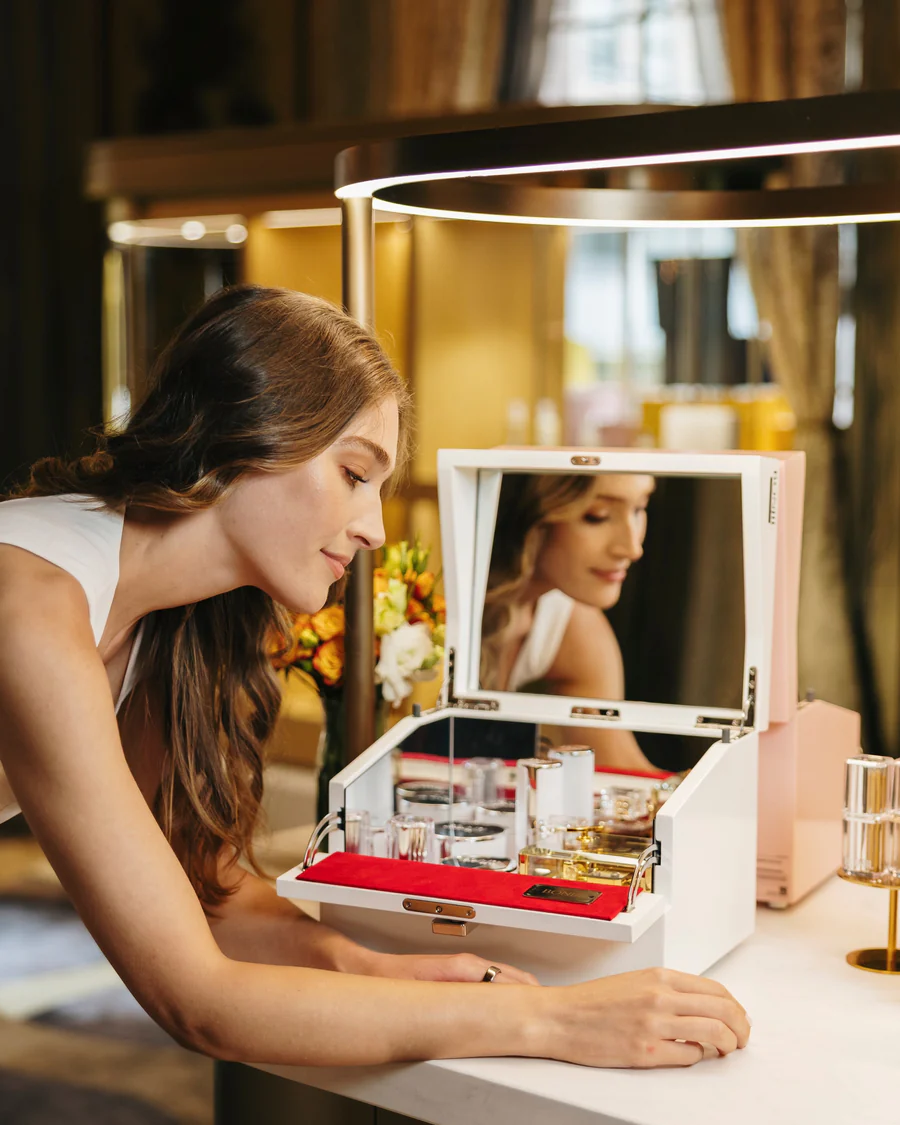
Yes, BONJIL Music Boxes can transform your skincare into an acoustic ritual by pairing calming melodies with your daily routine. Each music box is designed as an elegantly crafted companion to BONJIL skincare collections, providing a soothing auditory backdrop that turns product application into a mindful, multisensory ceremony.
Playing a consistent melody during skincare creates an anchoring cue. Over time, the brain associates that sound with relaxation, potentially deepening the calming response each session. This layered approach aligns with BONJIL's core philosophy: "Beauty, Felt With Every Sense." Rather than treating skincare as a purely topical task, the music box invites you to engage hearing alongside touch and scent, reinforcing the ritualistic dimension that distinguishes neuro-cosmetic practice from conventional routines.
For those exploring acoustic neuro-cosmetics at home, a dedicated music box offers something a generic playlist cannot: intentional design calibrated for a specific sensory moment.

What Are the Key Takeaways About Sound Frequencies and Skin Health We Covered?
The key takeaways about sound frequencies and skin health covered in this article span cellular biology, neural pathways, specific frequency benefits, and practical integration strategies:
-
Sound waves act as mechanical stimuli that influence fibroblast activity, collagen expression, and keratinocyte function at the cellular level.
-
Mechanoreceptors in the skin, including Pacinian corpuscles and Meissner's corpuscles, convert acoustic vibrations into neural signals that travel to the brain.
-
The skin-brain axis links stress reduction through sound to measurable improvements in skin conditions aggravated by cortisol dysregulation.
-
Specific frequencies, such as 40 Hz gamma, 432 Hz, and 528 Hz, show early promise for relaxation and cellular response, though large-scale clinical validation remains limited.
-
Multisensory rituals that combine sound, touch, and topical application create compounding benefits beyond any single modality alone.
According to the National Center for Complementary and Integrative Health (NIH), "listening to or making music affects the brain in ways that may help promote health and manage disease symptoms," while also noting that "much of the research on music-based interventions is preliminary." This honest assessment reflects where the field stands: encouraging, grounded in real biology, yet still maturing. Integrating sound into skincare is not about replacing proven formulations; it is about enriching the experience through which those formulations are delivered.