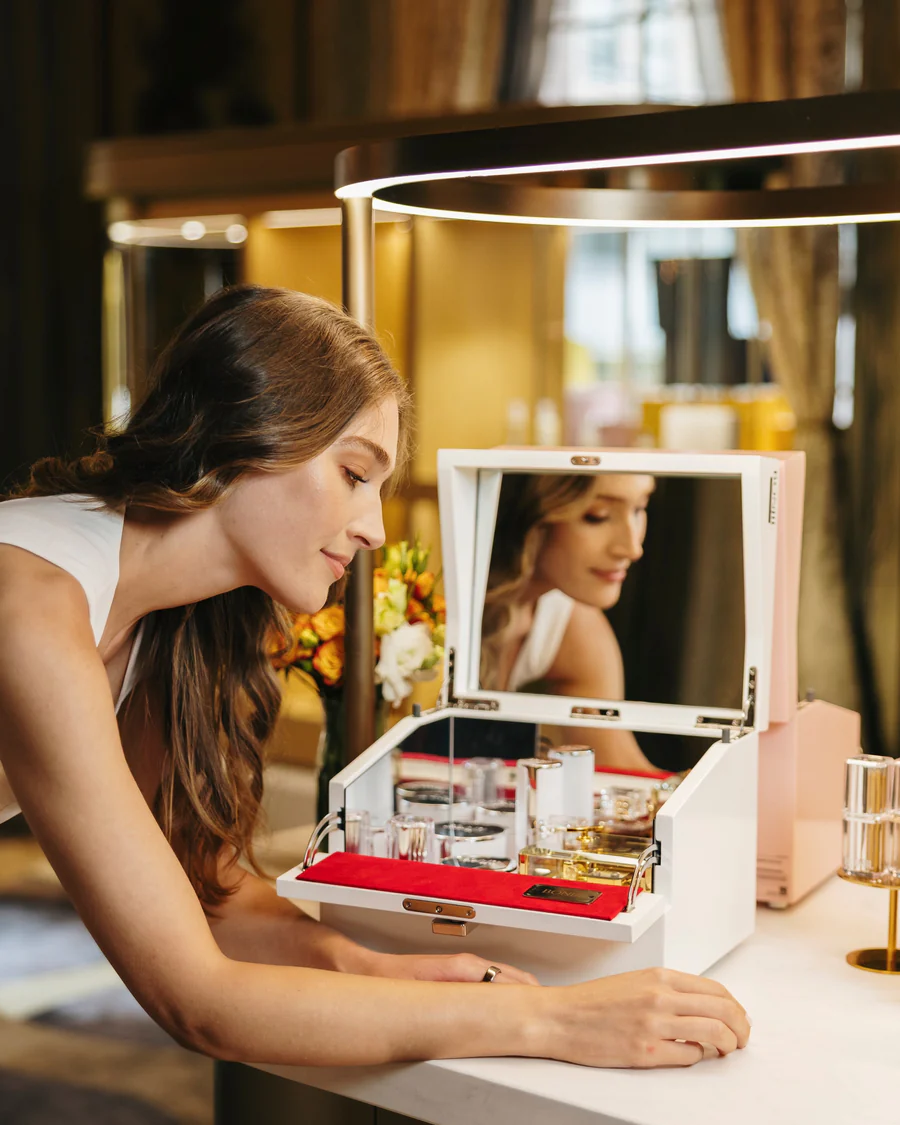
Neurocosmetics is a category of skincare products designed to modulate the neuro-immuno-cutaneous system, the bidirectional signaling network that connects skin's five million sensory nerve endings to the central nervous system. These formulations target neuropeptides, neurotransmitters, and sensory receptors at the epidermal level to improve both skin health and emotional wellbeing.
This guide covers the science behind neurocosmetic ingredients and skin-brain communication, their measurable benefits for skin and mood, safety and regulatory considerations, the sensory principles that amplify their effects, and how personalized technology is shaping their future.
Neurocosmetic ingredients such as acetyl hexapeptide-8, GABA analogs, beta-endorphin stimulators, and cannabinoid receptor activators each target specific neural pathways. Acetyl hexapeptide-8 inhibits neurotransmitter transmission to relax facial muscles, while GABA inhibits collagen-degrading MMP-1 triggered by UVB exposure. Adaptogenic botanicals like Rhodiola rosea and ashwagandha modulate the hypothalamic-pituitary-adrenal axis to counteract stress-driven skin deterioration.
Clinical evidence documents 15 to 45 percent improvements in elasticity and hydration from neuro-targeted formulations, alongside measurable reductions in cortisol from aromatherapy-integrated routines. Key ingredients maintain favorable safety profiles compared to invasive alternatives, and regulatory frameworks across the FDA, EU, Health Canada, and Japan's PMDA govern how these products reach consumers.
Scent, texture, and ritualistic application are not decorative features; they activate mechanoreceptors and olfactory pathways that deepen the skin-brain response. AI-driven personalization, wearable biosensors, epigenetic testing, and microbiome analysis are now converging to make neurocosmetic routines adaptive and individually precise.
What Does Neurocosmetics Mean in Skincare Science?
Neurocosmetics means a category of skincare products designed to influence the communication between skin and the nervous system. The subsections below explain how the skin-brain connection operates, which ingredients define this category, and what separates neurocosmetics from traditional cosmetics.
How Does the Skin-Brain Connection Work?
The skin-brain connection works through bidirectional signaling between cutaneous nerve endings and the central nervous system. Skin contains over five million sensory nerve endings densely packed with neurotransmitters such as dopamine, serotonin, acetylcholine, substance P, and oxytocin. Three receptor classes facilitate this dialogue: thermoreceptors detect heat and cold, nociceptors register pain, and mechanoreceptors respond to touch and pressure. These receptors transmit external signals to the spinal cord, then to the brain. When psychological stress activates the hypothalamic-pituitary-adrenal axis, the brain sends chemical signals back to the skin, altering barrier function and immune response. This two-way pathway, often called the neuro-immuno-cutaneous (NIC) system, is the biological foundation neurocosmetics aim to modulate.

What Are Neurocosmetic Ingredients and How Do They Function?
Neurocosmetic ingredients are bioactive compounds that target the skin's neurosensory pathways to influence both dermatologic function and emotional response. According to the New York Society of Cosmetic Chemists, the origin of the term "neurocosmetics" is often credited to Dr. Laurent Misery, who described the category as the ability to modulate the function of the NIC system. Used since the 1990s, these formulations operate at the epidermal level.
Key neurocosmetic ingredient categories include:
-
Acetyl hexapeptide-8 inhibits neurotransmitter transmission at synapses, relaxing facial muscles to reduce expression wrinkles.
-
Palmitoyl tripeptide-1 is a signal peptide that stimulates collagen and glycosaminoglycan synthesis.
-
GABA analogs inhibit MMP-1 production triggered by UVB radiation and accelerate skin wound healing.
-
Cannabinoid receptor activators promote wound healing by increasing cell proliferation, collagen synthesis, and cell migration.
-
Beta-endorphin stimulators protect against UVB-induced barrier dysfunction and participate in regulating skin pigmentation.
How Is Neurocosmetics Different From Traditional Cosmetics?
Neurocosmetics is different from traditional cosmetics because it targets the neuro-immuno-cutaneous system rather than addressing surface-level appearance alone. Traditional cosmetics cleanse, moisturize, or alter appearance through physical or chemical action on the skin's outermost layers. Neurocosmetics, by contrast, modulate epidermal nerve signaling to influence both skin health and emotional wellbeing.
Essential oils such as lavender, bergamot, ylang-ylang, neroli, and melissa illustrate this distinction; they have been shown to modulate central nervous system activity by acting on GABAergic and serotonergic receptors, according to a 2025 review published in MDPI Cosmetics. This neurological mechanism goes well beyond what a standard moisturizer delivers. Notably, the FDA does not recognize "cosmeceuticals" as a legal category, so neurocosmetic brands must navigate classification as cosmetics, drugs, or both. The growing market reflects consumer appetite for this deeper approach: the global neurocosmetics market was valued at approximately USD 1.94 billion in 2024 and is projected to reach USD 3.15 billion by 2030.
For consumers accustomed to conventional products, the shift requires understanding that skin is not merely a passive barrier. Understanding how neurocosmetic ingredients interact with skin receptors reveals the full scope of this science.
What Are the Key Benefits of Neurocosmetics?
The key benefits of neurocosmetics span stress-related aging reduction, improved hydration and barrier strength, enhanced radiance, calmed sensitivity, and elevated mood. The following subsections detail each benefit.

How Do Neurocosmetics Reduce Stress-Related Skin Aging?
Neurocosmetics reduce stress-related skin aging by interrupting the neurochemical cascade that accelerates collagen breakdown and cellular damage. Psychological stress activates the hypothalamic-pituitary-adrenal axis, flooding skin with glucocorticoids that weaken structural proteins. Neurocosmetic peptides and botanical adaptogens counteract this process by modulating neuropeptide signaling at the epidermal level.
Ingredients such as acetyl hexapeptide-8 relax micro-tension in facial muscles, while beta-endorphin stimulators restore the balance between cell proliferation and differentiation disrupted under chronic stress. These targeted mechanisms address the root neurological triggers of premature aging rather than merely masking surface symptoms. For anyone experiencing stress-driven skin changes, this proactive approach offers a meaningful advantage over conventional anti-aging formulas.
How Do Neurocosmetics Improve Skin Hydration and Barrier Function?
Neurocosmetics improve skin hydration and barrier function by targeting the neuro-immuno-cutaneous pathways that regulate moisture retention and epidermal integrity. According to a study published in Scientific Reports (PMC), psychological stress increases endogenous glucocorticoids by activating the hypothalamic-pituitary-adrenal axis, and the negative effects of these glucocorticoids on skin barrier function are well established.
Beta-endorphin protects against UVB-induced barrier dysfunction by inhibiting inflammation and restoring disrupted Akt/mTOR signaling. Skin microorganisms produce short-chain fatty acids involved in maintaining skin homeostasis, mirroring gut microbiota metabolites that modulate brain function through the bidirectional gut-brain axis. Clinical evidence from AI-integrated multi-omics platforms has demonstrated 15 to 45 percent improvements in both elasticity and hydration. This dual-pathway correction, addressing both neurological stress responses and microbial balance, makes neurocosmetics particularly effective for chronically dehydrated or barrier-compromised skin.
How Do Neurocosmetics Enhance Skin Brightness and Radiance?
Neurocosmetics enhance skin brightness and radiance by suppressing collagen-degrading enzymes and supporting healthy melanocyte function through neuroactive compounds. According to research published in PubMed Central, treatment with gamma-aminobutyric acid (GABA) inhibited the production of matrix metalloproteinase 1 (MMP-1), the enzyme significantly induced by UVB radiation that breaks down collagen and dulls skin tone.
GABA also enhanced fibroblast migration without toxicity, accelerating the skin's natural renewal process. Meanwhile, growing consumer awareness around health and environment has increased willingness to purchase plant extract-based formulations that deliver these neuroactive benefits. By preserving collagen integrity while promoting cellular turnover, neurocosmetics address radiance at a structural level rather than relying solely on surface-brightening agents.
How Do Neurocosmetics Calm Sensitivity and Inflammation?
Neurocosmetics calm sensitivity and inflammation by modulating the neuropeptide signaling that triggers immune overreaction in the skin. Calcitonin gene-related peptide (CGRP) regulates the function of T cells, B cells, dendritic cells, endothelial cells, and mast cells, all key components of skin immunity. When stress or environmental irritants cause excessive neuropeptide release, the result is redness, irritation, and chronic sensitivity.
Neurocosmetic formulations containing cannabinoid receptor activators and neuro-soothing botanicals help rebalance this immune-neural communication. Rather than simply suppressing visible inflammation after it occurs, these ingredients intervene earlier in the signaling chain. For reactive or sensitized skin types, this upstream approach represents one of the most meaningful shifts away from symptom-only management.
How Do Neurocosmetics Elevate Mood and Emotional Wellbeing?
Neurocosmetics elevate mood and emotional wellbeing by engaging the skin's dense network of sensory receptors to trigger positive neurochemical responses in the brain. The skin-brain axis enables bidirectional communication: topical stimulation of beta-endorphin pathways and serotonergic receptors can influence central nervous system activity, shifting emotional states during application.
Sensory elements such as texture, temperature, and fragrance amplify this effect. Essential oils like lavender and citrus act on GABAergic receptors to promote calm, while the ritualistic act of application itself reinforces mindfulness. This emotional dimension is what distinguishes neurocosmetics from purely functional skincare. When a product simultaneously improves skin health and elevates psychological state, the daily routine becomes genuinely therapeutic.
Understanding these combined benefits reveals how neurocosmetic ingredients interact with specific skin receptors at the molecular level.
How Do Neurocosmetic Ingredients Interact With Skin Receptors?
Neurocosmetic ingredients interact with skin receptors by targeting the sensory nerve network that connects skin to the brain. The subsections below cover neuropeptide signaling, endorphin-boosting compounds, and neuro-soothing botanical extracts.
What Role Do Neuropeptides Play in Neurocosmetics?
Neuropeptides play a central role in neurocosmetics by serving as chemical messengers that regulate inflammation, immune response, and sensory signaling within the skin. Substance P, CGRP, and beta-endorphin are among the most studied neuropeptides in this category. These molecules mediate communication between cutaneous nerve endings, immune cells, and keratinocytes.
According to a 2025 review published in Frontiers in Immunology, the brain-gut-skin axis plays a critical role in the pathogenesis of inflammatory skin diseases through interorgan communication mediated by neuropeptides, cytokine networks, and HPA axis signaling. Neurocosmetic formulations that modulate neuropeptide activity can help calm reactive skin while supporting the broader neuro-immuno-cutaneous system. For formulators, understanding these signaling pathways is essential to developing products that address both visible skin concerns and the neurological triggers behind them.
How Do Endorphin-Boosting Compounds Work on the Skin?
Endorphin-boosting compounds work on the skin by stimulating the production of beta-endorphin, an opioid neuropeptide synthesized locally in epidermal cells. Beta-endorphin activates mu-opioid receptors in the skin, triggering a cascade that influences barrier repair, pigmentation regulation, and anti-inflammatory responses.
Research published in PubMed Central demonstrates that beta-endorphin protects against UVB-induced skin barrier dysfunction by inhibiting inflammation and restoring the balance between proliferation and differentiation disrupted by aberrant Akt/mTOR signaling. This protective mechanism makes beta-endorphin stimulators particularly valuable in neurocosmetic formulations designed for sun-stressed or compromised skin. What makes these compounds uniquely powerful is their dual action: they improve measurable skin outcomes while simultaneously promoting a sense of comfort that traditional actives simply cannot replicate.
What Are Neuro-Soothing Botanical Extracts?
Neuro-soothing botanical extracts are plant-derived ingredients that calm skin reactivity by modulating the neuro-immuno-cutaneous system. Two of the most prominent adaptogenic botanicals in neurocosmetics are Rhodiola rosea and ashwagandha (Withania somnifera).
Key characteristics of these extracts include:
-
Rhodiola rosea functions as an adaptogen that nonspecifically increases an organism's resistance to stress while normalizing physiological parameters.
-
Ashwagandha reduces cortisol and pro-inflammatory cytokine expression, supporting both systemic stress resilience and topical skin calming.
According to the European Medicines Agency's 2011 herbal monograph, Rhodiola rosea earned approved traditional use status as an adaptogen for temporary relief of stress-related symptoms, such as fatigue and exhaustion. These botanicals bridge the gap between emotional wellness and visible skin health, making them foundational to the neurocosmetic approach.
With these receptor-level mechanisms in mind, sensory experience becomes the next layer of neurocosmetic efficacy.
What Role Does Sensory Experience Play in Neurocosmetics?
Sensory experience plays a central role in neurocosmetics by activating the skin-brain axis through scent, texture, and ritualistic application. These sensory inputs influence cortisol levels, mood, and perceived product efficacy.

How Do Scent and Aromatherapy Amplify Neurocosmetic Effects?
Scent and aromatherapy amplify neurocosmetic effects by triggering neurochemical responses that reduce stress hormones and elevate mood. Citrus essential oils, for example, possess a pleasant scent and impart relaxing, calming, mood-uplifting, and cheer-enhancing effects, according to a review published in Antioxidants (Basel). When inhaled, aromatic compounds from lavender, rose, and citrus reach olfactory receptors that signal directly to the limbic system, the brain's emotional processing center. This pathway allows a topical skincare product to influence psychological state before its active ingredients even begin working on the skin. Fragrance selection in neurocosmetic formulation is not decorative; it is functionally strategic.
How Does Texture Influence the Skin-Brain Response?
Texture influences the skin-brain response by engaging mechanoreceptors and thermoreceptors embedded throughout the dermis, which relay tactile information to the central nervous system. A silky serum activates different sensory pathways than a dense balm, producing distinct neurological feedback loops. Research in computational neuroscience has modeled how basic texture features connect to aesthetic perception through hierarchical processing layers in the brain. This means the physical feel of a product on skin genuinely shapes emotional and physiological outcomes. Formulations that feel luxurious can reinforce the calming or energizing intent of neurocosmetic actives, making texture a deliberate tool rather than an afterthought.
Why Does the Ritual of Application Matter in Neurocosmetics?
The ritual of application matters in neurocosmetics because repetitive, intentional skincare behaviors create conditioned neurological responses that enhance product efficacy over time. Consistent rituals, such as massage techniques, layering sequences, and mindful breathing during application, generate placebo-adjacent effects that are measurably real. Research published in Philosophical Transactions of the Royal Society B describes placebo effects as the "specific" effects of healing rituals, not nonspecific noise. However, the ritual alone has limits. Current evidence does not support the notion that topical cosmeceuticals can directly modulate emotional states through application alone; the sensory context surrounding that application is what bridges the gap between skincare and psychological benefit.
Understanding sensory design in neurocosmetics clarifies why safety and clinical evidence behind these products deserve closer examination.
Are Neurocosmetics Safe and Backed by Scientific Research?
Neurocosmetics are generally considered safe for topical use, and a growing body of clinical research supports their efficacy claims. The sections below examine the clinical evidence, potential side effects, and regulatory frameworks governing these products.
What Clinical Evidence Supports Neurocosmetic Claims?
The clinical evidence supporting neurocosmetic claims comes from targeted trials measuring both physical skin improvements and psychophysiological responses. In one clinical study, participants using a neurocosmetic formulation with lavender and geranium essential oils twice weekly for four weeks showed significant reductions in anxiety, depression, and salivary cortisol levels. Separate trials have documented measurable improvements in skin elasticity and barrier function from neuro-targeted peptide formulations. While results are promising, the field is still maturing. According to a 2025 commentary in Clinics in Dermatology, the convergence of neuroscience and dermatology may pave the way for a new generation of evidence-based skincare with psychophysiological impact. Larger, longer-term studies will strengthen these foundations considerably.
Are There Any Side Effects or Risks of Neurocosmetic Products?
The side effects of neurocosmetic products are minimal when formulations use well-studied topical ingredients. Acetyl hexapeptide-8, one of the most widely researched neurocosmetic peptides, is considered safe for topical use with minimal risk of complications or adverse effects, according to a 2024 review in JMIR Dermatology. Unlike injectable botulinum toxin, this peptide does not carry risks of ptosis, eyebrow asymmetry, or other neuromuscular complications. That said, individual sensitivities to botanicals, essential oils, or peptide concentrations can still occur. Patch testing remains a sensible precaution, particularly for reactive skin types. The topical delivery mechanism inherently limits systemic exposure, which is why neurocosmetic products maintain a favorable safety profile compared to invasive alternatives.
How Are Neurocosmetics Regulated Compared to Pharmaceuticals?
Neurocosmetics are regulated as cosmetics, not pharmaceuticals, in every major market. The distinction hinges on intended use. Under the U.S. FD&C Act, cosmetics are articles intended for "cleansing, beautifying, promoting attractiveness, or altering the appearance," while drugs are articles intended to "affect the structure or any function of the body." The FDA does not recognize the term "cosmeceutical" as a legal category.
Key regulatory differences across major markets include:
-
United States (FDA): Products claiming only cosmetic benefits require no pre-market approval; products claiming to treat or prevent disease must comply with drug regulations.
-
European Union (EC No. 1223/2009): Cosmetic products must be safe under normal use conditions, and claims must not mislead consumers regarding efficacy.
-
Canada (Health Canada): Cosmetics must meet the Food and Drugs Act and Cosmetic Regulations, including ingredient disclosure and sanitary manufacturing standards.
-
Japan (PMDA): Standard cosmetics need no marketing approval, but products containing active ingredients are classified as quasi-drugs requiring formal approval.
Neurocosmetic brands must carefully calibrate their claims to remain within cosmetic classification boundaries. Products that cross into therapeutic language risk reclassification as drugs, triggering far more rigorous approval requirements. Understanding these regulatory boundaries is essential as the science behind neurocosmetics continues to evolve.
Who Can Benefit Most From Using Neurocosmetics?
Neurocosmetics can benefit a wide range of individuals, particularly those whose skin concerns are intensified by stress, inflammation, or sensory sensitivity. The profiles below highlight who stands to gain the most from this approach.
People experiencing chronic stress often see their skin suffer first. Psychological stress activates the hypothalamic-pituitary-adrenal axis, increasing glucocorticoids that degrade barrier function. Neurocosmetic formulations containing adaptogenic ingredients like Ashwagandha target this cycle directly. According to a study published in PMC (Pharmaceutics), an aqueous solution from Ashwagandha root inhibited the NF-κB and MAPK pathways in human keratinocytes, decreasing pro-inflammatory cytokines such as IL-8, IL-6, TNF-α, and IL-1β while increasing anti-inflammatory cytokines. For anyone whose breakouts, redness, or dullness flare during high-pressure periods, neurocosmetics offer a scientifically grounded alternative to purely surface-level treatments.
Individuals with reactive or sensitized skin also benefit significantly. Conditions like rosacea, eczema flare-ups, and contact sensitivity involve overactive neuro-immune signaling. Neurocosmetic ingredients that modulate neuropeptide activity and calm sensory receptors can interrupt the inflammation cascade before it manifests visibly.
Those seeking emotional wellness through their skincare routine represent another ideal audience. Neurocosmetics incorporate aromatherapy, texture design, and ritualistic application to engage the skin-brain axis beyond chemistry alone. This multisensory dimension resonates with consumers who view skincare as self-care rather than a purely functional task.
Aging skin responds well to neurocosmetic peptides and beta-endorphin stimulators that address both structural decline and the neuroinflammatory processes that accelerate it. For mature skin types, these formulations work on multiple pathways simultaneously, which standard anti-aging products typically do not.
In my experience, the consumers who see the most dramatic results are those dealing with the intersection of stress and visible skin deterioration. Addressing the neurological trigger, not just the symptom, is what makes neurocosmetics genuinely different from conventional formulations. With growing interest in personalized, science-backed routines, understanding how neurocosmetics shape the future of beauty becomes the next essential step.
What Is the Future of Neurocosmetics in the Beauty Industry?
The future of neurocosmetics in the beauty industry centers on deeper neuroscience integration, evolving consumer expectations, and AI-driven personalization. The sections below explore how formulation science is advancing, whether neurocosmetics will replace conventional anti-aging products, and how personalized routines are taking shape.
How Is Neuroscience Advancing Cosmetic Formulation?
Neuroscience is advancing cosmetic formulation by enabling ingredient development that targets specific neural pathways in the skin. Formulators now design peptides, GABA analogs, and botanical actives that modulate sensory receptors and neuropeptide signaling at the epidermal level. According to research published through HAL Open Science, AI and multi-omics platforms integrating genome-microbiome-exposome data now produce hyper-customized products, with clinical evidence showing 15 to 45 percent improvements in elasticity and hydration. Wearable biosensors paired with digital dermatology tools further refine these formulations by providing real-time physiological feedback. This convergence of data science and cutaneous neurobiology represents the most significant shift in how skincare products are conceptualized and tested.
Will Neurocosmetics Replace Conventional Anti-Aging Products?
Neurocosmetics will likely complement, rather than fully replace, conventional anti-aging products. Traditional formulations built around retinoids, hyaluronic acid, and vitamin C address structural skin concerns effectively. Neurocosmetics add a distinct layer by targeting the neuro-immuno-cutaneous system, addressing stress-driven aging that conventional products largely ignore. Consumer adoption barriers remain real; according to a study published in the Journal of Cosmetic Dermatology (PMC), respondents with higher educational levels were less likely to repurchase plant extract-based skincare, and men showed greater willingness to pay premium prices than women. These behavioral patterns suggest that neurocosmetics will occupy a premium, science-forward niche alongside established anti-aging categories rather than displacing them entirely.
How Are Personalized Neurocosmetic Routines Evolving?
Personalized neurocosmetic routines are evolving through the integration of epigenetic testing, microbiome analysis, and adaptive AI algorithms. Epigenetic modulators such as resveratrol have shown potential to reduce biological skin age by 5 to 10 years in trials, as documented by HAL Open Science. Microbiome-based personalization further tailors formulations to individual skin flora, while real-time data from wearable biosensors adjusts product recommendations based on cortisol levels, hydration status, and environmental exposure. For brands committed to multisensory ritual, like BONJIL, this evolution means skincare regimens can adapt not just to what the skin needs biochemically, but to the emotional and neurological state of the person using them.
With personalized neuroscience shaping product design, integrating these advances into a daily sensory ritual becomes the next step.
How Can a Multisensory Skincare Ritual Elevate Your Neurocosmetic Results?
A multisensory skincare ritual can elevate your neurocosmetic results by engaging scent, texture, sound, and touch simultaneously, amplifying the skin-brain signaling that drives both emotional and dermatologic benefits. The following sections explore how BONJIL's collections support this approach and summarize the essential takeaways from this guide.

Can BONJIL's Sensory Skincare Collections Enhance the Neurocosmetic Experience?
Yes, BONJIL's sensory skincare collections can enhance the neurocosmetic experience by combining luxurious formulations with intentional multisensory design. Each collection, from Perfection Éternelle to La Signature Au Caviar, pairs active skincare ingredients with evocative textures and aromatic profiles that encourage mindful application. The BONJIL Music Box collection adds an auditory dimension, providing calming melodies that create a soothing backdrop during application. This layered sensory engagement aligns directly with neurocosmetic principles: when scent, touch, and sound converge during a skincare ritual, the skin-brain axis receives richer input, potentially deepening both the emotional and physiological response. For anyone seeking to move beyond purely functional routines, building a ritual around products designed to engage every sense represents one of the most practical ways to maximize neurocosmetic outcomes.
What Are the Key Takeaways About Neurocosmetics, Their Benefits, Safety, and Future?
The key takeaways about neurocosmetics, their benefits, safety, and future are:
-
Neurocosmetics target the skin-brain axis through ingredients like neuropeptides, GABA analogs, and adaptogenic botanicals, addressing both visible skin concerns and emotional wellbeing simultaneously.
-
Clinically studied benefits include reduced stress-related aging, improved barrier function, calmed sensitivity, and enhanced mood during application.
-
Leading neurocosmetic ingredients such as acetyl hexapeptide-8 carry strong safety profiles, and regulatory frameworks across the FDA, EU, and Health Canada govern how these products reach consumers.
-
The future points toward AI-driven personalization, wearable biosensors, epigenetic testing, and microbiome-based formulations that will make neurocosmetic routines increasingly precise.
-
Sensory ritual, including scent, texture, and sound, is not a luxury add-on; it is a core mechanism through which neurocosmetic products deliver their full range of results.
Integrating these principles into a daily routine transforms skincare from a surface-level habit into a science-backed practice that nurtures both skin health and emotional balance.