Neurocosmetics are skincare products that target communication pathways between the skin and the nervous system, working at the neuro-immuno-cutaneous level to modulate neuromediators involved in aging rather than simply treating surface symptoms.
This guide covers the science behind the skin-brain connection, how neurocosmetic ingredients target specific aging mechanisms, what clinical evidence supports their efficacy, who benefits most across different ages and skin types, and how product quality and sensory rituals influence real-world results.
The skin functions as a living sensory receptor organ directly connected to the central nervous system, and neurocosmetic formulations leverage this biology through ingredients like neuropeptides, GABA derivatives, cortisol-regulating adaptogens, and oxytocin-mimicking peptides that each address distinct neurochemical pathways driving visible aging.
Clinical data supports specific actives at validated concentrations; neuropeptides like Argireline have demonstrated measurable wrinkle reduction in peer-reviewed studies, though results are gradual compared to injectables like Botox. Neurocosmetics function best as a complementary or preventive layer rather than a full replacement for medical procedures.
Chronic stress accelerates skin aging by elevating cortisol, which degrades collagen through inflammatory gene expression pathways. Neurocosmetics that interrupt these stress-response cascades address a root cause of aging that conventional topicals were not designed to reach, benefiting skin types from early-30s prevention to mature skin over 50 and even reactive, sensitive skin.
Formulation quality, delivery technology, and transparent labeling separate effective neurocosmetic products from marketing-driven ones. BONJIL's approach pairs clinically informed actives with multisensory rituals that engage the skin-brain axis, amplifying anti-aging outcomes through deliberate sensory design.
What Are Neurocosmetics?
Neurocosmetics are skincare products that target the communication pathways between skin and the nervous system. The sections below explain how they differ from conventional formulations and the science underpinning this skin-brain connection.
How Do Neurocosmetics Differ From Traditional Skincare?
Neurocosmetics differ from traditional skincare by affecting the skin's neuromediators through specific mechanisms of action, rather than simply moisturizing or exfoliating the surface. Traditional products address visible concerns like dryness or texture. Neurocosmetics, by contrast, work at the neuro-immuno-cutaneous level, influencing how nerve endings in the skin send and receive chemical signals.
According to a 2024 Grand View Research report, the global neurocosmetics market was estimated at USD 1.94 billion and is expected to grow at a CAGR of 8.5% from 2025 to 2030, with skincare holding 40.96% of market share in 2023. That rapid growth reflects rising consumer demand for products that go beyond topical correction. For anyone accustomed to results-driven routines, this category represents a meaningful evolution in how formulations are designed to interact with skin biology.
What Is the Science Behind the Skin-Brain Connection?
The science behind the skin-brain connection centers on the neuro-immuno-cutaneous system (NICS). Skin functions as a living sensory receptor organ directly connected to the central nervous system. Nerve fibers embedded in the dermis release neuromediators, including neuropeptides and neurotransmitters, that regulate inflammation, collagen production, and cellular repair.
When stress, touch, or topical ingredients stimulate these nerve endings, signals travel bidirectionally between skin cells and the brain. This feedback loop means emotional states can visibly alter skin condition, while sensory skincare experiences can influence neurochemical balance. Understanding this connection is what makes neurocosmetic formulation fundamentally different from surface-level approaches to anti-aging.

How Do Neurocosmetics Target the Aging Process?
Neurocosmetics target the aging process by addressing three biological mechanisms: neuropeptide signaling, neurotransmitter modulation, and stress-response pathways. Each mechanism influences skin structure and appearance differently.
How Do Neuropeptides Reduce Wrinkles and Fine Lines?
Neuropeptides reduce wrinkles and fine lines by signaling skin cells to increase collagen production and regulate muscle contraction at the cellular level. Synthetic neuropeptides, such as acetyl hexapeptide-8, intercept the signaling cascade that causes repetitive facial muscle contractions. By partially inhibiting neurotransmitter release at the neuromuscular junction, these peptides soften expression lines without paralyzing the muscle entirely.
Unlike injectable neurotoxins, topical neuropeptides work gradually through consistent application. Their smaller molecular structures allow penetration into the upper dermal layers, where they stimulate type I collagen synthesis. For anyone seeking a non-invasive approach, neuropeptides represent one of the most practical first steps in a neurocosmetic routine.
How Do Neurotransmitter-Modulating Ingredients Relax Facial Muscles?
Neurotransmitter-modulating ingredients relax facial muscles by mimicking or enhancing the activity of calming neurochemicals at nerve-muscle synapses. GABA, the brain's primary inhibitory neurotransmitter, serves as the model compound for this approach. Topical GABA-like ingredients bind to receptors on skin nerve endings, reducing the signal intensity that triggers muscle contraction.
The challenge has always been delivery. Because GABA is hydrophilic, it struggles to cross the skin barrier in standard formulations. Advanced delivery systems solve this problem; nanoemulsion technology, combined with penetration enhancers, significantly improves transdermal absorption. This formulation science is what separates effective neurotransmitter-modulating products from those that simply list GABA on the label without meaningful bioavailability.
How Do Stress-Response Pathways Accelerate Skin Aging?
Stress-response pathways accelerate skin aging by elevating cortisol, which binds to glucocorticoid receptors and activates inflammatory gene expression through AP-1 and NF-κB signaling cascades. These pathways break down collagen and elastin while simultaneously suppressing new collagen synthesis, creating a compounding cycle of structural decline.
Chronic psychological stress keeps this destructive loop active, visibly manifesting as thinning skin, deeper wrinkles, and uneven pigmentation. According to a longitudinal study published in PMC, 86 female volunteers who applied Galactomyces ferment filtrate-containing skincare twice daily for 12 months significantly reversed 11 years of cumulative facial aging in wrinkles, pigmented spots, and roughness while improving hydration. Neurocosmetics that interrupt cortisol cascades or incorporate stress-modulating actives address aging at its biochemical origin rather than its surface symptoms.
With these aging mechanisms in view, understanding specific neurocosmetic ingredients reveals how each pathway can be targeted effectively.
What Neurocosmetic Ingredients Are Used for Anti-Aging?
Neurocosmetic ingredients used for anti-aging include neuropeptides, endorphin-boosting compounds, cortisol-regulating actives, oxytocin-mimicking peptides, and GABA-like molecules. Each category targets a distinct neurochemical pathway involved in skin aging.

Neuropeptides
Neuropeptides are short-chain amino acid sequences that modulate neurotransmitter activity in the skin. Acetyl hexapeptide-8, commonly known as Argireline, is the most widely studied neuropeptide in anti-aging formulations. It works by inhibiting SNARE complex formation, which reduces the intensity of muscle contractions responsible for expression lines. According to a study published in PMC/NIH, a 10% Argireline concentration produced a 49% reduction in wrinkle depth after four weeks of daily application, while also increasing type I collagen fibers. Other signal peptides, such as palmitoyl pentapeptide-4, stimulate collagen and fibronectin production rather than targeting muscle contraction. For those seeking topical alternatives to injectables, neuropeptides remain among the most evidence-backed neurocosmetic actives available.
Endorphin-Boosting Compounds
Endorphin-boosting compounds are neurocosmetic actives that stimulate the skin's own feel-good neurotransmitters. Beta-endorphin and enkephalin mimetics can be triggered through specific botanical extracts and sensory stimulation techniques. Rhodiola rosea extract and certain vanilla-derived compounds have demonstrated the ability to promote endorphin release at the cutaneous level. A study published in PMC/NIH confirmed that bilateral tactile stimulation for five minutes significantly increased dopamine release in the nucleus accumbens, while noxious stimulation had no effect on dopamine secretion. This finding reinforces why gentle, ritualistic application methods matter just as much as the formula itself. Endorphin pathways help counteract the neurochemical stress signals that accelerate visible aging.
Cortisol-Regulating Actives
Cortisol-regulating actives are ingredients that buffer the skin against stress-induced damage by modulating glucocorticoid activity. Chronic cortisol elevation breaks down collagen and elastin through AP-1 and NF-κB pathways while simultaneously suppressing new collagen synthesis. Adaptogens such as ashwagandha and Rhodiola rosea are the primary cortisol-regulating actives used in neurocosmetic formulations. According to a bibliometric study published in PMC/NIH, researchers identified 109 adaptogens with cutaneous applications, primarily from Fabaceae, Araliaceae, and Lamiaceae plant families, with terpenoids, phenolics, and flavonoids as their active compounds. These botanicals normalize the skin's stress response rather than simply masking its effects, making them particularly valuable for aging skin exposed to chronic environmental or psychological stressors.
Oxytocin-Mimicking Peptides
Oxytocin-mimicking peptides are synthetic or bioidentical compounds that replicate the skin-protective effects of the oxytocin hormone. Oxytocin exerts anti-inflammatory properties and has been linked to telomere length, a sensitive indicator of cellular aging, according to research published in PMC/NIH. Ingredients that mimic oxytocin's receptor activation can reduce neurogenic inflammation and support the skin's repair mechanisms. Sensory-rich formulations designed to evoke comfort and pleasure during application may also stimulate endogenous oxytocin release. This dual approach, combining topical peptide activity with ritualistic sensory cues, represents one of the more innovative frontiers in neurocosmetic anti-aging.
GABA and GABA-Like Ingredients
GABA and GABA-like ingredients are neurocosmetic actives that inhibit excessive neural signaling to relax facial muscles and support dermal health. Gamma-aminobutyric acid functions as the skin's primary inhibitory neurotransmitter, reducing muscle micro-contractions that deepen expression lines over time. The main challenge with topical GABA has been skin permeation. A study published in MDPI's Cosmetics Journal found that GABA-loaded nanoemulsions achieved a 2.89-fold increase in skin permeation versus standard solution form, and with 1,8-cineole as a penetration enhancer, permeation increased 3.37-fold while also stimulating hyaluronic acid synthesis and enhancing dermal fibroblast survival. Delivery technology is what separates effective GABA formulations from ineffective ones, making vehicle design a critical factor when evaluating these products.
Understanding these ingredient categories helps clarify what to expect from clinical research on neurocosmetics.
What Does the Clinical Evidence Say About Neurocosmetics?
The clinical evidence about neurocosmetics shows promising but nuanced results, with peer-reviewed data supporting specific ingredients while experts urge realistic expectations compared to medical procedures.
What Do Peer-Reviewed Studies Show About Neuropeptides?
Peer-reviewed studies show that neuropeptides can produce measurable wrinkle reduction when applied at effective concentrations. According to a study published in PubMed Central, a 10% Argireline concentration resulted in a 49% reduction in wrinkle depth after four weeks of daily application, with mice studies showing increased type I collagen fibers and decreased type III collagen fibers. These findings suggest that topical neuropeptides influence both surface-level wrinkle appearance and deeper dermal remodeling. Still, most studies use controlled conditions that may not fully replicate real-world skincare routines, so individual results can vary.
What Do Dermatologists Say About Neurocosmetic Claims?
Dermatologists generally acknowledge neurocosmetic ingredients as a legitimate advancement in topical skincare, though most emphasize the need for tempered expectations. Many note that while peptides like Argireline and GABA derivatives show clinical promise, concentrations in commercial formulations often fall below those used in controlled studies. The consensus among skin professionals leans toward viewing neurocosmetics as effective complementary tools rather than standalone solutions. For consumers seeking noticeable anti-aging results, dermatologists frequently recommend pairing neurocosmetic products with proven actives like retinoids and sunscreen. This layered approach tends to yield the most consistent outcomes across skin types.
How Do Neurocosmetic Results Compare to Injectable Treatments?
Neurocosmetic results compare to injectable treatments as a gentler, more gradual alternative with lower efficacy ceilings. Argireline, the most studied neurocosmetic peptide, achieves up to a 52% wrinkle reduction within four weeks. Botox, by contrast, achieves up to an 80% reduction in wrinkle visibility within just one week, according to a 2024 review in the MDPI Cosmetics Journal. The trade-off is clear: injectables deliver faster, more dramatic results but carry risks including bruising, muscle weakness, and the need for repeated clinical visits. Neurocosmetics offer a non-invasive daily option that suits those who prefer topical routines or want to extend the interval between injectable appointments.
With clinical benchmarks established, the next question is whether neurocosmetics can fully replace injectables.
Can Neurocosmetics Replace Botox and Fillers for Anti-Aging?
Neurocosmetics cannot fully replace Botox and fillers for anti-aging, but they offer a meaningful non-invasive alternative for mild to moderate concerns. The realistic comparison depends on wrinkle severity, desired results, and tolerance for injectable procedures.
Botox achieves up to an 80% reduction in wrinkle visibility within one week, according to a 2024 review in the MDPI Cosmetics Journal. Argireline, the most studied neuropeptide alternative, reaches up to 52% wrinkle reduction over four weeks of consistent topical use. That gap is significant for deep-set expression lines, yet narrower than most consumers expect for surface-level wrinkles and fine lines.
Where neurocosmetics genuinely excel is in what injectables cannot address: cumulative skin quality improvement, stress-mediated aging pathways, and barrier health. Fillers add volume; neuropeptides and cortisol-regulating actives work at the cellular signaling level to slow the processes driving aging in the first place. For anyone seeking prevention rather than correction, neurocosmetics represent a more sustainable foundation.
The practical answer for most people is not replacement but integration:
-
Neurocosmetics work best as a daily preventive layer that slows neuromediator-driven aging between appointments.
-
Botox and fillers remain more effective for established deep wrinkles and volume loss requiring immediate structural correction.
-
Combining both approaches allows lower injectable frequency while maintaining skin quality through topical neurocosmetic support.
For those unwilling or unable to pursue injectables, consistent neurocosmetic use delivers visible improvement, particularly when formulations include clinically validated concentrations of neuropeptides and neurotransmitter modulators. Understanding who benefits most from these products narrows the decision further.
Who Benefits Most From Neurocosmetic Anti-Aging Products?
Neurocosmetic anti-aging products benefit people across multiple age groups and skin types. The following sections cover effectiveness for early aging in the 30s, mature skin over 50, and sensitive skin.
Are Neurocosmetics Effective for Early Signs of Aging in Your 30s?
Neurocosmetics are effective for early signs of aging in your 30s, particularly for addressing fine lines, uneven texture, and early pigmentation changes before they deepen. Neuropeptide-based formulas work preventively by modulating neurotransmitter activity at the skin level, slowing the repetitive muscle contractions that etch expression lines over time.
According to a PMC/NIH study, 86 female volunteers who applied Galactomyces ferment filtrate-containing skincare twice daily for 12 months significantly reversed 11 years of facial aging in wrinkles, pigmented spots, and roughness while increasing hydration. Starting neurocosmetic routines in your 30s builds a protective foundation that compounds over time, making early adoption one of the smartest anti-aging strategies available.
Do Neurocosmetics Work for Mature Skin Over 50?
Neurocosmetics work for mature skin over 50 by targeting deeper neurochemical pathways that conventional anti-aging creams overlook. Age-related decline in collagen synthesis, increased cortisol sensitivity, and chronic low-grade inflammation all respond to neurocosmetic actives like neuropeptides, GABA-mimicking compounds, and adaptogenic ingredients.
For mature skin, these formulations address multiple concerns simultaneously: deep wrinkles, loss of firmness, hyperpigmentation, and barrier dysfunction. Results may take longer to become visible compared to younger skin, since cellular turnover slows with age. However, consistent use supports cumulative improvement. Pairing neurocosmetic products with a sensory ritual amplifies stress-reducing benefits, which directly counters cortisol-driven collagen degradation common in this age group.
Can Sensitive Skin Types Safely Use Neurocosmetics?
Yes, sensitive skin types can safely use neurocosmetics, and these formulations may actually be especially well-suited for reactive skin. According to research published in MDPI's Cosmetics Journal, approximately 50% of the population considers their skin sensitive, primarily women, and TRPV1 vanilloid receptor overexpression in sensitive skin leads to a lower activation threshold that triggers inflammation, collagen destruction, and premature aging.
Neurocosmetics that modulate TRPV1 receptor activity can calm this overactivation cycle rather than simply masking symptoms. Key considerations for sensitive skin include:
-
Choose fragrance-free neurocosmetic formulas to avoid triggering sensory receptors.
-
Look for GABA-like ingredients that soothe neural hypersensitivity.
-
Patch test before full application, even with gentle formulations.
Understanding your skin's neurological profile helps identify the most compatible neurocosmetic approach for lasting anti-aging results.
How Does Stress Affect Skin Aging and Why Does It Matter?
Stress affects skin aging by elevating cortisol levels, which directly degrade collagen and elastin while blocking new collagen production. It matters because this hormonal cascade accelerates visible aging far beyond what sun exposure or time alone would cause.
When the body encounters chronic psychological or physical stress, cortisol binds to glucocorticoid receptors in skin cells. This binding activates gene expression through AP-1 and NF-κB pathways, two signaling mechanisms that break down structural proteins and trigger inflammation. According to a study published in PMC/NIH, restraint stress in mice produced a 4-fold increase in plasma corticosterone, demonstrating how dramatically stress hormones can spike and suppress new collagen synthesis simultaneously.
The result is a compounding cycle: elevated cortisol thins the dermis, weakens the skin barrier, and reduces elasticity, all of which manifest as fine lines, sagging, and dullness. Unlike UV damage, which accumulates on exposed areas, stress-driven aging affects the entire face uniformly. This is precisely why neurocosmetics, with their focus on modulating stress-response pathways and calming neuromediators, represent a fundamentally different approach to anti-aging. Addressing cortisol at the neurochemical level targets a root cause that traditional topical antioxidants and retinoids simply were not designed to reach.
Understanding how stress drives skin aging clarifies what to prioritize when choosing anti-aging products.
What Should You Look for in a Neurocosmetic Anti-Aging Product?
You should look for clinically validated ingredient concentrations, transparent label claims, and high-quality formulations. The following subsections cover effective dosing, regulatory trustworthiness, and how delivery systems influence results.
Which Ingredient Concentrations Are Clinically Effective?
Clinically effective ingredient concentrations depend on the specific neurocosmetic active being used. According to a study published in PubMed Central, a 10% Argireline concentration resulted in a 49% reduction in wrinkle depth after four weeks of daily application. Lower concentrations may appear on ingredient lists but fail to deliver measurable results.
GABA-based formulations also require precise delivery to penetrate the skin barrier. Nanoemulsion carriers have demonstrated nearly three-fold increases in GABA skin permeation compared to standard solution forms. When evaluating any neurocosmetic product, checking whether published clinical data supports the listed concentration is one of the most reliable ways to separate effective formulations from marketing-driven ones.
What Label Claims Should You Trust or Question?
The label claims you should trust are those backed by specific, measurable outcomes rather than vague promises. Terms like "Botox-like" or "clinically proven" require scrutiny; without published data, concentration details, or identified active ingredients, such claims lack substance.
According to the U.S. Food and Drug Administration, cosmetic labeling must be truthful and not misleading. If a product claims to treat, prevent, or affect the structure or function of the body, it is classified as a drug and must meet drug-approval requirements. Products making bold anti-aging claims while marketed as cosmetics occupy a regulatory gray area that consumers should approach with caution.
-
Claims listing specific peptide concentrations with cited studies are more credible.
-
Phrases like "dermatologist tested" do not guarantee efficacy.
-
"Clinically proven" without a referenced trial is essentially meaningless.
How Does Formulation Quality Affect Neurocosmetic Results?
Formulation quality affects neurocosmetic results by determining whether active ingredients actually reach their target within the skin. Even potent neuropeptides or neurotransmitter modulators lose effectiveness if the delivery vehicle cannot transport them past the skin barrier.
Advanced delivery systems, such as nanoemulsions and encapsulation technologies, significantly enhance bioavailability. Stability also matters; poorly formulated products allow sensitive peptides to degrade before they can act on neuromediators. Texture, pH balance, and ingredient synergy all influence whether a product performs as intended or falls short.
For brands like BONJIL, which approach neurocosmetics through multisensory formulation design, the quality of the vehicle is inseparable from the quality of the result. Understanding how a multisensory ritual amplifies these formulation benefits adds another dimension to effective anti-aging skincare.
How Does a Multisensory Skincare Ritual Enhance Anti-Aging?
A multisensory skincare ritual enhances anti-aging by engaging the skin-brain connection through touch, scent, and sound, which triggers beneficial neurochemical responses that complement topical active ingredients. The following subsections explore how BONJIL applies this principle and summarize the article's key insights.

Can BONJIL's Neurocosmetic Collections Address Anti-Aging?
Yes, BONJIL's neurocosmetic collections can address anti-aging by combining neuropeptide-rich formulations with a deliberately multisensory ritual. BONJIL structures its skincare around the principle that sensory engagement during application amplifies the skin's response to active ingredients.
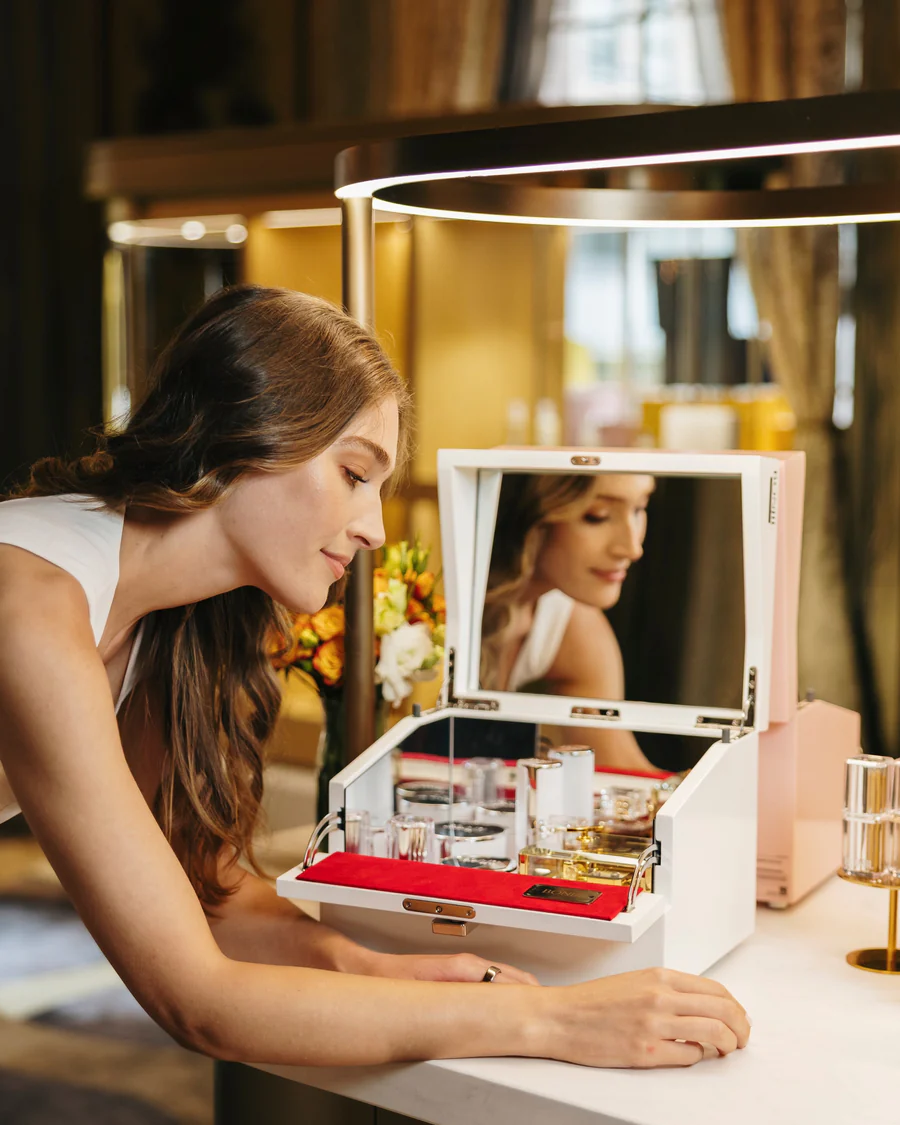
Collections like Perfection Éternelle and La Signature Au Caviar target visible aging concerns, while the BONJIL Music Box provides calming auditory stimulation designed to complement the application process. A 2023 study published in PMC found that gentle tactile stimulation significantly increased dopamine release in the nucleus accumbens, reinforcing why mindful product application matters beyond simple delivery of ingredients.
This ritualistic approach aligns with research showing that reducing stress-driven cortisol supports collagen preservation. For most users seeking cumulative anti-aging results, pairing clinically effective actives with consistent sensory rituals yields more sustainable outcomes than relying on ingredients alone.
What Are the Key Takeaways About Neurocosmetics for Anti-Aging?
The key takeaways about neurocosmetics for anti-aging are:
-
Neurocosmetics target the skin-brain axis, modulating neuromediators that influence inflammation, collagen synthesis, and cellular repair.
-
Neuropeptides like Argireline deliver measurable wrinkle reduction, though results are gradual compared to injectables.
-
Stress-response pathways driven by cortisol actively degrade collagen and elastin, making cortisol-regulating actives a meaningful addition to any anti-aging regimen.
-
Ingredient concentration and formulation quality determine whether neurocosmetic products deliver real results or remain marketing claims.
-
Multisensory rituals that incorporate touch, scent, and sound can trigger neurochemical shifts supporting skin health over time.
Neurocosmetics represent a credible, science-backed evolution in anti-aging skincare. BONJIL brings this approach to life through collections that unite sensory ritual with clinically informed formulation.