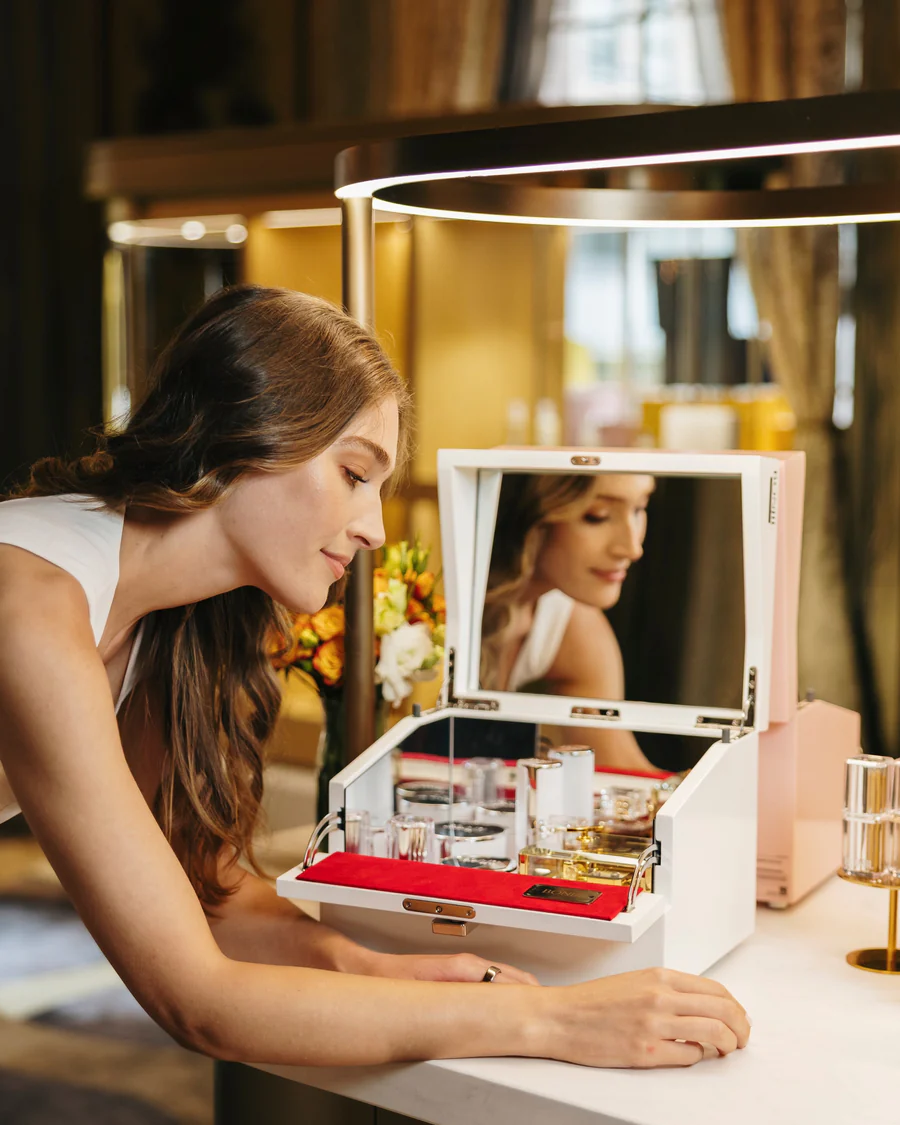
Neurocosmetics are skincare products formulated with neuroactive ingredients that target the bidirectional communication pathways between skin cells and the nervous system. The skin functions as a peripheral neuroendocrine organ, producing its own hormones, neurotransmitters, and neuropeptides; neurocosmetics are designed to work within this biology.
This guide covers the science of the skin-brain axis, proven benefits and clinical evidence for neurocosmetic ingredients, key actives to look for in formulations, and the future of sensory-driven, personalized skincare.
The skin-brain axis connects the brain, pituitary glands, adrenals, peripheral nerves, and skin through neurologic, immunologic, and hormonal pathways. Neurocosmetics leverage this network using neuropeptides like substance P and CGRP, neurotransmitters like acetylcholine and GABA, and adaptogenic botanicals to modulate cellular repair, inflammation, and stress signaling at the source.
Clinical trials on neurocosmetic ingredients show measurable results: neuropeptide formulations reduce wrinkle depth by up to 30% in four weeks, while adaptogenic extracts improve skin hydration by over 20% and reduce cortisol-driven barrier damage. These benefits extend beyond wrinkles to include radiance, barrier strength, and emotional well-being during use.
Ingredients like acetyl hexapeptide-8 (Argireline) inhibit acetylcholine release to soften expression lines, oxytocin-inspired peptides target fibroblast senescence, and adaptogens such as ashwagandha suppress pro-inflammatory cytokines that compromise skin integrity.
Looking ahead, AI diagnostics, genetic testing, and real-time biofeedback devices are converging with sensory formulation science. Multisensory rituals combining touch, scent, and sound produce measurable reductions in stress markers, creating physiological conditions where active ingredients perform at their best.
What Are Neurocosmetics in Skincare?
Neurocosmetics in skincare are products formulated with neuroactive ingredients that target the communication pathways between skin cells and the nervous system. The sections below explain the skin-brain connection, key neuroactive ingredients, and what separates neurocosmetics from conventional formulations.
How Does the Skin-Brain Connection Influence Skincare?
The skin-brain connection influences skincare by enabling bidirectional signaling between cutaneous cells and the central nervous system. The brain-skin axis comprises the brain, pituitary glands, adrenals, peripheral nerves, and skin, all interconnected by neurologic, immunologic, and hormonal pathways. Skin cells produce hormones, neurotransmitters, and neuropeptides along with their corresponding functional receptors, effectively making the skin a peripheral neuroendocrine organ. When stress, UV exposure, or inflammation triggers a response, skin cells release signaling molecules that communicate directly with the nervous system. This bidirectional loop means emotional states can visibly alter skin condition, and topical interventions can, in turn, influence neurochemical responses. Neurocosmetics are designed to work within this axis.

What Neuropeptides and Neurotransmitters Are Used in Neurocosmetics?
The neuropeptides and neurotransmitters used in neurocosmetics include:
-
Substance P, which binds to the neurokinin 1 receptor and regulates cutaneous immune and inflammatory responses.
-
Calcitonin gene-related peptide (CGRP), secreted by sensory nerve fibers in the skin to modulate inflammation and vascular tone.
-
Beta-endorphins and enkephalins, endogenous opioid peptides that act on mu and delta receptors to promote comfort signaling.
-
Acetylcholine, which controls keratinocyte behavior and reduces skin inflammation through nicotinic receptors.
-
GABA, synthesized in skin cells and active on GABA-A receptors in keratinocytes.
-
Serotonin and dopamine, with receptors confirmed in dermal fibroblasts; dopamine D1 receptor activation promotes wound healing.
According to a report published by PsychArchives, the neurocosmetics market is projected to reach approximately $3.13 billion by 2030, driven by growing demand for these neuroactive formulations.
How Do Neurocosmetics Differ From Traditional Cosmetics?
Neurocosmetics differ from traditional cosmetics by targeting the neurological signaling pathways within skin rather than addressing surface-level hydration or texture alone. Traditional cosmetics typically work on the stratum corneum, delivering moisture or occlusives that improve appearance temporarily. Neurocosmetics, by contrast, use neuropeptides and sensory-active botanicals to modulate the skin-brain axis directly.
According to a 2025 study published via HAL Science, the cosmetics industry is shifting from generic to personalized, science-driven products through the integration of neurocosmetics, genomics, and epigenetics. Sensory design also plays a role; the synergy between olfactory impact and topical activity reinforces the skin-brain axis as a therapeutic target. It is worth noting that "neurocosmetic" remains a marketing term, not a regulatory classification. Products stay under standard cosmetic regulation unless they make medical claims. For most consumers seeking science-informed skincare that goes beyond surface correction, this category represents the clearest bridge between dermatology and neuroscience available without a prescription.
How Do Neurocosmetics Work on the Skin?
Neurocosmetics work on the skin by leveraging neuropeptides, neurotransmitters, and sensory pathways to regulate cellular repair, reduce stress-induced damage, and enhance ingredient absorption. The following subsections explain each mechanism.

How Do Neuropeptides Signal Skin Cells to Repair?
Neuropeptides signal skin cells to repair by binding to specific receptors on keratinocytes, fibroblasts, endothelial cells, and immune cells, triggering targeted responses in tissue maintenance and regeneration. According to research published in the Journal of Investigative Dermatology, neuropeptides released from cutaneous nerves or skin and immune cells in response to noxious stimuli are mandatory for fine-tuned regulation of cutaneous immune responses and tissue repair.
Sensory nerve fibers in the skin serve as crucial sources of secreted neuropeptides, such as calcitonin gene-related peptide (CGRP) and substance P. These molecules demonstrate high potency at low dosage and can penetrate the stratum corneum effectively. Neurotransmitters like acetylcholine also participate; B cells produce ACh to control keratinocyte behavior and reduce skin inflammation through the α9 nicotinic acetylcholine receptor. This dual network of neuropeptides and neurotransmitters is what makes the skin function as a peripheral neuroendocrine organ.
How Do Neurocosmetics Reduce Stress-Related Skin Damage?
Neurocosmetics reduce stress-related skin damage by interrupting the cascade of cortisol and pro-inflammatory cytokines that compromise barrier integrity. Chronic psychological stress dysregulates the HPA axis, elevating cortisol levels that decrease epidermal lipids and structural proteins. Stratum corneum hydration drops while transepidermal water loss increases.
Neurocosmetic formulations counteract this cycle through adaptogenic botanicals and calming neuropeptides that modulate the local stress response at the skin level. By targeting the same neurochemical pathways that stress activates, these ingredients help restore barrier function and reduce inflammatory signaling before visible damage occurs. For stress-prone skin types, this mechanism-first approach offers a meaningful advantage over purely occlusive or moisturizing strategies.
How Does Sensory Stimulation Enhance Ingredient Absorption?
Sensory stimulation enhances ingredient absorption by activating neurological pathways that improve skin receptivity during product application. Tactile and olfactory inputs during skincare rituals reduce autonomic stress responses, lowering cortisol levels that would otherwise impair barrier permeability.
According to a 2007 study published in PubMed, lavender and rosemary aromatherapy enhance free radical scavenging activity and decrease cortisol, protecting the body from oxidative stress. When the skin is calm and barrier function is intact, active ingredients penetrate more efficiently through the stratum corneum. The ritualistic application process, combining touch, scent, and texture, reinforces the skin-brain axis to create conditions where topical actives perform at their best. Understanding these interconnected mechanisms reveals why neurocosmetic benefits extend beyond individual ingredients.
What Are the Proven Benefits of Neurocosmetics?
The proven benefits of neurocosmetics include wrinkle reduction, improved skin radiance, stronger barrier function, and enhanced emotional well-being. Each benefit stems from targeting the skin-brain axis with neuroactive ingredients.
Can Neurocosmetics Reduce Wrinkles and Fine Lines?
Yes, neurocosmetics can reduce wrinkles and fine lines by targeting stress-mediated skin aging and modulating neuromuscular activity. Chronic stress elevates cortisol, which impairs extracellular matrix synthesis and accelerates visible aging. According to a clinical study published in the Journal of Cosmetic Dermatology, moderately stressed subjects showed a severity increase of approximately 32.9% in skin texture alterations and fine lines, alongside compromised DNA integrity and impaired wound healing at the cellular level.
Neurocosmetic peptides counteract these pathways directly. By calming stress-driven inflammation and inhibiting repetitive muscle contractions, formulations containing neuropeptides address both the biochemical and mechanical causes of fine lines. For anyone noticing expression wrinkles compounded by daily stress, this dual-action approach offers meaningful advantages over single-mechanism products.
Can Neurocosmetics Improve Skin Radiance and Tone?
Yes, neurocosmetics can improve skin radiance and tone by combining adaptogenic botanicals with neuroactive compounds that address hydration, elasticity, and pigmentation simultaneously. Several studies highlight Withania somnifera's potential to treat pigmentary disorders, improve skin aging, and manage inflammatory skin conditions.
According to a 2023 clinical trial published in Cureus, topical application of a lotion containing Ashwagandha standardized root extract improved skin hydration by 20.66%, skin elasticity by 16.34%, and transepidermal water loss by -15.12% after 60 days compared to placebo (p<0.0001). These measurable improvements in hydration and elasticity translate directly into visible radiance. When skin retains moisture effectively and maintains structural resilience, light reflects more evenly across the surface, producing a naturally luminous, even-toned complexion.
Can Neurocosmetics Strengthen the Skin Barrier?
Yes, neurocosmetics can strengthen the skin barrier by counteracting cortisol-driven damage and upregulating protective gene expression. Cortisol decreases lipid and structural protein content in the epidermal layers, reducing stratum corneum hydration while increasing transepidermal water loss. Chronic psychological stress compounds this damage through HPA axis dysregulation, elevating pro-inflammatory cytokines such as IL-6, TNF-α, and IL-1β.
Neurocosmetic ingredients target these pathways at the molecular level. According to research published in Cosmetics (MDPI), acetyl dipeptide-1 cetyl ester (Calmosensine) significantly upregulates epidermal barrier genes and reactivates elastogenesis by stimulating dermal genes including alpha-1 type I collagen, decorin, lysyl oxidase-like 1, and fibrillin-1. This gene-level intervention represents a fundamentally different strategy than conventional moisturizers that merely occlude the surface.
Can Neurocosmetics Promote Emotional Well-Being During Use?
Yes, neurocosmetics can promote emotional well-being during use by activating sensory pathways that influence mood, stress perception, and relaxation. The skin-brain axis enables topical ingredients and sensory stimuli to trigger neurochemical responses, including the release of beta-endorphins and modulation of cortisol levels. Textures, fragrances, and ritualistic application methods all contribute to this effect.
This is where neurocosmetics diverge most sharply from conventional skincare. A product that simultaneously calms the nervous system while treating the skin transforms routine application into a restorative practice. For brands like BONJIL that design multisensory rituals around their formulations, emotional well-being is not a secondary benefit; it is central to how the product works.
With these measurable benefits established, the next question is what the broader scientific evidence reveals about neurocosmetic efficacy.
What Does the Scientific Evidence Say About Neurocosmetics?
The scientific evidence for neurocosmetics includes clinical trials on neuropeptide-based ingredients and professional commentary on regulatory classification. Below, we examine the clinical data and dermatologist perspectives.
What Clinical Studies Support Neurocosmetic Efficacy?
Clinical studies supporting neurocosmetic efficacy span multiple neuropeptide ingredients tested in controlled settings. Several trials demonstrate measurable wrinkle reduction across different formulations:
-
A cream containing 10% Argireline applied twice daily reduced wrinkle depth by up to 27% within 30 days, while a 2% concentration reduced wrinkle volume by up to 20.6% within 7 days.
-
A 5% BONT-L Peptide Solution cream reduced periorbital micro-reliefs by 38% in 28 days across 15 volunteers.
-
A 10% Snap 8 cream applied twice daily for 28 days reduced periorbital wrinkle depth by up to 63%.
-
Combining 5% Leuphasyl with 5% Argireline reduced periorbital wrinkles by 25% to 47% within 28 days.
According to a 2021 study published in MDPI Cosmetics, clinical tests on 20 volunteers aged 46 to 59 proved the anti-wrinkle and smoothing efficacy of Stoechiol at concentrations of 0.25% or 1%, applied twice daily to the crow's feet area for just 7 days. These results are promising, though most trials involve small sample sizes and short durations. Larger, longer-term studies would strengthen the evidence base considerably.

What Do Dermatologists Say About Neurocosmetic Claims?
Dermatologists say that neurocosmetic claims require careful interpretation. According to UL Prospector, "neurocosmetic" is a marketing term, not a regulatory one; products remain under standard cosmetic regulation unless they make medical or psychological claims. This distinction matters because the FDA and EU Regulation (EC) No 1223/2009 classify products based on intended use, not ingredient sophistication.
Most dermatologists acknowledge that neuropeptide ingredients show real biological activity in clinical settings. However, they caution consumers to distinguish between verified cosmetic benefits and overstated therapeutic promises. For anyone building a science-informed skincare routine, understanding these boundaries helps set realistic expectations about what topical neurocosmetic products can deliver.
What Neurocosmetic Ingredients Should You Look For?
The neurocosmetic ingredients you should look for include neuropeptides that modulate muscle contraction, oxytocin-inspired peptides that combat skin aging, and adaptogenic botanicals that regulate stress-related damage. Each targets the skin-brain axis through a distinct mechanism.
How Do Acetyl Hexapeptide and Argireline Target Expression Lines?
Acetyl hexapeptide and Argireline target expression lines by inhibiting neurotransmitter release at the neuromuscular junction. Modeled after the N-terminus of the SNAP-25 protein, acetyl hexapeptide-8 competes with SNAP-25 for binding to vesicle-associated membrane protein (VAMP), destabilizing the SNARE complex essential for acetylcholine release. Without acetylcholine, facial muscles cannot contract as forcefully, which prevents the deepening of expression wrinkles.
According to a study published in GMS Interdisciplinary Plastic and Reconstructive Surgery, a 10% Argireline emulsion applied to 10 healthy females reduced wrinkle depth by up to 30% after four weeks without toxicity. Its affordability, over-the-counter availability, and ease of self-application position it as one of the most accessible alternatives to injectable botulinum toxin. For anyone seeking measurable results without clinical procedures, this peptide deserves a permanent place in your routine.
How Does Oxytocin-Inspired Peptide Technology Benefit Skin?
Oxytocin-inspired peptide technology benefits skin by targeting the oxytocin receptor (OXTR), which is expressed in dermal fibroblasts. The neuropeptide oxytocin alleviates dermal fibroblast senescence, and research published in MDPI Cosmetics confirms that oxytocin levels correlate with visible skin aging. By mimicking oxytocin's receptor-binding activity, synthetic peptide analogues may slow cellular aging at the dermal level.
This intersection of emotional neuroscience and anti-aging represents one of the most compelling frontiers in neurocosmetics, bridging mood-associated biochemistry with measurable skin outcomes.
Why Are Adaptogens Important in Neurocosmetic Formulations?
Adaptogens are important in neurocosmetic formulations because they regulate cortisol and inflammatory pathways that directly damage skin. Key adaptogens include:
-
Ashwagandha (Withania somnifera) suppresses pro-inflammatory cytokines such as IL-6, TNF-α, and IL-1β in keratinocytes while promoting anti-inflammatory TGF-β1 expression.
-
Reishi mushroom (Ganoderma lucidum) significantly inhibits the release of IL-8, IL-6, MMP-2, and MMP-9 under pro-inflammatory conditions, supporting wound healing and reducing enzymatic collagen breakdown.
-
Rhodiola rosea inhibits COX-1, COX-2, and phospholipase A2 activity, while reducing cortisol response to stress.
According to a study published in Medicine (Baltimore), ashwagandha intake produced a 23% reduction in morning cortisol compared to placebo. When chronic stress is a primary driver of barrier dysfunction and premature aging, adaptogens offer a foundational layer of neurocosmetic protection that purely topical actives cannot replicate alone.
With these ingredients mapped to specific skin-brain pathways, the next consideration is identifying who benefits most from incorporating neurocosmetics.
Who Can Benefit Most From Neurocosmetics?
Neurocosmetics can benefit most those whose skin concerns are closely tied to stress, sensory sensitivity, or emotional well-being. The following groups stand out as ideal candidates for this approach.
-
People with stress-reactive skin. Chronic stress elevates cortisol, which impairs barrier function and triggers inflammation. According to a 2024 clinical study published in the Journal of Cosmetic Dermatology, moderately stressed subjects showed a 32.9% increase in severity of fine lines and microrelief alterations, alongside compromised DNA integrity and reduced ECM synthesis. Neurocosmetics that modulate neuropeptide signaling address this root cause directly, not just the visible symptoms.
-
Those prone to expression lines. Repeated facial muscle contractions deepen dynamic wrinkles over time. Neurocosmetic peptides like acetyl hexapeptide-8 inhibit acetylcholine release at the neuromuscular junction, offering a non-invasive alternative to injectables for forehead lines, crow's feet, and frown lines.
-
Sensitive skin sufferers. Conditions such as rosacea, atopic dermatitis, and reactive skin involve neurogenic inflammation mediated by substance P and CGRP. Neurocosmetic formulations that calm sensory nerve signaling can reduce flare-ups without the irritation potential of conventional actives like retinoids.
-
Consumers seeking holistic, ritualistic skincare. People who value emotional well-being alongside visible results gain the most from the multisensory dimension of neurocosmetics. Tactile textures, calming aromatherapy, and mindful application rituals activate the skin-brain axis in ways that purely functional products cannot.
-
Aging skin with declining neuropeptide activity. Oxytocin receptor expression exists in dermal fibroblasts, and oxytocin levels correlate with visible skin aging. Older skin produces fewer endogenous neuropeptides, making it particularly responsive to topical neurocosmetic supplementation.
For anyone whose skin tells the story of their stress, emotions, or lifestyle, neurocosmetics represent a meaningful shift from surface-level correction to root-cause care. Understanding this category's future potential reveals even more possibilities.
What Is the Future of Neurocosmetics in Skincare?
The future of neurocosmetics in skincare lies in AI-driven personalization, expanded clinical validation, and deeper integration of sensory science. The following sections explore how technology will shape product development, whether neurocosmetics can rival conventional treatments, and how multisensory formulation is advancing.
How Will AI and Personalization Shape Neurocosmetic Products?
AI and personalization will shape neurocosmetic products by enabling formulations tailored to individual skin biology, stress profiles, and genetic predispositions. Genetic factors explain up to 60% of the variability in how individuals age, according to a 2025 review published in Frontiers in Genetics. This insight is driving a shift toward skin microbiome analysis, genetic testing, and real-time biofeedback devices that can inform ingredient selection at the individual level.
AI-powered diagnostic tools are already approaching clinical-grade accuracy. Wearable sensors that monitor transepidermal vapor flux in real time offer new data streams for adaptive skincare routines. As these technologies mature, neurocosmetic products will likely move from broad-spectrum formulations to precision protocols that adjust to each user's neurobiological and dermatological profile. This convergence of data science and sensory formulation represents one of the most promising frontiers in skincare innovation.
Will Neurocosmetics Replace Conventional Anti-Aging Treatments?
Neurocosmetics will not fully replace conventional anti-aging treatments, but they are closing the efficacy gap. Botulinum toxin injections achieve up to 80% reduction in wrinkle visibility within one week, according to a 2024 review in MDPI Cosmetics. Neurocosmetic peptides like Argireline and SYN-Ake achieve up to 52% wrinkle reduction within four weeks without injections.
The practical advantage of neurocosmetics is accessibility. Over-the-counter availability, affordability, and ease of self-application position them as daily-use complements rather than direct replacements. For consumers who want meaningful results without invasive procedures, neurocosmetic formulations offer a compelling middle ground. The most effective anti-aging strategy will likely combine both approaches: injectables for deep dynamic wrinkles and neurocosmetic topicals for ongoing maintenance and sensory wellness.
How Is Sensory Science Evolving in Skincare Rituals?
Sensory science is evolving in skincare rituals by integrating tactile, olfactory, and auditory stimuli into formulations designed to activate the skin-brain axis. A 2025 study published in PMC found that tactile-olfactory combinations produced a 42.3% reduction in state anxiety scores, a 66.0% decrease in sympathetic nervous system activity measured by the LF/HF ratio, and a 67.2% reduction in skin conductance.
Aromatherapy research further supports this direction. Lavender inhalation alone has been shown to produce a 69.6% decrease in blood cortisol levels, reinforcing how scent directly modulates stress hormones that damage skin. These findings validate the hypothesis that sensory engagement during skincare application is not merely experiential; it produces measurable physiological changes that support barrier function and reduce inflammation. As formulation science continues to incorporate these principles, the line between skincare product and wellness intervention will continue to blur.
With sensory science now backed by clinical data, neurocosmetic rituals are evolving from luxury preference into evidence-based practice.
How Can Multisensory Skincare Rituals Enhance Neurocosmetic Results?
Multisensory skincare rituals enhance neurocosmetic results by combining tactile, olfactory, and auditory stimulation to activate the skin-brain axis during product application. The following subsections explore how BONJIL integrates this approach and summarize the core principles behind neurocosmetic efficacy.

Can BONJIL's Neurocosmetic Collections Elevate Your Skincare Ritual?
Yes, BONJIL's neurocosmetic collections can elevate your skincare ritual by pairing active neurocosmetic formulations with deliberate sensory engagement. Each collection targets specific skin concerns while incorporating texture, fragrance, and even sound through the BONJIL Music Box, designed to provide a soothing backdrop during application.
This multisensory design reflects emerging research on how combined stimulation amplifies physiological relaxation. According to a 2025 study published in PMC, a tactile-olfactory combination elicited a 42.3% reduction in state anxiety scores, a 66.0% decrease in sympathetic nervous system activity (LF/HF ratio), and a 54.7% increase in parasympathetic markers (SDNN). Lower stress activation during skincare application supports better barrier function and ingredient receptivity.
BONJIL collections such as Perfection Éternelle and La Signature Au Caviar frame product use as a mindful ritual rather than a routine step. When cortisol levels drop during a calming sensory experience, the skin's capacity for repair and absorption improves. For consumers seeking measurable skin outcomes alongside emotional well-being, this ritualistic approach represents one of the most practical applications of neurocosmetic science available today.
What Are the Key Takeaways About How Neurocosmetics Work?
The key takeaways about how neurocosmetics work center on three principles: the skin-brain axis, neuroactive ingredient signaling, and sensory-enhanced application.
-
The skin functions as a peripheral neuroendocrine organ, producing hormones, neurotransmitters, and neuropeptides through cells like keratinocytes and fibroblasts.
-
Neurocosmetic ingredients, including neuropeptides such as acetyl hexapeptide-8 and adaptogens like ashwagandha, target specific receptors in skin cells to reduce muscle contraction, calm inflammation, and counteract cortisol-driven barrier damage.
-
Chronic stress disrupts the HPA axis, elevating cortisol, depleting epidermal lipids, and increasing transepidermal water loss; neurocosmetics address these pathways directly.
-
Sensory rituals involving touch, scent, and sound lower anxiety and cortisol levels during application, creating physiological conditions that support ingredient efficacy.
-
Clinical evidence supports specific ingredients: argireline reduces wrinkle depth by up to 30% in four weeks, while adaptogens like ashwagandha improve hydration by over 20%.
Neurocosmetics represent a shift from surface-level treatment to formulations that engage the nervous system for both visible skin improvement and emotional balance. Understanding these mechanisms helps consumers choose products, like those from BONJIL, that deliver results through science-backed, sensory-rich skincare experiences.