Red face anxiety is a stress-driven condition where the sympathetic nervous system triggers visible facial flushing during moments of social pressure, embarrassment, or anticipatory dread. The blushing itself then becomes a source of fear, creating a self-reinforcing cycle between redness and anxiety.
This guide covers the physiology behind anxiety-related blushing, the symptoms and conditions commonly confused with it, the blush-anxiety feedback loop, calming techniques and lifestyle changes for long-term relief, and skincare practices that protect reactive skin.
Anxiety-driven flushing begins when the brain activates the fight-or-flight response, releasing adrenaline and triggering vasodilation in the dense network of blood vessels beneath facial skin. Chronic stress compounds this by disrupting HPA axis function and weakening the skin barrier over time.
The symptoms extend beyond visible redness. Rapid heartbeat, muscle tension, intense self-consciousness, and catastrophic thinking about how others perceive the flush all layer onto each episode. Conditions like rosacea, carcinoid syndrome, menopause-related hot flashes, and alcohol flush reaction produce similar redness through entirely different mechanisms, making accurate identification essential.
At the core of red face anxiety sits a feedback loop: blushing triggers self-focused attention, which intensifies anxiety, which deepens the blush. Techniques like diaphragmatic breathing, progressive muscle relaxation, cold application, and cognitive reframing interrupt this cycle by shifting nervous system activity and redirecting attention externally.
Sustained relief requires lifestyle adjustments. Regular exercise restores HPA axis balance, dietary changes reduce vasodilatory triggers, consistent sleep regulates cortisol, and mindfulness meditation lowers baseline stress reactivity.
Barrier-restoring skincare formulations help soothe skin weakened by repeated flushing, while calming skincare rituals that engage multiple senses can address both the complexion and the nervous system simultaneously.
What Causes Anxiety-Related Facial Redness?
Anxiety-related facial redness is caused by the sympathetic nervous system activating a chain of physiological responses that dilate facial blood vessels. The sections below explain how this process works, from the initial nervous system trigger to the long-term effects of chronic stress on skin tone.
How Does the Sympathetic Nervous System Trigger Blushing?
The sympathetic nervous system triggers blushing by activating the fight-or-flight response, which releases neurotransmitters that dilate facial blood vessels. According to the University of Florida College of Medicine, embarrassment activates the sympathetic nervous system, causing vasodilation; blood vessels dilate, making the face and neck visibly red.
This system communicates through three key neurotransmitters: norepinephrine, epinephrine, and acetylcholine. When the brain perceives a social threat, the adrenal glands release adrenaline, increasing heart rate and redirecting blood flow. Because facial skin contains a high density of blood vessels close to the surface, the effects of vasodilation become immediately visible as redness.

What Role Does Adrenaline Play in Facial Flushing?
Adrenaline plays a central role in facial flushing by acting as the chemical messenger that widens blood vessels in the face and neck. Once the adrenal glands release epinephrine and norepinephrine, these hormones signal blood vessels to dilate, increasing blood flow to the skin's surface.
This process does not stop at redness alone. Heightened self-focused attention, the increased awareness of oneself as a social object, amplifies the perception of flushing and often sustains the anxiety that triggered it. According to research published in Behavioural and Cognitive Psychotherapy, this heightened self-focused attention plays an important role in maintaining social phobia. Medications like clonidine work by altering the body's response to noradrenaline, modifying how blood vessels constrict and dilate.
How Do Dilated Blood Vessels Create Visible Redness?
Dilated blood vessels create visible redness because facial skin is thinner than skin elsewhere on the body, with capillaries positioned close to the surface. When vasodilation occurs, these small blood vessels expand and allow a greater volume of blood to flow through them. The increased blood volume beneath translucent facial skin produces the characteristic red or flushed appearance.
The cheeks, forehead, and neck are most affected because these areas have the densest concentration of superficial capillaries. Once the triggering stressor passes, vasoconstriction gradually returns blood vessels to their normal diameter, and the redness fades. For people with anxiety-related blushing, however, the anticipation of flushing can restart the cycle before vessels fully recover.
Can Chronic Stress Change Baseline Skin Redness Over Time?
Yes, chronic stress can change baseline skin redness over time by disrupting the hypothalamic-pituitary-adrenal (HPA) axis and impairing skin barrier function. According to a study published in Scientific Reports (Nature.com), psychological stress increases endogenous glucocorticoids by activating the HPA axis, and elevated levels of the enzyme 11β-HSD1 under prolonged stress ultimately impair barrier function.
When the HPA axis remains overactivated, cortisol stays elevated. This sustained hormonal imbalance weakens the skin's protective barrier, making it more reactive to environmental triggers. Research published in the International Journal of Dermatology confirms that mental stress damages the skin barrier through poor sleep and severe anxiety. Diets high in sugar and fat further compound the problem by altering the expression of corticotropin-releasing hormone and adrenocorticotropic hormone, sustaining HPA axis activation.
Understanding these physiological causes is essential, but recognizing how erythrophobia specifically intensifies the fear of blushing adds another layer to the picture.
What Is Erythrophobia and How Does It Relate to Red Face Anxiety?
Erythrophobia is the clinical term for an intense, persistent fear of blushing. This phobia sits at the intersection of specific phobia and social anxiety, making it a core driver of red face anxiety. Understanding how erythrophobia develops, how it differs from general social anxiety disorder, and what self-reinforcing cycle it creates clarifies why facial redness becomes so distressing.
According to Medical News Today, erythrophobia is the term for fear of blushing, classified as a type of anxiety disorder in which a person experiences extreme fear or anxiety about a particular situation or object. Rather than fearing social judgment broadly, individuals with erythrophobia fixate specifically on the visible redness itself. The fear centers on being seen blushing, which transforms an involuntary physiological response into a source of dread.
What makes erythrophobia particularly relevant to red face anxiety is its self-reinforcing nature. The anticipation of blushing triggers the sympathetic nervous system, which then produces the very flushing the person fears. Each episode confirms the belief that blushing is uncontrollable, deepening the phobia over time. This cycle is distinct from occasional embarrassment; it represents a clinically significant pattern where the fear of a symptom becomes the primary trigger for that symptom.
Erythrophobia also overlaps heavily with social anxiety disorder, though the two are not identical. While social anxiety disorder involves broad fear of negative evaluation across social situations, erythrophobia narrows that fear to one specific physiological sign. Many people experience both simultaneously, with blushing anxiety serving as either a subset of or an entry point into broader social anxiety. For anyone experiencing persistent red face anxiety, recognizing erythrophobia as a defined condition is the first step toward targeted intervention.
Knowing how erythrophobia functions within the broader anxiety landscape helps distinguish normal blushing from a pattern that may benefit from professional support.
What Are the Common Symptoms of Red Face Anxiety?
The common symptoms of red face anxiety span visible flushing, physical discomfort, emotional distress, and anticipatory dread. Below, each symptom category is explored in detail.
What Does the Facial Flushing Itself Feel and Look Like?
Facial flushing itself looks like a sudden, visible reddening of the cheeks, ears, neck, and sometimes the upper chest. The skin appears blotchy or uniformly flushed, often with a warm, heated sensation that intensifies under social attention.
Color ranges from light pink to deep crimson, depending on skin tone and the severity of the anxiety trigger. According to the Cleveland Clinic, skin flushing can also accompany underlying conditions such as rosacea, menopause, fever, and carcinoid syndrome, so persistent redness without a clear emotional trigger warrants medical evaluation. In anxiety-driven episodes, the redness typically fades within minutes once the perceived social threat subsides.
What Physical Sensations Accompany Anxiety-Induced Redness?
The physical sensations that accompany anxiety-induced redness extend well beyond visible color change. The sympathetic nervous system activates a cascade of bodily responses alongside facial flushing.
Common physical symptoms include:
-
Rapid heartbeat and palpitations as adrenaline surges through the bloodstream.
-
Increased perspiration, particularly on the palms, forehead, and underarms.
-
A tingling or prickling sensation across the face and neck.
-
Tightness in the chest or shallow, rapid breathing.
-
Muscle tension in the jaw, shoulders, and stomach.
-
A noticeable rise in skin surface temperature, especially across the cheeks.
These sensations often compound one another. Noticing a racing heart, for instance, can intensify the feeling that others are watching, which further amplifies the flush.
What Emotional and Cognitive Symptoms Occur Alongside Blushing?
The emotional and cognitive symptoms that occur alongside blushing include intense self-consciousness, shame, fear of judgment, and intrusive thoughts about how visible the redness appears to others.
A study published in the Journal of Child Psychology and Psychiatry found that blushing at age 4.5 predicted social anxiety disorder symptoms at age 7.5, independent of earlier behavioral inhibition. This early link suggests that the emotional burden of blushing becomes deeply embedded over time. Heightened self-focused attention turns a normal physiological response into a source of persistent worry, while catastrophic thinking magnifies the perceived social cost of each episode. Many individuals begin avoiding conversations, presentations, or social gatherings altogether. For those caught in this pattern, the emotional weight of blushing often feels heavier than the flush itself.
How Does Anticipatory Anxiety Worsen Redness Before It Starts?
Anticipatory anxiety worsens redness before it starts by activating the sympathetic nervous system in response to a feared scenario that has not yet occurred. Simply imagining an upcoming meeting, date, or public interaction can trigger the same adrenaline release and vasodilation that produce actual blushing.
This preemptive stress response creates a self-fulfilling cycle:
-
The person anticipates blushing in a future social situation.
-
Worry triggers sympathetic activation, raising heart rate and skin temperature.
-
Early flushing begins, confirming the fear.
-
Heightened awareness of the flush intensifies the anxiety further.
Because the body cannot distinguish between a real social threat and a vividly imagined one, anticipatory anxiety essentially guarantees the outcome the person dreads most. Breaking this pattern often requires shifting attention away from internal monitoring, a skill that calming techniques and cognitive strategies can build over time.
What Conditions Are Commonly Confused with Red Face Anxiety?
The conditions commonly confused with red face anxiety include rosacea, social anxiety disorder, carcinoid syndrome, menopause-related hot flashes, and alcohol flush reaction. Each involves facial redness but differs in cause, triggers, and treatment.
Rosacea
Rosacea is a chronic inflammatory skin condition that produces persistent centrofacial redness, visible blood vessels, and sometimes papules or pustules. Unlike anxiety-driven blushing, which resolves once the emotional trigger passes, rosacea redness tends to linger and worsen over time without dermatological treatment. Certain triggers overlap with anxiety flushing, such as heat and stress, which makes self-diagnosis unreliable. A dermatologist can distinguish rosacea from anxiety-related blushing through clinical evaluation of telangiectasia, papules, and ocular involvement. Getting the diagnosis right matters because rosacea responds to topical treatments and barrier repair, while anxiety-driven flushing requires psychological or nervous system interventions.
Social Anxiety Disorder
Social anxiety disorder is a clinical condition where everyday social interactions cause significant anxiety, self-consciousness, and embarrassment. It extends well beyond situational blushing. According to the WHO's ICD-11 diagnostic requirements, individuals with social anxiety disorder may report concerns about physical symptoms, such as blushing, sweating, or trembling, rather than initially endorsing fears of negative evaluation. This physical-symptom focus often leads people to mistake the disorder for a blushing problem alone.
The key distinction: red face anxiety centers on the flushing itself as the primary concern, while social anxiety disorder involves pervasive fear across multiple social contexts, such as conversations, being observed while eating, or performing in front of others. Blushing is one symptom within a broader pattern of avoidance and distress. Erythrophobia, the specific fear of blushing, can exist as a feature of social anxiety disorder or as its own phobic response.
Carcinoid Syndrome
Carcinoid syndrome is a rare, life-threatening medical condition caused by neuroendocrine tumors that release serotonin and other vasoactive substances into the bloodstream. According to NCBI, carcinoid syndrome affects approximately 10% of patients with carcinoid tumors. The flushing it produces occurs suddenly, often without any emotional trigger, and may involve the entire upper body.
Unlike anxiety-related blushing, carcinoid flushing is frequently accompanied by diarrhea, wheezing, and heart valve abnormalities. The 24-hour urinary 5-HIAA test is the initial diagnostic tool used to confirm the condition. Anyone experiencing unexplained, recurrent flushing alongside gastrointestinal symptoms should seek medical evaluation promptly.
Menopause-Related Hot Flashes
Menopause-related hot flashes are episodes of sudden warmth, facial redness, and sweating caused by declining estrogen levels. These episodes arise from hormonal shifts rather than emotional triggers. Hot flashes typically last several minutes, occur at predictable life stages (perimenopause and menopause), and often disrupt sleep. While anxiety can intensify hot flash frequency, the underlying mechanism is endocrine, not psychological. Women who experience both anxiety and hormonal changes sometimes struggle to distinguish between the two, making a clinical hormone evaluation helpful for accurate identification.
Alcohol Flush Reaction
Alcohol flush reaction is a genetic condition caused by a deficiency in the enzyme aldehyde dehydrogenase 2 (ALDH2), which impairs alcohol metabolism. The reaction produces immediate facial redness, warmth, and sometimes nausea after consuming even small amounts of alcohol. This condition is most common among people of East Asian descent. Unlike anxiety-related blushing, alcohol flush follows a clear chemical trigger and does not involve emotional distress as its cause. Recognizing this distinction prevents unnecessary anxiety about a purely metabolic response.
Accurate identification of these conditions guides people toward the right support, whether dermatological, psychological, or medical.
Who Is Most Likely to Experience Red Face Anxiety?
Red face anxiety affects specific groups more than others, depending on age, personality traits, and underlying conditions. The following profiles carry the highest risk.
-
Teenagers and young adults: Social anxiety disorder impacts about one in 10 teens and adults in the U.S., with onset frequently occurring during adolescence when self-consciousness peaks.
-
Women and girls: Among youth aged 13 to 17, an estimated 11% of females experience social anxiety disorder compared to 6% of males, according to the American Psychiatric Association.
-
People with high self-focused attention: Individuals who constantly monitor how they appear to others develop inflated beliefs about the social cost of blushing, which intensifies both the fear and the physiological response.
-
Those with fair or reactive skin: Lighter skin tones make vasodilation more visible, increasing awareness of flushing and reinforcing the anxiety cycle.
-
Individuals with a history of behavioral inhibition: Early childhood temperamental shyness is a recognized precursor; children who blush easily at young ages show elevated risk for social anxiety symptoms years later.
For anyone in these groups, the overlap between visible flushing and social evaluation creates a uniquely self-reinforcing pattern. Recognizing which risk factors apply is the first step toward breaking the blush-anxiety cycle before it becomes entrenched.
How Does the Blush-Anxiety Cycle Reinforce Itself?
The blush-anxiety cycle reinforces itself through a feedback loop where blushing triggers self-focused attention, which intensifies anxiety, which deepens the blush. Three cognitive mechanisms drive this self-perpetuating pattern: heightened self-awareness, inflated beliefs about social cost, and avoidance behavior that prevents corrective learning.
Self-focused attention is the primary engine of this cycle. When a person notices warmth or redness on their face, attention shifts inward, amplifying awareness of the blush as a visible social signal. According to a study published in Behaviour Research and Therapy (PubMed), self-focused attention led to more social anxiety than task-focused attention across all three experiments, with high blushing-anxious groups reporting significantly higher self-awareness than low-anxious comparison groups. Once that internal spotlight locks onto the blush, the person overestimates how noticeable and socially damaging the redness actually is.
These inflated beliefs about blushing's social consequences fuel the next turn of the loop. The person anticipates judgment, embarrassment, or ridicule, which triggers further sympathetic nervous system activation and more visible flushing. Over time, this anticipatory anxiety can become so automatic that merely imagining a social situation produces redness before any interaction begins.
Avoidance completes the cycle's hold. By steering clear of triggering situations, the person never gathers evidence that blushing carries fewer social penalties than feared. Without that corrective experience, the distorted beliefs remain intact, and each future encounter carries the same exaggerated threat. Breaking this loop typically requires redirecting attention externally and challenging the catastrophic appraisals that keep it spinning, strategies explored in the calming techniques that follow.

What Calming Techniques Help Reduce Anxiety-Related Blushing?
Calming techniques help reduce anxiety-related blushing by interrupting the sympathetic nervous system activation that causes facial vasodilation. The most effective approaches include diaphragmatic breathing, progressive muscle relaxation, cold application, grounding exercises, and cognitive reframing.

How Does Slow Diaphragmatic Breathing Reduce Facial Redness?
Slow diaphragmatic breathing reduces facial redness by activating the parasympathetic nervous system, which counteracts the fight-or-flight response responsible for vasodilation. When you breathe deeply into the diaphragm rather than shallowly into the chest, vagal tone increases and sympathetic arousal decreases.
This shift lowers adrenaline output and gradually constricts the dilated blood vessels in the face. A simple approach involves inhaling for four counts, holding for four, and exhaling for six. The extended exhale is key; it signals safety to the nervous system. Practicing this technique daily builds a faster calming response during real flushing episodes.
Can Progressive Muscle Relaxation Calm a Flushing Episode?
Yes, progressive muscle relaxation can calm a flushing episode by systematically releasing the physical tension that accompanies anxiety-driven blushing. PMR involves tensing and then relaxing specific muscle groups in sequence, which reduces sympathetic nervous system activity and lowers cortisol.
A systematic review of 46 publications covering more than 3,402 adults, published in Psychology Research and Behavior Management, concluded that PMR is effective in reducing stress, anxiety, and depression. Because flushing episodes are sustained by muscle tension and elevated stress hormones, releasing that tension through PMR helps constrict dilated facial blood vessels more quickly. Even an abbreviated version targeting the shoulders, jaw, and forehead can provide noticeable relief within minutes.
How Does Cold Water or a Cool Compress Help in the Moment?
Cold water or a cool compress helps in the moment by triggering local vasoconstriction, which physically narrows the dilated blood vessels causing visible redness. Applying something cold to the wrists, neck, or cheeks activates a rapid cooling response that counteracts the heat generated by sympathetic arousal.
Cold exposure also stimulates the dive reflex, a parasympathetic response that slows heart rate and redirects blood flow away from the skin's surface. Practical options include:
-
Pressing a chilled water bottle against the inner wrists
-
Holding a damp cool cloth on the back of the neck
-
Splashing cold water on the face in a restroom
This technique works best as an immediate intervention while slower-acting strategies like breathing take effect.
What Grounding Techniques Redirect Focus Away from Blushing?
Grounding techniques redirect focus away from blushing by shifting attention from internal self-monitoring to external sensory input. Self-focused attention is a primary driver that maintains and intensifies both the blushing response and the anxiety surrounding it.
According to research published in Clinical Psychology and Psychotherapy, task concentration training effectively reduces fear of blushing and enhances external focus. Practical grounding methods include:
-
The 5-4-3-2-1 technique: naming five things you see, four you can touch, three you hear, two you smell, and one you taste
-
Focusing intently on what someone is saying rather than how your face feels
-
Pressing your feet firmly into the floor and noticing the sensation
Redirecting attention externally breaks the self-monitoring loop that amplifies redness.
How Does Cognitive Reframing Break the Fear-of-Blushing Loop?
Cognitive reframing breaks the fear-of-blushing loop by challenging the catastrophic beliefs that fuel anticipatory anxiety about turning red. Most people who fear blushing overestimate both how visible their redness is and how negatively others judge it.
Reframing involves replacing thoughts like "everyone will notice and think I'm weak" with more accurate assessments, such as "blushing is a normal physiological response that most people barely register." This shift reduces the emotional charge attached to flushing, which in turn lowers the sympathetic activation that produces it. Over time, repeated reframing weakens the conditioned association between social situations and panic about redness. For anyone managing red face anxiety, combining cognitive reframing with the physical techniques above creates a comprehensive calming strategy.
What Lifestyle Changes Help Prevent Red Face Anxiety Long Term?
Lifestyle changes that help prevent red face anxiety long term include regular exercise, dietary adjustments, consistent sleep, and mindfulness meditation. Each targets the HPA axis and cortisol regulation that drive chronic flushing.
How Does Regular Exercise Regulate the Stress Response?
Regular exercise regulates the stress response by restoring HPA axis function and reducing oxidative stress. According to a 2025 review in Frontiers in Physiology, regular exercise enhances the antioxidant defense system, reduces reactive oxygen species, and restores HPA axis function, alleviating both psychological and physiological stress symptoms.
Cardiovascular fitness also lowers the intensity of vascular reactions during stressful moments. Over time, this blunted stress response means less adrenaline-driven vasodilation in the face when anxiety strikes. For those prone to blushing, consistent aerobic activity builds a physiological buffer that makes flushing episodes less frequent and less severe.
What Dietary Triggers Should You Avoid to Reduce Flushing?
The dietary triggers you should avoid to reduce flushing include:
-
Spicy foods, which stimulate vasodilation and heat production in facial blood vessels.
-
Alcohol, particularly red wine, which directly dilates capillaries and increases skin redness.
-
Caffeine, which elevates adrenocorticotropic hormone and cortisol secretion, amplifying the stress response.
-
High-sugar and high-fat meals, which contribute to sustained HPA axis activation over time.
-
Hot beverages, which raise core body temperature and trigger reflexive facial flushing.
Eliminating or reducing these triggers gives the nervous system fewer reasons to activate the flushing pathway. Keeping a food diary helps identify personal triggers that are most problematic.
How Does Consistent Sleep Improve Anxiety-Related Skin Reactivity?
Consistent sleep improves anxiety-related skin reactivity by regulating cortisol levels and reducing inflammation. According to Walk In Dermatology, inadequate sleep raises cortisol, which triggers inflammation and breaks down proteins that maintain skin integrity.
When cortisol remains chronically elevated from poor sleep, the skin barrier weakens and blood vessels become more reactive to stress signals. Prioritizing seven to nine hours of quality sleep each night helps normalize this hormonal cycle. The result is calmer, less reactive skin that flushes less easily during anxious moments.
Can Mindfulness Meditation Lower Chronic Blushing Frequency?
Yes, mindfulness meditation can lower chronic blushing frequency by reducing the cortisol levels that drive stress-related flushing. A study published in J Med Assoc Thai found that mindfulness meditation lowers blood cortisol levels, suggesting it decreases stress and the risk of stress-related conditions, including psychiatric disorders.
This cortisol reduction directly dampens the HPA axis hyperactivity responsible for repeated flushing episodes. Regular practice also trains awareness without reactivity, so the anticipatory anxiety that often triggers blushing loses its grip over time. Even brief daily sessions create measurable shifts in baseline stress physiology.
With these lifestyle foundations in place, persistent or worsening symptoms may signal the need for professional guidance.
When Should You See a Professional About Red Face Anxiety?
You should see a professional about red face anxiety when blushing episodes become persistent, cause significant distress, or lead you to avoid social situations. The signs below help distinguish normal blushing from a condition that warrants clinical evaluation.
Occasional blushing during embarrassment is a universal human response. When that blushing starts dictating your decisions, however, the line between a harmless reaction and a treatable condition has likely been crossed. There are several specific warning signs that signal it is time to seek help, such as social avoidance, daily preoccupation with flushing, sleep disruption, and declining work or school performance.
Key indicators that professional support is needed include:
-
Blushing anxiety causes you to avoid conversations, meetings, public speaking, or social gatherings.
-
You spend significant time each day worrying about when the next flushing episode will occur.
-
Self-help strategies, such as breathing exercises, grounding techniques, and cognitive reframing, have not reduced the frequency or intensity of episodes after consistent practice.
-
Facial redness occurs alongside other unexplained symptoms like diarrhea, wheezing, or rapid heart rate, which could indicate an underlying medical condition such as carcinoid syndrome or rosacea.
-
The fear of blushing has led to depression, isolation, or substance use as a coping mechanism.
According to European Psychiatry, fear of blushing is a form of social anxiety disorder characterized by an intense and obsessive threat of blushing in front of other people. This classification means that validated screening tools and evidence-based treatments exist specifically for this experience.
A mental health professional can administer structured assessments like the Liebowitz Social Anxiety Scale, which evaluates physiological symptoms including blushing, trembling, and perspiration alongside fear and avoidance patterns. Cognitive behavioral therapy, medication, or a combination of both may be recommended depending on severity. For facial redness that persists regardless of emotional state, a dermatologist can rule out rosacea or vascular conditions.
Waiting too long to seek help often deepens the blush-anxiety cycle, making it harder to interrupt without professional guidance. If red face anxiety is shrinking your world, that is reason enough to reach out.
With professional support in place, a consistent skincare routine can further soothe the skin that bears the physical effects of anxiety-driven flushing.
What Skincare Practices Help Soothe Anxiety-Prone Flushed Skin?
Skincare practices that help soothe anxiety-prone flushed skin include barrier-restoring formulations, calming rituals that double as emotional regulation tools, and gentle products designed for reactive complexions. The following subsections cover why sensitive formulations matter, how skincare rituals support emotional balance, and how BONJIL can help.

Why Do Sensitive Skin Formulations Matter After Flushing Episodes?
Sensitive skin formulations matter after flushing episodes because repeated vasodilation weakens the skin barrier, increasing irritation and prolonging visible redness. When anxiety triggers facial flushing, the resulting inflammation compromises the stratum corneum's protective function.
According to a 2021 study published through PubMed (NIH), addressing barrier dysfunction with moisturizer and cleanser formulations that restore skin hydration, normalize skin pH, restore the microbiome, and replenish skin lipids can assist in improving rosacea signs and symptoms. These same principles apply to anxiety-induced flushing, where barrier repair reduces sensitivity to future episodes.
Key qualities to look for in post-flushing skincare include:
-
Fragrance-free cleansers that preserve natural skin pH
-
Moisturizers containing ceramides or lipid-restoring compounds
-
Formulations free of alcohol, sulfates, and known irritants
Prioritizing barrier health after flushing is one of the most practical steps for calming reactive skin over time.
How Does a Calming Skincare Ritual Support Emotional Regulation?
A calming skincare ritual supports emotional regulation by creating a structured, sensory-rich pause that shifts the nervous system away from fight-or-flight activation. The repetitive, intentional nature of applying products slowly engages tactile awareness, which functions similarly to grounding techniques used in anxiety management.
When the hands follow a predictable sequence of cleansing, applying serum, and moisturizing, attention redirects from anxious thoughts toward physical sensation. This transition from self-focused worry to present-moment awareness can lower the heightened arousal that drives facial flushing.
The ritual does not need to be long. Even a focused five-minute routine performed consistently builds a reliable anchor point in the day, reinforcing a sense of control that anxiety often erodes.
Can BONJIL's Multi-Sensory Skincare Rituals Help Calm Reactive Flushed Skin?
Yes, BONJIL's neurocosmetic skincare approach can help calm reactive flushed skin by combining sensory science with mindful rituals designed to soothe both complexion and nervous system. BONJIL formulates products at the intersection of sensory science and skin health, making the application process itself a calming experience.
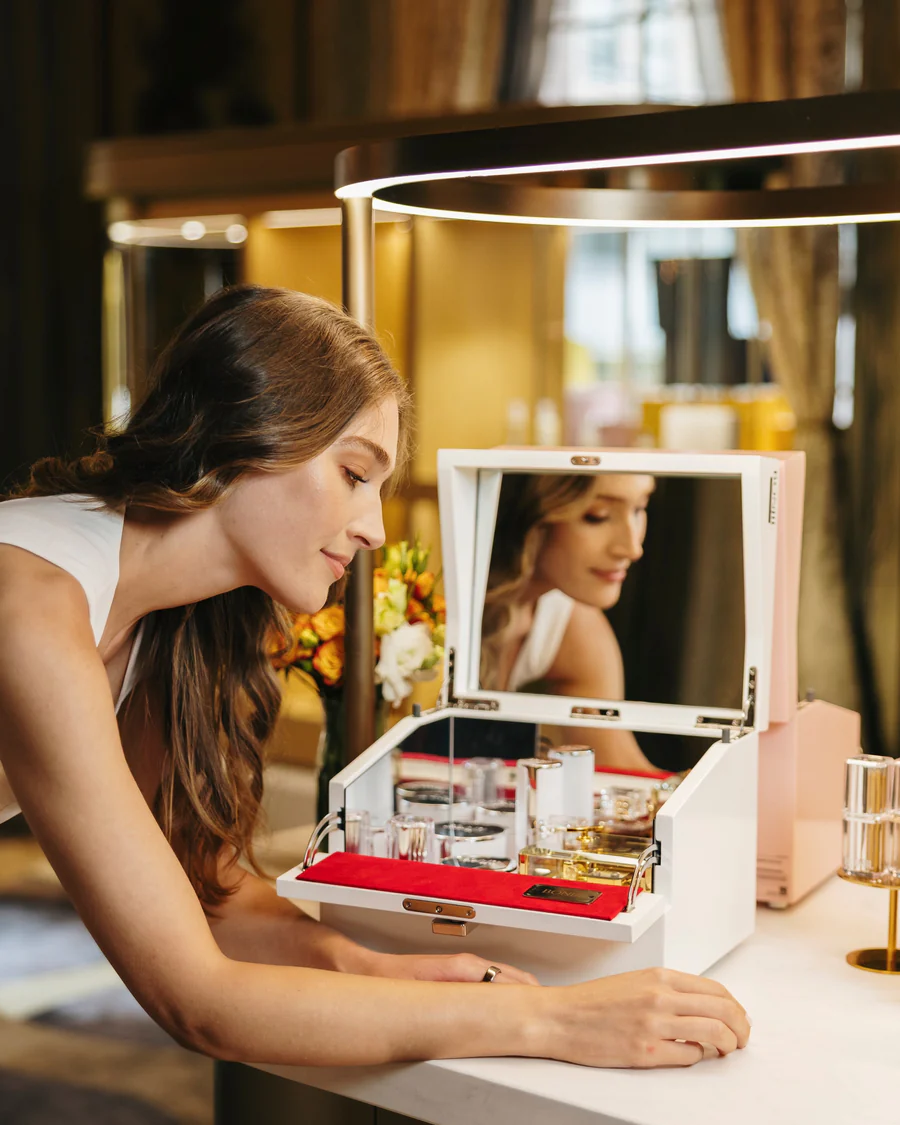
BONJIL's approach encourages mindful, slow application that engages touch, scent, and sound, with the BONJIL Music Box providing a soothing auditory backdrop to the skincare ritual. This deliberate sensory layering transforms a simple skincare step into an emotional regulation practice. For skin prone to anxiety-driven redness, this approach addresses the external barrier and the internal stress response simultaneously.
BONJIL positions skincare as a cherished ritual rather than a clinical task, which is exactly the reframe that anxiety-prone skin benefits from most.
What Are the Key Takeaways About Red Face Anxiety We Covered?
The key takeaways about red face anxiety covered in this article center on understanding the physiological cycle, managing the emotional triggers, and protecting skin health through intentional care.
-
Facial flushing results from sympathetic nervous system activation, which dilates blood vessels in response to stress, embarrassment, or social anxiety.
-
The blush-anxiety cycle reinforces itself when self-focused attention amplifies both the fear of blushing and the blushing response.
-
Calming techniques such as diaphragmatic breathing, progressive muscle relaxation, and grounding exercises can interrupt flushing in real time.
-
Lifestyle factors including regular exercise, dietary trigger avoidance, quality sleep, and mindfulness meditation reduce chronic stress reactivity.
-
Barrier-restoring skincare formulations protect flushed skin from further sensitivity and irritation.
According to 2022 data from the National Center for Health Statistics (CDC), about one in five U.S. adults experienced anxiety symptoms in the prior two weeks. Red face anxiety is far more common than most people realize, and combining stress management with thoughtful skincare offers a practical path forward.