Calming skincare ingredients are bioactive compounds that interact with the skin-brain axis to reduce stress hormones, activate the parasympathetic nervous system, and elevate mood through touch, scent, and topical absorption.
This guide covers the science of the skin-brain connection, the most effective mood-boosting ingredients, how those ingredients act on neural pathways, the role of textures and application rituals, building a complete calming routine, and how skincare fits alongside other stress-relief methods.
Your skin and brain communicate through bidirectional pathways involving the HPA axis, olfactory-limbic connections, and haptic sensory fibers. Stress hormones like cortisol reshape skin health, while topical application and deliberate touch send calming signals back to the central nervous system.
Lavender, chamomile, rose, ashwagandha, CBD, niacinamide, magnesium, and adaptogenic mushrooms each target distinct neurobiological mechanisms. Some suppress cortisol through olfactory pathways; others restore cellular resilience, block excitatory neural signaling, or activate serotonin receptors directly.
These ingredients reach the brain through three primary routes: aromatic compounds modulate the HPA axis and reduce cortisol secretion, topical adaptogens restore barrier function and cellular energy under stress, and peptides serve as precursors for localized neurotransmitter production in the skin.
Product format matters as much as the active ingredient. Serums penetrate deeper due to small molecular structure, while rich balms activate mechanoreceptors linked to emotional comfort. Evening application aligns with circadian biology, when skin permeability peaks and DNA repair accelerates.
Skincare cannot replace traditional stress-relief methods, but it powerfully complements them. Integrating mindfulness into application rituals produces clinical outcomes comparable to pharmaceutical interventions, making a consistent sensory-rich routine one of the simplest daily investments in nervous system balance.
How Does Skincare Affect Your Nervous System and Mood?
Skincare affects your nervous system and mood through bidirectional communication between the skin and brain. Touch, scent, and mindful application each activate distinct neural pathways that regulate stress hormones and emotional states.
What Is the Skin-Brain Connection?
The skin-brain connection is a bidirectional communication pathway linking the central nervous system directly to the skin. Stress triggers the brain and pituitary gland to release corticotropin-releasing hormone (CRH) and adrenocorticotropic hormone (ACTH). The adrenal glands then secrete cortisol, catecholamines, and androgens, while peripheral nerves release neuropeptides such as Substance P and calcitonin gene-related peptide (CGRP). According to research published in the National Center for Biotechnology Information (NCBI/PMC), this cascade creates a fully bidirectional signaling system between the central nervous system and skin. Because signals travel in both directions, what you apply to your skin can influence neural activity just as emotional states reshape skin health. This reciprocal relationship forms the scientific basis of psychodermatology.

How Does Touch During Skincare Activate Calming Responses?
Touch during skincare activates calming responses by stimulating specialized nerve fibers beneath the skin's surface. C-tactile (CT) afferent fibers respond optimally to slow stroking at approximately 3 centimeters per second, facilitating oxytocin release and activating the parasympathetic nervous system, according to research published in NCBI/PMC. Product texture also matters. When applied to the skin, different formulations activate mechanoreceptors that transmit signals to both the somatosensory cortex and emotional processing centers in the brain. Creamy textures tend to evoke comfort and indulgence, while lightweight serums convey a sense of efficacy. Deliberately slowing down your application technique can transform a routine step into an intentional calming practice that engages your body's built-in relaxation response.
What Role Do Scent and Aroma Play in Mood Regulation?
Scent and aroma play a direct role in mood regulation by activating the olfactory system, which connects to the limbic system, the brain's emotional processing center. Certain aromatic compounds suppress the stress response by modulating the hypothalamic-pituitary-adrenal (HPA) axis and reducing cortisol secretion. A systematic review and network meta-analysis published in Frontiers in Public Health found that Citrus aurantium L. (sweet orange) essential oil demonstrated the most significant effectiveness for reducing both state and trait anxiety, with jasmine and damask rose also showing measurable anxiolytic effects. Scent-infused skincare offers one of the most immediate pathways to nervous system regulation, making fragrance selection a genuinely functional choice rather than a purely aesthetic one.
With these neural pathways in mind, specific ingredients can amplify these calming effects even further.
What Are the Best Mood-Boosting Ingredients in Skincare?
The best mood-boosting ingredients in skincare include lavender, chamomile, rose, ashwagandha, CBD, niacinamide, magnesium, and adaptogenic mushrooms. Each targets the skin-brain axis through distinct mechanisms.

Lavender
Lavender is one of the most researched mood-boosting skincare ingredients. Its active compounds, linalool and linalyl acetate, produce anxiolytic effects through direct interaction with the limbic system. When applied topically or inhaled during a skincare ritual, lavender reduces nervous tension and promotes parasympathetic activation. Its dual role as both a skin-soothing botanical and a calming aromatic agent makes it a cornerstone of neurocosmetic formulations. For anyone building a stress-relief skincare routine, lavender remains the most versatile starting point.
Chamomile
Chamomile delivers calming benefits through both its anti-inflammatory properties and its gentle, herbaceous aroma. Bisabolol and apigenin, two key compounds in chamomile extract, soothe irritated skin while the scent engages olfactory pathways linked to relaxation. Topical chamomile is particularly well suited for sensitive, stress-reactive skin types. Its mild nature allows it to pair easily with stronger actives in layered routines, making it a reliable supporting ingredient in mood-focused formulations.
Rose
Rose functions as a mood-boosting skincare ingredient through both topical hydration and aromatic influence on emotional processing centers. Damask rose, in particular, has demonstrated measurable anxiolytic effects. According to a systematic review and network meta-analysis published in Frontiers in Public Health (2023), damask rose showed measurable anxiety-reducing properties alongside jasmine and sweet orange essential oil. Rose's rich sensory profile, combining scent, texture, and color, amplifies the ritualistic quality of any skincare application.
Ashwagandha
Ashwagandha is a powerful adaptogen that modulates the body's stress response at the hormonal level. This botanical reduces cortisol output and supports nervous system balance when used consistently. Increasingly, skincare formulators incorporate ashwagandha extract into topical products targeting stress-related skin concerns such as dullness, sensitivity, and premature aging. Its adaptogenic action complements aromatic ingredients by addressing internal stress physiology rather than relying solely on sensory pathways.
CBD and Hemp Seed Oil
CBD and hemp seed oil offer mood-boosting benefits through distinct but complementary mechanisms. According to a review published in NCBI/PMC (2020), cannabidiol demonstrates anxiolytic effects at low to intermediate doses through 5-HT1A receptor activation, with clinical evidence supporting its use for anxiety disorders. Hemp seed oil, rich in omega fatty acids, reinforces the skin barrier and reduces inflammation. Together, these ingredients address both the neurological and dermatological dimensions of stress-reactive skin.
Niacinamide
Niacinamide is vitamin B3 in its active topical form. It restores the cellular NAD+ pool, attenuates oxidative stress, strengthens barrier function, and calms inflammatory responses. These protective effects help skin maintain homeostasis under both internal and external stressors. While niacinamide does not directly alter mood through scent or neurotransmitter pathways, its ability to visibly reduce stress-induced skin damage, such as redness and uneven texture, creates a positive feedback loop between skin appearance and emotional well-being.
Magnesium
Magnesium supports mood regulation through its role as an NMDA receptor antagonist in the nervous system. It blocks excitatory calcium signaling and may also activate calming GABA-A receptors. According to a systematic review of 15 interventional trials published in NCBI/PMC (2024), supplemental magnesium is likely useful in treating mild anxiety, particularly in individuals with low baseline magnesium status. In skincare, topical magnesium formulations can help soothe muscle tension and promote a sense of physical relaxation during application.
Adaptogens and Reishi Mushroom
Adaptogens and reishi mushroom represent an emerging category of mood-boosting skincare actives. Reishi, along with lion's mane, cordyceps, shiitake, and maitake, contains bioactive compounds that modulate stress hormones. A randomized, double-blind, placebo-controlled trial published in NCBI/PMC found that a proprietary mushroom blend significantly reduced anxiety scores on both the State-Trait Anxiety Inventory (STAI-S, p=0.025 at 6 weeks) and Hamilton Anxiety Scale (HAM-A, p=0.002) over 12 weeks. These fungi offer a compelling frontier for formulators seeking clinically supported calming ingredients beyond traditional botanicals.
With these key ingredients identified, understanding how they interact with the brain reveals why they are so effective.
How Do Calming Skincare Ingredients Work on the Brain?
Calming skincare ingredients work on the brain through olfactory-limbic pathways, adaptogenic stress modulation, and neurotransmitter support. The following subsections explain how aromatherapeutic compounds, topical adaptogens, and peptides each influence neural activity.

How Do Aromatherapeutic Compounds Influence Cortisol Levels?
Aromatherapeutic compounds influence cortisol levels by activating the olfactory system, which directly modulates the hypothalamic-pituitary-adrenal (HPA) axis and suppresses cortisol secretion. Lavender's active compounds, linalool and linalyl acetate, inhibit voltage-gated calcium channels and reduce 5-HT1A receptor activity while increasing parasympathetic tone.
According to a 60-day randomized controlled trial published through NCBI, lavender essential oil inhalation produced statistically significant reductions in anxiety symptoms on the Hamilton Anxiety Rating Scale, with measurable decreases in cortisol levels and improved sleep quality. Adaptogenic compounds amplify this effect; biomarker analysis of a mushroom blend intervention showed significant reductions (p<0.001) in both cortisol and ACTH levels over 12 weeks. Approximately 65 percent of patients with inflammatory dermatoses experience increased pruritus at night due to circadian cortisol troughs, reinforcing why evening application of aromatherapeutic skincare is particularly effective. For anyone building a calming routine, timing aromatic products to coincide with the body's natural cortisol decline maximizes their neurological benefit.
How Do Topical Adaptogens Modulate the Stress Response?
Topical adaptogens modulate the stress response by restoring cellular resilience and reducing inflammation at the skin barrier level. Niacinamide, one of the most versatile topical adaptogens, replenishes the cellular NAD+ pool and mitochondrial energetics while attenuating oxidative stress and inflammatory signaling, according to research published through NCBI. These protective mechanisms help maintain skin homeostasis under both internal hormonal fluctuations and external environmental stressors.
When paired with mindfulness during application, the benefits compound. A study of patients with moderate to severe psoriasis found that mindfulness-based stress reduction resolved symptoms four times faster than phototherapy alone. This suggests that the ritual of applying adaptogenic skincare, not just the ingredients themselves, contributes meaningfully to stress modulation. Adaptogens represent one of the most practical categories for daily skin-nervous system support.
How Do Peptides and Amino Acids Support Neurotransmitter Balance?
Peptides and amino acids support neurotransmitter balance by serving as precursors and signaling molecules within the skin's neuroendocrine network. The skin synthesizes neurotransmitters locally, including serotonin, beta-endorphins, and gamma-aminobutyric acid (GABA), and topical peptides can influence this localized production.
Specific neuropeptides interact with receptors on keratinocytes and sensory nerve endings, modulating pain perception, inflammation, and mood-related signaling at the cutaneous level. Amino acids such as glycine and L-theanine function as inhibitory neurotransmitter precursors that promote calming neural activity when absorbed through the skin barrier. While this field remains newer than aromatherapy or adaptogen research, peptide-based neurocosmetics represent one of the most promising frontiers for targeted mood support through skincare.
With these neural mechanisms established, the broader category of neurocosmetics frames how the industry applies this science at scale.
What Is Neurocosmetics and Why Does It Matter for Mood?
Neurocosmetics are topical products designed to interact with the skin's neuroreceptors and neurotransmitters, delivering both visible beauty results and emotional well-being benefits. This category bridges cosmetics and neuroscience by targeting the skin-brain axis. Understanding what defines neurocosmetics, how large the market has grown, and why mood-focused skincare represents a legitimate wellness shift clarifies the science behind this approach.
According to Grand View Research, the global neurocosmetics market was estimated at USD 1.94 billion in 2024 and is expected to grow at a compound annual growth rate of 8.5% from 2025 to 2030, with neurocosmetic skincare representing 40.96% of the market share. These figures reflect a genuine consumer shift toward products that address both aesthetic concerns and emotional wellness simultaneously. For luxury brands built on multisensory ritual and the skin-nervous system connection, neurocosmetics represents the scientific validation of what premium skincare should have always been."
With this foundation established, the next section explores which textures and formats best deliver these calming effects.
Which Skincare Textures and Formats Best Deliver Calming Effects?
Skincare textures and formats best deliver calming effects when the formulation matches both the active ingredient's molecular properties and the sensory experience desired. Balms, oils, and serums each interact with skin and nerves differently, while application timing amplifies absorption.
Do Balms and Oils Calm Nerves Differently Than Serums?
Balms and oils calm nerves differently than serums because each format activates distinct sensory and absorption pathways. Serums use small molecular structures to penetrate deeper into skin layers compared to creams and oils, though formulation vehicles and chemical enhancers significantly influence actual penetration depth and bioavailability, according to the Cosmetic Science Network. Rich, creamy textures found in balms activate mechanoreceptors that transmit signals to emotional processing centers in the brain, producing comfort and indulgence. Lightweight serums, by contrast, convey a sensation of efficacy. For calming purposes, the ideal approach pairs a penetrating serum with an occlusive balm layered on top, combining deeper active delivery with prolonged sensory soothing.
How Does Application Ritual Influence Ingredient Absorption?
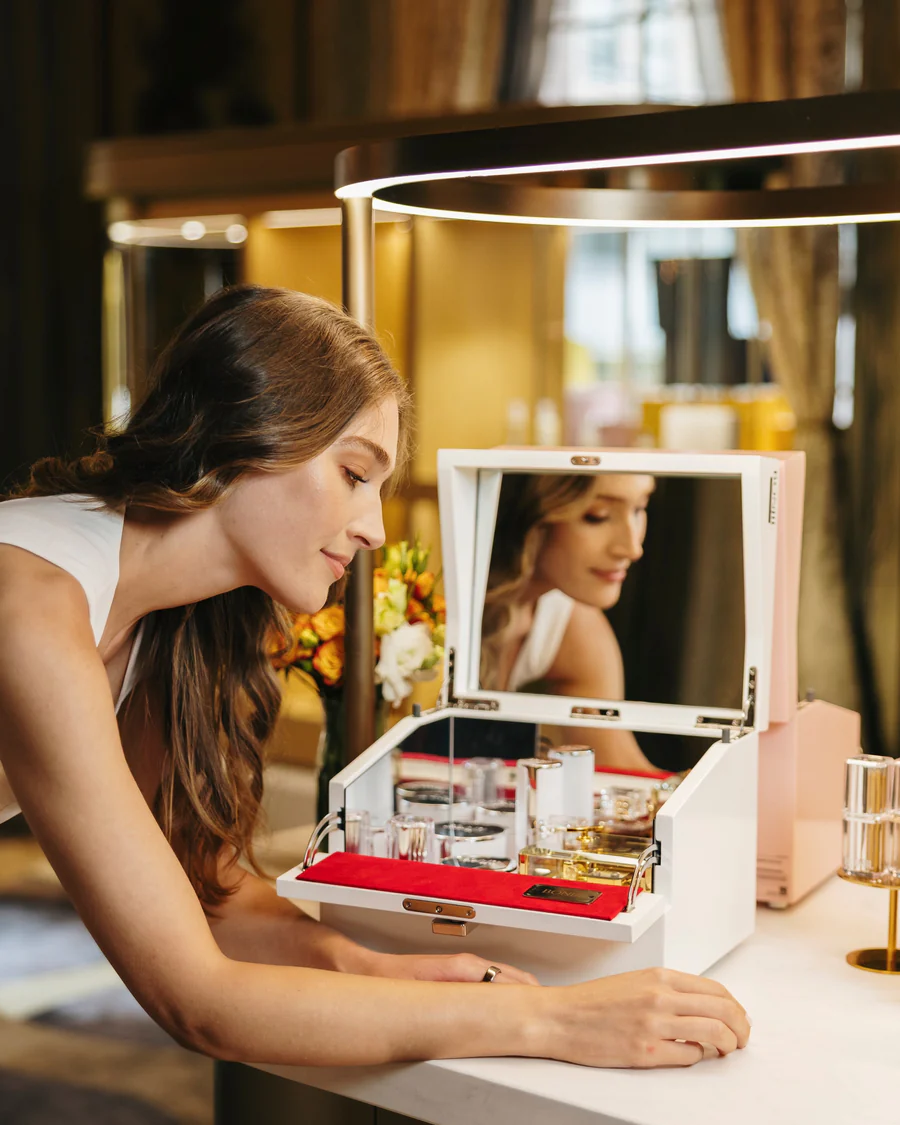
Application ritual influences ingredient absorption by aligning deliberate, mindful technique with the skin's biological rhythms. Chronobiology research published in The Journal of Clinical and Aesthetic Dermatology demonstrates that DNA repair in skin cells peaks at night, with keratinocyte proliferation reaching its highest rate around midnight. Applying restorative ingredients during evening hours synchronizes delivery with this natural circadian repair cycle. Optimal transdermal delivery also depends on molecular weight under 500 Da and a logP between 1 and 3, both of which perform better during nighttime hours when skin permeability increases. Slowing down the application process itself activates parasympathetic pathways, turning a routine step into a calming, absorption-enhancing ritual. BONJIL elevates this principle by pairing premium skincare formulations with sensory elements like the BONJIL Music Box collection, which provides calming melodies designed to enhance your application ritual.
How Can You Build a Mood-Boosting Skincare Routine?
You can build a mood-boosting skincare routine by selecting calming ingredients matched to your body's circadian rhythms and layering them in the correct order. The following subsections cover morning ingredients, nighttime ingredients, and optimal product layering.
What Calming Ingredients Work Best in a Morning Routine?
The calming ingredients that work best in a morning routine are niacinamide, citrus-based aromatics, and lightweight adaptogenic formulas. Niacinamide restores the cellular NAD+ pool and attenuates oxidative stress, reinforcing skin barrier function against daytime environmental stressors. Citrus essential oils, particularly sweet orange, pair well with morning application because they reduce anxiety while promoting alertness. According to a systematic review and network meta-analysis published in Frontiers in Public Health, Citrus aurantium L. (sweet orange) essential oil demonstrated the most significant effectiveness for reducing both state and trait anxiety among all essential oils evaluated. A magnesium-infused mist can further calm morning tension by opposing excitatory calcium activity in the nervous system. For anyone building a daytime routine around nerve-calming skincare, prioritizing barrier-protective and energizing ingredients over heavy occlusives makes a meaningful difference in both skin performance and emotional balance throughout the day.
What Nerve-Soothing Ingredients Work Best Before Sleep?
The nerve-soothing ingredients that work best before sleep are lavender, ashwagandha, CBD, and adaptogenic mushroom extracts. Evening application aligns with the skin's circadian biology; research published in The Journal of Clinical and Aesthetic Dermatology confirms that skin permeability is higher in the evening than in the morning, with topical absorption peaking around 4:00 AM. Lavender's active compounds, linalool and linalyl acetate, increase parasympathetic tone when inhaled during application. Ashwagandha and reishi mushroom formulas target cortisol reduction, which is especially valuable at night since approximately 65 percent of patients with inflammatory dermatoses experience increased symptoms due to natural circadian cortisol troughs. Rich, creamy textures work particularly well in evening routines. They activate mechanoreceptors that send comfort signals to emotional processing centers in the brain, turning nighttime skincare into a genuinely restorative ritual.
How Do You Layer Mood-Boosting Products for Maximum Effect?
You layer mood-boosting products for maximum effect by applying them from thinnest to thickest consistency, allowing each layer to absorb before adding the next. Serums penetrate deeper into skin layers due to their small molecular structure, so calming actives like niacinamide or CBD serums should go on first. Follow with treatment oils containing lavender or ashwagandha, then seal everything with a richer balm or cream. Slow, intentional application at roughly 3 centimeters per second activates C-tactile afferent fibers, which facilitate oxytocin release and parasympathetic nervous system activation. Each step becomes both a delivery mechanism and a mindfulness practice. Pairing this layering approach with consistent timing trains the skin's circadian clock genes to optimize absorption, making the entire routine more effective over time.
With a structured routine in place, the next consideration is how skincare fits alongside other stress-relief practices.

Can Skincare Replace or Complement Other Stress-Relief Methods?
Skincare cannot replace traditional stress-relief methods, but it can powerfully complement them. The strongest clinical outcomes emerge when skincare rituals are combined with established approaches like mindfulness, therapy, and medical treatment.
Skincare works best as one layer within a broader stress-management strategy. Calming ingredients and intentional application rituals activate real neurological pathways, from olfactory-limbic responses to parasympathetic activation through touch. These mechanisms overlap with those targeted by conventional interventions, making skincare a natural complement rather than a substitute.
According to a study published in JAMA Dermatology, mindfulness-based stress reduction resolved symptoms four times faster than phototherapy treatments alone in patients with moderate to severe psoriasis. This finding highlights how psychological interventions paired with dermatological care outperform either approach in isolation. Evening skincare routines hold particular value here; approximately 65 percent of patients with inflammatory dermatoses experience increased pruritus at night due to natural circadian troughs in cortisol levels, reinforcing why combining calming skincare with stress-reduction practices before bed yields measurable benefits.
For most people, the practical advantage of mood-boosting skincare is consistency. Meditation and exercise require dedicated time and motivation. A skincare routine, by contrast, is something most people already do twice daily. Layering calming, science-backed ingredients into that existing habit creates a low-barrier entry point for nervous system regulation that compounds over time.
With the science supporting skincare as a complementary wellness tool, a multisensory ritual can amplify these calming benefits further.
How Does a Multisensory Skincare Ritual Enhance Calm?
A multisensory skincare ritual enhances calm by engaging touch, scent, and mindful attention simultaneously, activating the parasympathetic nervous system through multiple sensory pathways. The following sections explore how BONJIL applies this principle and summarize the article's core takeaways.
Can BONJIL's Neurocosmetics Collections Calm Nerves?
Yes, BONJIL's collections can support a calming experience by combining luxury skincare formulations with a deliberately multisensory application ritual. Each collection, from Perfection Éternelle to La Signature Au Caviar, pairs premium skincare with ritualistic elements designed to enhance your sensory experience.
The BONJIL Music Box collection takes this further, providing calming melodies that create an auditory layer during product application. When slow, intentional touch meets aromatic compounds and soothing sound, the result is a ritual that activates parasympathetic responses across multiple channels simultaneously. For anyone looking to transform a routine into a genuine moment of calm, this convergence of sensory science and luxury skincare represents one of the most practical approaches available today.
What Are the Key Takeaways About Calming Skincare Ingredients?
The key takeaways about calming skincare ingredients center on the scientifically validated connection between what you apply to your skin and how your nervous system responds. A randomized clinical trial published in JAMA Dermatology found that integrating mindfulness practices with skincare produced a large effect size (Cohen d = −1.06) in quality-of-life improvement for participants with skin conditions.
The most actionable insights from this article include:
-
Ingredients such as lavender, ashwagandha, CBD, niacinamide, magnesium, and adaptogenic mushrooms each target distinct neurobiological pathways to reduce anxiety and support mood.
-
Touch, scent, and texture activate the parasympathetic nervous system through separate sensory channels that compound when combined in a single ritual.
-
Evening application aligns with the skin's circadian biology, optimizing both ingredient absorption and stress relief.
-
Neurocosmetics bridge the gap between traditional skincare and emotional wellness, offering measurable outcomes beyond surface-level aesthetics.
Prioritizing a consistent, sensory-rich skincare ritual is one of the simplest daily investments in both skin health and nervous system balance.