Ceramides are naturally occurring lipids that form the structural foundation of your skin's protective barrier, composing approximately 50% of the skin's lipid matrix. They function as the "mortar" between skin cells, sealing in moisture and defending against environmental irritants.
This guide covers ceramide science and barrier function, skin-specific benefits, ceramide types and nomenclature, routine integration and ingredient pairing, and how a multisensory skincare ritual supports long-term results.
Ceramides are sphingolipids organized into thirteen distinct classes with up to 1,000 species identified in human skin. This complexity explains why they dominate barrier function in ways cholesterol and free fatty acids cannot replicate alone. When ceramide levels drop, the lipid matrix weakens, transepidermal water loss increases, and skin becomes vulnerable to dryness, sensitivity, and premature aging.
The benefits of topical ceramides extend across every skin concern. They reduce transepidermal water loss by 10% to 20% within two weeks of consistent use, calm inflammation linked to conditions like atopic dermatitis, and restore the lipid density that naturally declines at roughly one percent per year after age 20. Every skin type benefits, from eczema-prone to oily and acne-prone.
Five primary ceramide types (EOS, NS, NP, AP, and EOP) each serve distinct structural roles, and effective formulations pair them with cholesterol and free fatty acids in a clinically validated 3:1:1 ratio. Synergistic ingredients like niacinamide boost the skin's own ceramide production, while hyaluronic acid complements ceramides by attracting moisture that the lipid barrier then locks in place.
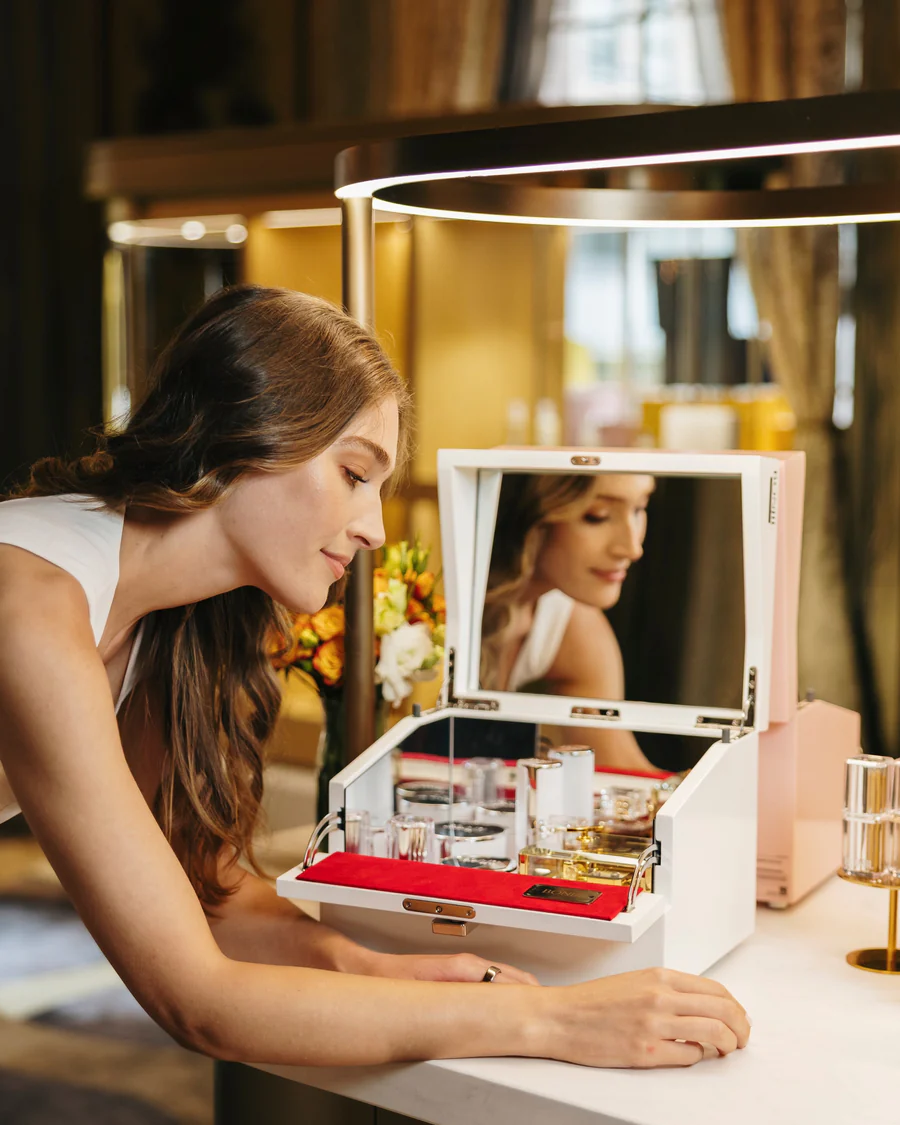
Consistency determines results. We designed BONJIL's neurocosmetics approach around multisensory rituals that make daily barrier support feel effortless, so the ingredients you apply actually have time to work.
What Are Ceramides and Why Does Your Skin Need Them?
Ceramides are naturally occurring lipids that form the foundation of your skin's protective barrier. The sections below explain their barrier role, how they differ from other lipids, and what happens when levels drop.
What Role Do Ceramides Play in the Skin Barrier?
Ceramides play a critical structural role in the skin barrier by forming the lipid "mortar" between corneocyte "bricks" in the stratum corneum. This lipid continuous phase accounts for approximately 20% of the stratum corneum's volume and about 15% of its dry weight, serving as the primary defense against water loss.
The complexity of this system is remarkable. According to a 2017 study in the International Journal of Cosmetic Science, thirteen classes of ceramides with potentially up to 1,000 distinct species have been identified in human skin, pointing to a deeply nuanced relationship between lipid composition and barrier behavior.
When this barrier sustains damage, targeted repair becomes essential. Topical application of a ceramide-dominant triple lipid mixture in a 3:1:1 molar ratio of ceramides, cholesterol, and free fatty acids has been clinically shown to accelerate barrier recovery.

How Are Ceramides Different From Other Skin Lipids?
Ceramides are different from other skin lipids because of their unique molecular structure and dominant concentration. Ceramides are the simplest form of sphingolipids, consisting of a sphingoid base backbone, such as sphingosine, linked to a single fatty acid through an amide bond.
While cholesterol and free fatty acids also contribute to barrier integrity, ceramides comprise roughly 50% of the skin's lipid composition. Cholesterol provides structural rigidity, and free fatty acids support fluidity, yet neither can replicate ceramides' ability to organize into the tightly packed lipid lamellae that seal moisture in. This structural dominance is precisely why ceramide depletion has such outsized consequences for skin health.
What Happens When Your Skin Loses Ceramides?
Your skin loses its ability to retain moisture and defend against irritants when ceramide levels decline. Reduced ceramide content disrupts the organized lipid lamellae, increasing transepidermal water loss and leaving skin vulnerable to environmental stressors.
Visible consequences include:
-
Persistent dryness and rough texture that moisturizers alone cannot resolve.
-
Heightened sensitivity, redness, and increased reactivity to previously tolerated products.
-
Accelerated formation of fine lines as dehydrated skin loses its plump appearance.
-
Greater susceptibility to conditions like eczema and contact dermatitis.
For most people, ceramide loss is gradual enough to go unnoticed until symptoms compound. Replenishing these lipids topically, rather than relying solely on humectants, addresses the root structural deficit. Understanding what depletes ceramides helps guide more effective prevention strategies.
What Are the Key Benefits of Ceramides for Skin?
The key benefits of ceramides for skin include barrier strengthening, deep moisture retention, anti-aging support, inflammation relief, environmental protection, and improved texture. Each benefit builds on ceramides' role as essential lipids within the stratum corneum.

How Do Ceramides Strengthen the Skin Barrier?
Ceramides strengthen the skin barrier by forming the lipid matrix that holds corneocytes together, functioning as the "mortar" between cellular "bricks." Healthy skin contains a lipid mixture composed of approximately 50% ceramides, 25% cholesterol, and 15% free fatty acids. When this ratio remains balanced, the stratum corneum maintains structural integrity against external irritants and pathogens. According to the Journal of Clinical and Aesthetic Dermatology, topical application of a ceramide-dominant triple lipid mixture in a 3:1:1 molar ratio has been clinically shown to accelerate barrier recovery in damaged skin. Replenishing ceramides is one of the most direct ways to restore compromised barrier function.
How Do Ceramides Lock In Moisture and Prevent Dehydration?
Ceramides lock in moisture and prevent dehydration by reducing transepidermal water loss (TEWL). Unlike humectants that pull water into the skin, ceramides integrate into the lipid lamellae of the stratum corneum to seal moisture within. In vitro and ex vivo studies published on ResearchGate demonstrated that ceramide-rich formulations can reduce TEWL by 10% to 20% after two weeks of consistent use. This occlusive-like function keeps skin hydrated from within rather than relying solely on surface-level moisture. For anyone dealing with persistent dryness, prioritizing ceramide replenishment often yields more sustained hydration than layering humectants alone.
How Do Ceramides Reduce Visible Signs of Aging?
Ceramides reduce visible signs of aging by restoring the lipid density that naturally declines with time. After age 20, the human body produces fewer ceramides at an estimated loss rate of one percent per year. According to Deveraux Specialties, by the time individuals reach their 30s, ceramide production may have decreased by up to 40%, with losses reaching 60% by the 40s. This depletion directly contributes to fine lines, dullness, and compromised elasticity. Topical ceramide application helps counteract these losses, supporting a plumper, more resilient skin surface that resists the visible markers of chronological aging.
How Do Ceramides Calm Inflammation and Sensitivity?
Ceramides calm inflammation and sensitivity by reinforcing the barrier that prevents irritants from penetrating deeper skin layers. When ceramide levels drop, the compromised barrier allows allergens, pollutants, and microbes to trigger inflammatory responses. Conditions such as atopic dermatitis, which affects approximately 4.9% of adults in the United States according to the Annals of Translational Medicine, are closely linked to ceramide deficiency. Restoring ceramide levels helps interrupt the itch-scratch cycle and reduces redness. For sensitive skin types prone to reactive flare-ups, ceramide-based formulations offer a gentle yet effective approach to calming chronic irritation.
How Do Ceramides Protect Skin From Environmental Damage?
Ceramides protect skin from environmental damage by maintaining the stratum corneum's structural cohesion against external stressors. Pollutants, UV exposure, harsh weather, and temperature fluctuations all degrade the lipid matrix over time. A ceramide-rich barrier acts as a frontline shield, preventing these aggressors from disrupting cellular function beneath the surface. Because the lipid continuous phase accounts for approximately 20% of the stratum corneum's volume, keeping it intact is essential for resisting oxidative stress and environmental wear. Consistent ceramide use builds cumulative resilience, making skin less reactive to daily environmental assaults.
How Do Ceramides Improve Skin Texture and Firmness?
Ceramides improve skin texture and firmness by optimizing lipid lamellae organization within the stratum corneum. When ceramide levels are adequate, skin cells align more uniformly, producing a smoother surface with fewer rough patches. This improved cohesion also enhances light reflection, giving skin a more even, luminous appearance. Niacinamide acts as a ceramide booster by stimulating sphingolipid synthesis in human keratinocytes, according to research published in Dermato (MDPI), which means pairing these ingredients amplifies textural benefits. For those seeking visibly refined skin, ceramides address the structural foundation that no amount of surface exfoliation can replicate on its own.
With these core benefits established, understanding the specific ceramide types helps you choose the most effective formulations.
What Are the Different Types of Ceramides in Skincare?
The different types of ceramides in skincare are classified by their chemical structure, with each type serving a distinct role in barrier function. The most common include Ceramide EOS, NS, NP, AP, and EOP.

Ceramide 1 (Ceramide EOS)
Ceramide 1, or Ceramide EOS, is an esterified omega-hydroxy ceramide with a sphingosine base. It functions as a molecular rivet, linking the outer lipid layers of the stratum corneum together. This long-chain structure creates a scaffold that holds the barrier's lamellar sheets in proper alignment. Without adequate Ceramide EOS, the organized lipid layers become unstable, allowing gaps that increase water loss. Its unique esterified fatty acid tail makes it one of the longest ceramide molecules in human skin.
Ceramide 2 (Ceramide NS)
Ceramide 2, or Ceramide NS, is a non-hydroxy fatty acid ceramide paired with a sphingosine base. It is the most abundant ceramide in human skin, making it a cornerstone of barrier integrity. Ceramide NS contributes significantly to the dense lipid packing between corneocytes that prevents transepidermal water loss. Because of its prevalence, many skincare formulations prioritize this type. For anyone rebuilding a compromised barrier, products containing Ceramide NS often deliver the most noticeable hydration improvements.
Ceramide 3 (Ceramide NP)
Ceramide 3, or Ceramide NP, is a non-hydroxy fatty acid ceramide paired with a phytosphingosine base. According to the Journal of Lipid Research, phytosphingosine-type ceramides represent approximately 35% of total ceramides in the human stratum corneum. Ceramide NP plays a central role in moisture retention and barrier repair, particularly in dry or irritated skin. Its phytosphingosine backbone enhances compatibility with the skin's natural lipid matrix, which is why it appears frequently in dermatologist-recommended moisturizers and barrier creams.
Ceramide 6-II (Ceramide AP)
Ceramide 6-II, or Ceramide AP, is an alpha-hydroxy fatty acid ceramide with a phytosphingosine base. It supports natural desquamation, the process by which dead skin cells shed in an orderly manner. Proper cell turnover depends on adequate Ceramide AP levels; when depleted, skin can appear rough and flaky. This ceramide also reinforces the lipid lamellae that prevent irritants from penetrating the barrier. For those dealing with uneven texture or scaling, Ceramide AP is a particularly valuable ingredient to look for in formulations.
Ceramide 9 (Ceramide EOP)
Ceramide 9, or Ceramide EOP, is an esterified omega-hydroxy fatty acid ceramide with a phytosphingosine base. Like Ceramide EOS, it serves as a structural linchpin connecting lipid layers, but its phytosphingosine component adds enhanced water-binding capacity. Ceramide EOP is less abundant than NS or NP types, yet its structural role is critical for long-term barrier resilience. Formulations that include EOP alongside NP and AP provide broader coverage of the skin's natural ceramide profile. Understanding these distinct types helps when selecting products that closely mirror your skin's own lipid composition.
Who Benefits Most From Using Ceramides?
Ceramides benefit virtually every skin type, from newborns to mature adults. According to an expert consensus panel published in PubMed, gentle cleansers and moisturizers containing ceramides provide benefits to the stratum corneum's lipid and water content when applied from birth onwards. The sections below break down how ceramides address dry, sensitive, aging, and oily skin concerns.
How Do Ceramides Help Dry or Dehydrated Skin?
Ceramides help dry or dehydrated skin by replenishing the lipid barrier that prevents moisture escape. When ceramide levels drop, the spaces between skin cells lose their "mortar," allowing water to evaporate freely. Topical ceramides fill these gaps, restoring the protective matrix that holds hydration in place. For chronically dry skin, this lipid replenishment addresses the root structural deficit rather than simply adding temporary surface moisture. Pairing ceramides with cholesterol and free fatty acids amplifies this effect, since all three lipids work together within the barrier. Consistently dry or flaky skin often signals depleted ceramide stores, making these formulations particularly effective for long-term relief.
How Do Ceramides Help Sensitive or Eczema-Prone Skin?
Ceramides help sensitive or eczema-prone skin by reinforcing a compromised barrier that allows irritants to penetrate. Atopic dermatitis, which affects up to 20% of children in some regions according to data published in the Annals of Translational Medicine, is closely linked to reduced ceramide levels in the stratum corneum. A weakened lipid matrix lets allergens, bacteria, and environmental triggers reach deeper skin layers, provoking inflammation. Ceramide-based moisturizers rebuild this protective seal, reducing both transepidermal water loss and irritant exposure. Because they are naturally present in skin, ceramides rarely trigger further sensitivity. For eczema-prone individuals, this makes ceramide formulations a foundational step in calming reactive skin cycles.
How Do Ceramides Help Aging or Mature Skin?
Ceramides help aging or mature skin by compensating for the natural decline in lipid production that accelerates with age. Phytosphingosine-type and 6-hydroxy sphingosine-type ceramides are the most abundant in human stratum corneum, representing approximately 35% and 45% of total ceramides respectively, according to the Journal of Lipid Research. As these stores diminish over the decades, skin loses elasticity, firmness, and moisture retention. Topical ceramides restore structural integrity to the lipid lamellae, which supports a smoother, more resilient surface. For mature skin, this barrier reinforcement is arguably more impactful than many anti-aging actives, because without a functioning lipid matrix, even potent ingredients struggle to deliver lasting results.
How Do Ceramides Help Oily or Acne-Prone Skin?
Ceramides help oily or acne-prone skin by stabilizing the barrier without adding occlusive heaviness. When the lipid barrier is damaged, often from harsh cleansers or acne treatments like retinoids and benzoyl peroxide, skin compensates by overproducing sebum. This excess oil can clog pores and worsen breakouts. Lightweight ceramide formulations restore barrier integrity, signaling the skin to reduce compensatory oil production. They also protect against the drying side effects of active acne treatments, helping skin tolerate these ingredients longer. Many people with oily skin avoid lipid-based products, but ceramides are non-comedogenic barrier components that balance hydration without triggering congestion.
With each skin type addressed, understanding what depletes ceramides in the first place helps prevent these concerns from developing.
What Causes Ceramide Depletion in the Skin?
Ceramide depletion in the skin results from aging, environmental exposure, harsh cleansing habits, and underlying skin conditions. The factors below explain how natural ceramide levels decline over time.
Aging is the primary driver. After age 20, the human body produces fewer ceramides at an estimated loss rate of one percent per year. According to Deveraux Specialties, by the time individuals reach their 30s, skin ceramide production may have decreased by up to 40%, with losses reaching 60% by the 40s. This progressive decline weakens the lipid matrix that holds skin cells together, making barrier compromise almost inevitable with time.
Beyond aging, several external and lifestyle factors accelerate ceramide loss:
-
Harsh surfactants in cleansers strip the skin's lipid layer, dissolving ceramides along with dirt and oil.
-
UV radiation damages lipid structures in the stratum corneum, accelerating barrier breakdown.
-
Low-humidity environments increase transepidermal water loss, placing additional stress on an already thinning lipid matrix.
-
Over-exfoliation disrupts the natural ceramide replenishment cycle by removing corneocytes faster than the skin can rebuild.
-
Chronic skin conditions, such as eczema and psoriasis, are associated with inherently lower ceramide levels, compounding the effects of environmental stressors.
What makes ceramide depletion particularly challenging is its compounding nature. Once levels drop, the barrier weakens, moisture escapes more readily, and irritants penetrate more easily, which in turn triggers further lipid disruption. Recognizing these causes early allows for targeted replenishment before visible damage sets in. Understanding which ingredients pair well with ceramides makes that replenishment even more effective.
Which Ingredients Work Best With Ceramides?
The ingredients that work best with ceramides include cholesterol, free fatty acids, niacinamide, and hyaluronic acid. Each supports barrier repair or hydration through a different mechanism.
Ceramides deliver the strongest results when paired with complementary lipids and hydration boosters. The optimal formulation mimics the skin's natural lipid ratio. According to the Journal of Clinical and Aesthetic Dermatology, topical application of a ceramide-dominant triple lipid mixture in a 3:1:1 molar ratio of ceramides, cholesterol, and free fatty acids has been clinically shown to accelerate barrier recovery in damaged skin. This ratio reflects the composition found in healthy stratum corneum, where ceramides account for roughly 50% of the lipid matrix, cholesterol contributes about 25%, and free fatty acids make up approximately 15%.
Beyond these core lipids, niacinamide acts as a ceramide booster by stimulating sphingolipid synthesis in human keratinocytes, as documented in Dermato (MDPI). Rather than simply supplementing ceramides from the outside, niacinamide prompts the skin to produce more of its own. This dual approach, combining topical ceramides with an ingredient that upregulates internal production, creates a synergistic effect that strengthens the barrier from both sides.
Hyaluronic acid complements ceramides through a different pathway. While ceramides seal the barrier to prevent transepidermal water loss, hyaluronic acid functions as a humectant that draws moisture into the skin. Layering both ingredients together addresses hydration at two levels: retention and attraction. For anyone building a ceramide-focused routine, pairing these ingredients maximizes both barrier integrity and long-term moisture balance.
How Should You Add Ceramides to Your Skincare Routine?
You should add ceramides to your skincare routine by applying them after water-based serums and before heavier occlusives. The following subsections cover optimal timing, frequency, and layering with active ingredients.

When Should You Apply Ceramides in Your Routine?
You should apply ceramides in your routine after cleansing, toning, and applying water-based serums, but before heavier creams or oils. Ceramides function as barrier-reinforcing lipids, so they work best when layered over hydrating steps that pull moisture into the skin. This sequencing lets ceramides seal that hydration in place.
A practical application order is:
-
Cleanser removes impurities without stripping natural lipids.
-
Toner or essence balances skin pH and preps for absorption.
-
Water-based serums (hyaluronic acid, niacinamide) deliver active hydration.
-
Ceramide moisturizer locks in all previous layers by reinforcing the lipid matrix.
-
Sunscreen (morning) or occlusive balm (evening) provides the final protective seal.
Ceramides are equally effective in both morning and evening routines, making them one of the most versatile barrier-support ingredients available.
How Often Should You Use Ceramide Products?
You should use ceramide products daily, ideally twice per day in both your morning and evening routines. Because ceramides are naturally occurring lipids in the skin barrier, they carry virtually no risk of irritation or overuse. Even sensitive and eczema-prone skin tolerates daily ceramide application well.
According to a 2024 review in the International Journal of Cosmetic Science, skincare formulations typically use ceramide concentrations between 0.2% and 5%, requiring specific high-temperature manufacturing processes to ensure proper dissolution and efficacy. This means consistency matters more than loading up on high-concentration products. For most people, a well-formulated ceramide moisturizer used every day delivers better cumulative barrier repair than sporadic application of a stronger formula.
Can You Layer Ceramides With Active Ingredients?
Yes, you can layer ceramides with active ingredients safely and effectively. Ceramides are non-reactive lipids, so they pair well with most actives without causing sensitization or neutralization.
Compatible pairings include:
-
Retinol: Ceramides buffer retinol's drying effects and reduce flaking.
-
Niacinamide: This combination boosts natural ceramide synthesis while reinforcing the existing barrier.
-
Vitamin C: Applying vitamin C serum first, followed by a ceramide moisturizer, protects antioxidant efficacy.
-
AHAs and BHAs: Ceramides applied after exfoliating acids help restore the lipid barrier that chemical exfoliation temporarily disrupts.
The key principle is simple: apply water-soluble actives first, then follow with ceramide-containing moisturizers. This approach lets actives penetrate effectively while ceramides provide a protective lipid seal. With a thoughtful layering strategy in place, ceramides become the foundation of a well-rounded skincare ritual.
How Do Ceramides Compare to Hyaluronic Acid?
Ceramides and hyaluronic acid both support skin hydration, but they work through fundamentally different mechanisms. Ceramides are barrier lipids that prevent moisture from escaping, while hyaluronic acid is a humectant that draws water into the skin. Understanding this distinction helps you choose the right products, or better yet, combine both for comprehensive hydration.
Hyaluronic acid functions as a humectant that pulls water into the skin for immediate plumping, whereas ceramides reduce transepidermal water loss by sealing moisture within the barrier. According to Photozyme, high molecular weight hyaluronic acid primarily remains on the skin surface to provide hydration, while ceramides integrate into the lipid lamellae of the stratum corneum to repair the underlying barrier structure.
The key differences between ceramides and hyaluronic acid include:
-
Primary function: Ceramides seal and repair the lipid barrier; hyaluronic acid attracts and binds water molecules.
-
Where they work: Ceramides integrate into the stratum corneum's lipid matrix; hyaluronic acid sits on or near the skin surface.
-
Hydration type: Ceramides prevent water loss (occlusive/emollient); hyaluronic acid increases water content (humectant).
-
Best for: Ceramides excel at barrier repair and sensitivity; hyaluronic acid excels at immediate plumping and volume.
Neither ingredient replaces the other. Hyaluronic acid without a strong lipid barrier is like filling a leaky bucket; the water it attracts evaporates quickly. Ceramides without adequate hydration leave the barrier intact but the skin still thirsty. For most people, layering hyaluronic acid underneath a ceramide-rich moisturizer delivers the most complete hydration strategy.
With hydration mechanisms clarified, a multisensory skincare ritual can elevate these benefits even further.
How Can a Multisensory Skincare Ritual Enhance Ceramide Benefits?
A multisensory skincare ritual can enhance ceramide benefits by turning barrier repair into an immersive, consistent practice. Below, explore how BONJIL's neurocosmetics approach delivers barrier support and the essential takeaways about ceramides for healthy skin.
Can BONJIL's Neurocosmetics Hydration Collections Deliver Ceramide-Level Barrier Support?
Yes, BONJIL's Neurocosmetics Hydration Collections can deliver ceramide-level barrier support by combining advanced skincare science with a multisensory ritual designed to promote consistency. BONJIL formulates its hydration collections around the principle that skin health improves when the nervous system is engaged through sensory experience, including texture, scent, and sound.
Consistency is one of the most underrated factors in barrier repair. When a routine feels like a cherished ritual rather than a chore, daily application becomes effortless. BONJIL's approach, pairing efficacious hydration formulas with calming elements like the BONJIL Music Box, encourages the kind of sustained use that allows barrier-supportive ingredients to deliver measurable results. For anyone serious about long-term hydration and barrier resilience, this experiential framework makes meaningful compliance far easier to maintain.
What Are the Key Takeaways About Ceramide Benefits for Healthy, Hydrated Skin?
The key takeaways about ceramide benefits for healthy, hydrated skin center on barrier integrity, moisture retention, and long-term resilience. According to Healthline, common questions about ceramides cover their safety in cosmetics, their role in hair care, and whether topical products can truly supplement natural ceramide production.
The most actionable insights from this guide include:
-
Ceramides compose approximately 50% of the skin's lipid barrier, making them essential for preventing water loss.
-
Natural ceramide production declines steadily after age 20, so topical replenishment becomes increasingly important.
-
Effective ceramide products pair ceramides with cholesterol and free fatty acids in balanced ratios for optimal barrier recovery.
-
Ceramides complement humectants like hyaluronic acid; one locks in moisture while the other attracts it.
-
A consistent, enjoyable skincare ritual ensures the sustained daily application that barrier repair requires.
Prioritizing ceramides is not just a trend; it is one of the most evidence-backed strategies for maintaining skin that feels hydrated, looks resilient, and ages gracefully.